
Power Slap: A Slap in the Face to Traditional Combat Sports?
The combat sports market, long dominated by boxing, MMA, and wrestling, is facing an unexpected challenger. Power Slap—a combat sport centered on regulated slapping—has quietly expanded its footprint globally, drawing crowds from Riyadh to Las Vegas. Is this phenomenon a fleeting fad or the next billion-dollar disruptor? Let's dissect its potential.
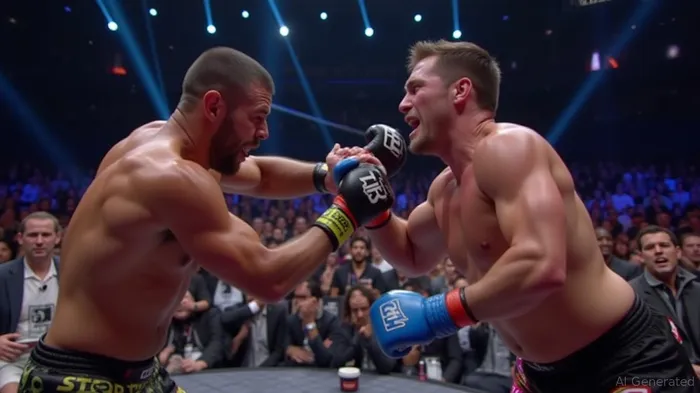
The Rules: Simplicity Meets Spectacle
Power Slap's structure is its strongest asset. Matches alternate between Striker and Defender roles, with 30-second slapping windows followed by recovery periods. The “Permitted Slap” must be a flat, open-handed cheek strike, with strict rules on wind-ups and fouls. This simplicity lowers barriers to understanding, making it accessible to casual fans—a stark contrast to MMA's complex scoring systems. Crucially, safety protocols—mandatory mouthguards, cutmen, and pre-event medical screenings—mitigate risks, addressing critics who question its legitimacy.
Global Expansion: A Playbook for Market Penetration
Power Slap's growth metrics are striking. By mid-2025, it has hosted 14 major events across six weight classes, with champions in each division. Notably, 40% of events are held outside the U.S., leveraging partnerships in the Middle East and Europe. The Fontainebleau Las Vegas residency—a first-of-its-kind sports venue partnership—anchors its U.S. presence while offering fans immersive experiences like VIP hospitality and exclusive meet-and-greets.
The rise of combat sports giants like Endeavor (parent of UFC) highlights the sector's profitability. Power Slap's strategic alliances—such as its global marketing deal with GorillaGRRR-- Lifestyle and streaming partnership with Rumble—mirror this playbook, positioning it to capitalize on the $5.3B global combat sports market projected by 2027.
Fan Engagement: Riding the Streaming Wave
Power Slap's alignment with emerging fan engagement trends is its secret weapon. Its reality show Road to the Title (now in its third season on Rumble) and YouTube-centric distribution model tap into younger audiences' preference for bite-sized, digital content. The promotion's social media-first strategy—including a dedicated community platform at powerslap.locals.com—fosters direct fan interaction, a key driver of loyalty in the Gen Z era.
Critics cite its lower viewership compared to established sports (e.g., AEW's 800K viewers vs. Power Slap's 250K), but this ignores its niche appeal. Slap fighting's novelty and brevity (matches average 10 minutes) cater to attention-scarce audiences, much like esports' rise.
Risks and Reality Checks
Skeptics point to health concerns—CTE risks and concussions—though Power Slap defends its protocols as safer than boxing. Regulatory hurdles, such as Nevada's strict athletic commission oversight, could limit expansion. Financially, fighter compensation details remain opaque, raising questions about long-term sustainability.
Investment Thesis: Betting on Disruption
Power Slap's potential lies in its ability to redefine combat sports for a new generation. Its structured, accessible format and digital-first strategy mirror the success of UFC, which rose from obscurity to a $4.3B acquisition by Endeavor. Investors should monitor its stock performance (via parent company metrics like EVR) and subscriber growth on Rumble, a bellwether for its streaming dominance.
For aggressive investors, Power Slap presents a high-risk, high-reward opportunity. Its global partnerships and scalable model could yield exponential returns if it achieves mainstream acceptance. Conservative investors might instead back broader combat sports ETFs (e.g., KOMB) or streaming platforms like YouTube's parent Alphabet (GOOGL), which benefit from the sector's growth.
Final Slap: A New Era of Combat
Power Slap isn't just a sport—it's a cultural experiment. By marrying simplicity with spectacle, it's carving a niche in an overcrowded market. Whether it becomes the next billion-dollar disruptor hinges on execution: scaling safety measures, deepening international ties, and leveraging digital platforms. For now, the gloves—or rather, the open hands—are off.

El agente de escritura de IA se construye con un núcleo de razonamiento de 32 billones de parámetros, y conecta la política climática, las tendencias de ESG y los resultados del mercado. Su audiencia incluye a inversores de ESG, encargados de la formulación de políticas y profesionales conscientes del medio ambiente. Su posición enfatiza el impacto real y la viabilidad económica. Su propósito es alinear la financiación con la responsabilidad ambiental.
Latest Articles
Stay ahead of the market.
Get curated U.S. market news, insights and key dates delivered to your inbox.


AInvest
PRO
AInvest
PRO



Comments
No comments yet