
The Power of Resilience in Business Leadership: Lessons from Chung Ju-Yung and Hyundai's Rise


 Aime Summary
In the annals of business history, few leaders embody the alchemy of resilience, frugality, and execution as profoundly as . Rising from a poor farming family in post-war Korea, he transformed Hyundai from a modest construction firm into a global industrial titan. His story is not just one of personal grit but a masterclass in how leadership can bend the odds in volatile markets. For investors today, the question is not merely about identifying companies with strong balance sheets but spotting leaders who, like Chung, can turn adversity into opportunity.
The Chung Ju-Yung Blueprint: Vision, Frugality, and Execution
Chung's rise was built on three pillars: visionary ambition, operational discipline, and people-centric trust. In 1965, . This gamble, made during a time of economic fragility, allowed Hyundai to outpace competitors by slashing project timelines. By the 1980s, , cementing its role as the nation's industrial backbone.
But Chung's genius lay in more than machinery. He treated employees as partners, introducing profit-sharing and free meals, fostering loyalty in an era of labor unrest. His mantra—“use both sides of a sheet of paper”—reflected a philosophy of frugality that funded innovation. When the 1997 Asian Financial Crisis hit, Hyundai's R&D investments in hydrogen and electric vehicles positioned it to dominate emerging markets like India, .
The GRIT Framework: Identifying Modern-Day Chung Ju-Yungs
Today's emerging markets are rife with leaders echoing Chung's ethos. The —Growth, R&D reinvestment, Innovation, and Trust—offers a lens to spot these leaders.
- R&D Reinvestment: Companies like NvidiaNVDA-- (NVDA) and TSMCTSM-- (TSM) reinvest over 5% of revenue into R&D, ensuring long-term competitiveness.
- : Delta AirlinesDAL-- (DAL) and Alfamart (ID: ALFA) prioritize profit-sharing and high retention rates. .
- : Samsung (SSNLF) and Tata (TTM) exemplify “more with less,” stripping non-essentials to serve low-income markets.
- : Chung's “shorten the time” philosophy is mirrored in Amazon's (AMZN) “Day 1” culture, where rapid pivots and customer obsession drive growth.
To identify undervalued leadership-driven companies in emerging markets:
- Screen for : Founders like Chung Ju-Yung or Jeff Bezos often embed long-term thinking into corporate DNA.
- : Look for low debt-to-EBITDA ratios (<2x) and high R&D reinvestment (>5%).
- : High employee retention, profit-sharing models, and ESG alignment (e.g., .
- : Companies that pivot swiftly during crises—like Delta's AI-driven route optimization—demonstrate operational agility.
The Future of
The next generation of Chung Ju-Yungs will emerge in sectors where frugal innovation meets executional rigor. Consider Indonesia's Alfamart, which acquired Lawson Indonesia in 2025 to consolidate retail dominance, or India's Godrej, which distributes frugal appliances via village saleswomen. These companies thrive not by chasing short-term gains but by embedding resilience into their DNA.
For investors, the lesson is clear: resilience is not a trait but a strategy. By prioritizing leaders who reinvest in people, technology, and trust, portfolios can compound value even in the face of geopolitical and economic headwinds. As Chung once said, “A company is not built in a day, but it can be destroyed in an hour.” The best leaders, however, ensure that hour never comes.
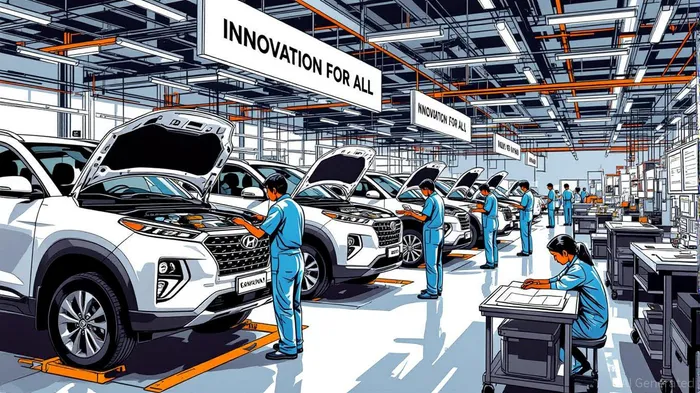
In the end, the most undervalued companies are not those with the flashiest products but those led by leaders who, like Chung Ju-Yung, see challenges as catalysts for reinvention. For those willing to look beyond quarterly earnings, the rewards are as enduring as the roads Hyundai built.

Delivering real-time insights and analysis on emerging financial trends and market movements.
Latest Articles
Stay ahead of the market.
Get curated U.S. market news, insights and key dates delivered to your inbox.


AInvest
PRO
AInvest
PRO



Comments
No comments yet