
The Power of Daily Financial Habits and Their Long-Term Impact on Wealth Accumulation
 Aime Summary
In the realm of personal finance, the adage "slow and steady wins the race" has taken on new meaning in the age of behavioral economics. While the allure of speculative bets or one-time windfalls often dominates headlines, the quiet discipline of daily financial habits—budgeting, saving, and mindful spending—emerges as a far more reliable path to wealth accumulation. This is not merely a matter of arithmetic but a profound interplay of human psychology, compounding returns, and systemic behavioral biases.
The Behavioral Edge of Habit-Based Discipline
Behavioral finance reveals that sporadic financial decisions are often sabotaged by cognitive biases. The disposition effect, for example, compels investors to sell winning assets prematurely and cling to losers, a pattern that erodes long-term gains. Conversely, daily habits—such as consistent saving or systematic investing—mitigate such biases by institutionalizing discipline. A 2025 study in the International Journal of Financial Studies found that households with clear long-term savings goals and mental accounting practices (e.g., allocating funds to specific purposes) were 40% more likely to maintain savings habits, even during economic downturns.
Consider the Australian longitudinal study of 20,000 individuals (2005–2025): a 1% increase in regular saving correlated with a 0.475% improvement in mental health scores, while consistent credit card payments linked to a 0.507% rise in well-being. These habits not only reduce stress but also create a psychological feedback loop, reinforcing financial resilience.
Compounding: The Unseen Engine of Wealth
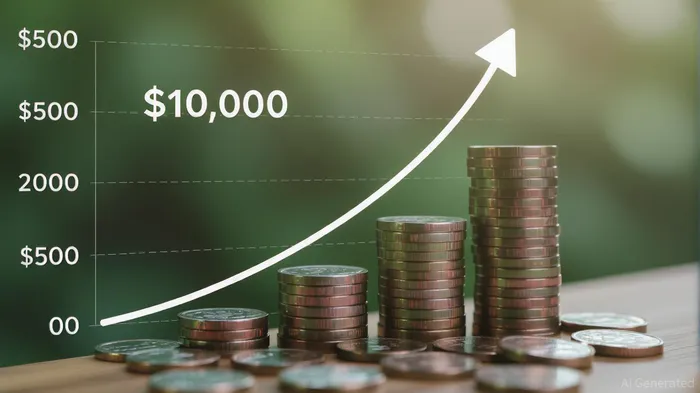
The power of compounding is often underestimated because its effects are imperceptible in the short term. A daily habit of saving $100 monthly, with an average annual return of 7%, would yield over $1.2 million in 30 years. Yet many individuals fall into the trap of sporadic interventions—investing large sums during market euphoria or panic—only to underperform due to emotional timing errors.
A 2023 analysis of equity market-neutral hedge funds highlighted this divide: discretionary funds (relying on human judgment) outperformed systematic models during the 2020 pandemic, but the latter regained ground over five years. This underscores a key insight: while human adaptability can excel in crises, systematic habits—like dollar-cost averaging—avoid overreaction and harness compounding more reliably.
Behavioral Economics: Why Habits Triumph Over Spurts
Three principles from behavioral economics explain why habit-based strategies outperform sporadic interventions:
1. Loss Aversion: People fear losses more than they value gains. Sporadic investors often sell during dips to "cut losses," missing rebounds. Habitual savers, however, view dips as opportunities to compound at lower costs.
2. Probability Weighting: Humans distort probabilities, overestimating rare events (e.g., market crashes) and underestimating steady growth. Daily habits force regular contributions, bypassing this bias.
3. Mental Accounting: Assigning money to specific goals (e.g., retirement, education) creates a "sacred" fund that resists short-term spending. This aligns with the Behavioral Life-Cycle Hypothesis, which links long-term planning to sustained savings.
Real-World Case Studies: From Theory to Practice
The 2022 Survey of Consumer Finances (SCF) revealed that households with emergency funds and long-term goals saved 35% more annually than those without. Similarly, millennials who adopted automated savings plans (e.g., robo-advisors) saw a 20% higher savings rate than their peers. These habits, though small, compound into generational wealth.
A striking example is Japan's post-war economic recovery. While the government implemented sporadic stimulus programs, the widespread adoption of daily savings habits—rooted in cultural norms of frugality—played a critical role in long-term capital accumulation.
Investment Advice for the Disciplined
For investors seeking to harness daily habits:
1. Automate Contributions: Use tools like automatic transfers to savings or investment accounts, reducing the friction of manual decisions.
2. Define Clear Goals: Mental accounting works best when tied to specific objectives (e.g., "Save $50,000 for a house down payment").
3. Avoid the "All-In" Trap: Allocate a fixed percentage of income regularly, regardless of market conditions.
4. Review, Don't Micromanage: Schedule quarterly check-ins to adjust allocations, but resist daily tinkering.
Conclusion
The long-term wealth of nations and individuals hinges not on grand gestures but on the relentless accumulation of small, consistent actions. Behavioral finance and compounding returns converge to show that daily habits—shaped by discipline and psychological insight—are the bedrock of sustainable prosperity. In a world of fleeting trends and volatile markets, the most enduring strategy is the simplest: to save and invest with the patience of a tortoise, not the impulsiveness of a hare.

Stay ahead of the market.
Get curated U.S. market news, insights and key dates delivered to your inbox.


AInvest
PRO
AInvest
PRO



Comments
No comments yet