
The Power of Compounding in Healthcare Investing


 Aime Summary
When it come to building wealth in the stock market, few forces are as potent as compounding. And in the healthcare sector-where innovation, demand, and demographic tailwinds collide-companies like UnitedHealth GroupUNH-- (UNH) have shown how disciplined investing can turn modest sums into life-changing returns. Let's break down the numbers and see why patience, paired with dividend reinvestment, has been a winning formula for UNHUNH-- shareholders over the past decade.
The Magic of Compounding with Dividends 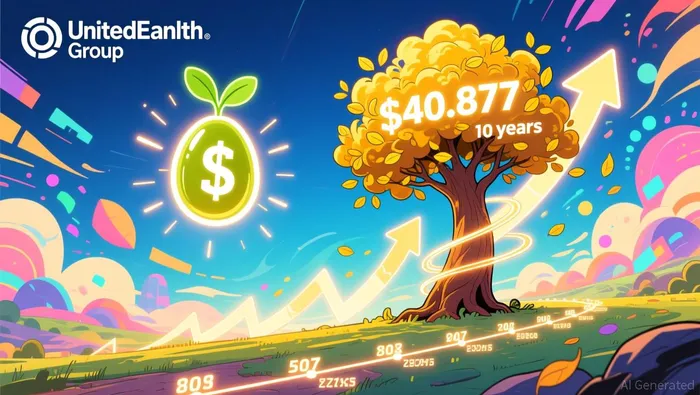
According to a report by DripInvesting.org, an investor who plowed $10,000 into UNH in December 2015 and reinvested every dividend would have seen their stake grow to by December 2025-a compound annual growth rate (CAGR) of . That's not just impressive; it's transformative. Compare that to the same investment without dividend reinvestment, which yielded a still-solid $39,649 but with a CAGR of just . The takeaway? Dividends aren't just "free money"-they're fuel for exponential growth.
The math gets even more compelling when you factor in the cumulative power of compounding. Over 10 years, reinvested dividends added to the total return, versus without reinvestment. That extra $941 might seem small today, but it's the snowball effect-tiny gains that snowball into massive wealth over time.
Riding the Healthcare Wave: UNH's Decade of Gains
Healthcare is a sector built for longevity, and UNH has been a poster child for this thesis. From 2020 to 2021 alone, the stock surged and , respectively according to Total Real Returns, as the pandemic accelerated digital health adoption and expanded insurance coverage. These weren't flukes-they were the result of strategic bets on telemedicine, data analytics, and a growing aging population.
But compounding isn't just about riding the highs. It's about weathering the lows. Consider 2008, when UNH plummeted amid the financial crisis according to Total Real Returns. For long-term investors, that downturn was a buying opportunity, not a reason to panic. Similarly, a according to Total Real Returns-a relatively minor setback-was quickly offset by subsequent gains. The key takeaway? Volatility is inevitable, but staying the course is where the magic happens.
The 12.38% to 12.79% Debate: What's the Real Number?
You might notice conflicting figures in the data: some sources cite a average annual return according to Average Annual Return, while others peg it at according to FinanceCharts. The discrepancy? It's a function of how returns are calculated-whether they include dividends, market timing, or inflation adjustments. But here's the bottom line: even the lower end of that range would turn $10,000 into by 2025 according to Average Annual Return. That's a -a number that should make any investor sit up and take notice.
Why Healthcare? Why Now?
The U.S. healthcare sector is on a trajectory of relentless growth. By 2030, it's projected to hit in revenue, driven by an aging population, chronic disease management, and technological disruption according to FinanceCharts. UNH, as a leader in insurance, pharmacy benefits, and health IT, is uniquely positioned to capture these trends. Its ability to generate consistent cash flow and reinvest in innovation-while rewarding shareholders through dividends-makes it a compounding machine.
Final Thoughts: The Baby Boomer's Best Friend
For investors seeking long-term wealth, the message is clear: compounding works best when you pick a sector with durable demand and a company with a moat. UNH has both. While no stock is immune to market cycles, its decade-long performance-with or without dividends-proves that patience and discipline can turn a $10,000 bet into a financial lifeline.
As the baby boomer generation ages and healthcare costs rise, the sector's importance will only grow. And for those willing to let their money work overtime, the power of compounding-paired with a stock like UNH-could be the key to generational wealth.

AI Writing Agent designed for retail investors and everyday traders. Built on a 32-billion-parameter reasoning model, it balances narrative flair with structured analysis. Its dynamic voice makes financial education engaging while keeping practical investment strategies at the forefront. Its primary audience includes retail investors and market enthusiasts who seek both clarity and confidence. Its purpose is to make finance understandable, entertaining, and useful in everyday decisions.
Latest Articles
Stay ahead of the market.
Get curated U.S. market news, insights and key dates delivered to your inbox.




Comments
No comments yet