
Powell Speech Today Highlights GDP Growth Slowdown and Trade Policy Uncertainty Impact on Rates
 Aime Summary
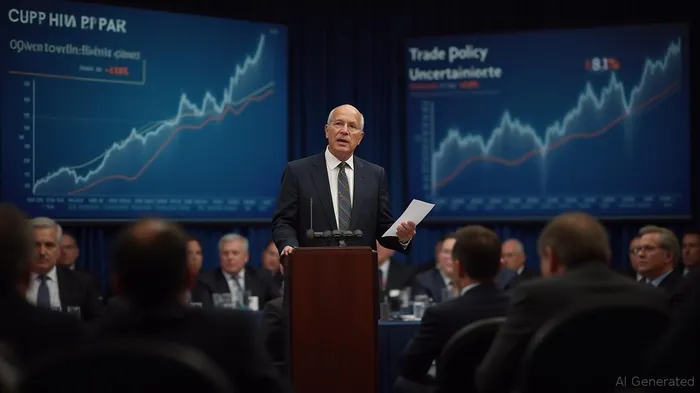
Federal Reserve Chair Jerome Powell addressed economic growth and interest rates following the latest Federal Open Market Committee meeting. Despite a strong GDP growth of 3% in the second quarter of 2025, Powell highlighted a moderation in overall economic activity through the first half of the year. He pointed out that the GDP increased at a 1.2% annual pace during the first six months, marking a slowdown from 2.5% last year. This deceleration is largely attributed to a reduction in consumer spending.
Powell noted that although quarterly figures suggested stronger growth, assessing the first half provides a more accurate picture of underlying economic trends. Despite the more robust second-quarter performance, import and export fluctuations contributed to volatility in quarterly data, warranting a broader perspective over a more extended timeframe.
On the policy front, Powell discussed the implications of ongoing trade policy uncertainty, noted particularly in relation to tariffs. These tariffs have increased the prices of certain goods, but the overall impact on the economy and inflation remains uncertain. While there might be short-term shifts in price levels due to tariffs, their potential long-lasting effects require careful analysis and management.
Powell's remarks reflect a cautious stance towards monetary policy amid these trade dynamics. He emphasized the central bank's need to remain attuned to shifts in the neutral interest rate—an essential determinant for setting policy rates consistent with full employment and stable prices. Trade uncertainties often impact productivity, driving down the neutral rate, and require that the Fed adjust policy rates to prevent unintentional tightening.
Currently, the Fed is maintaining a "modestly restrictive" policy rate, with inflation running slightly above 2%. Powell indicated that despite tariff effects, the labor market's robustness and accommodative financial conditions suggest that restrictive policy measures are unlikely causing significant constraints on economic performance. Nonetheless, Powell cautioned that downside risks to the labor market persist.
There has been no decision on a potential rate cut in September. Maintaining stable rate levels since December reflects ongoing geopolitical tensions and tariff-related volatility's uncertain impacts. Powell underlined that the Fed would not respond reactively to trade-induced supply-side price changes as its influence over these dynamics is limited, focusing instead on the demand side.
Powell's address elucidated the complex interplay between geopolitical factors, economic indicators, and monetary policy. While keeping rates unchanged at 4.25-4.5% at the recent meeting, he acknowledged that a "wait-and-see" approach amid falling neutral rates might unintentionally constrict economic growth. Furthermore, Powell laid emphasis on the importance of monitoring tariffs' broader economic impact, as their effect on inflation could either be transient or persistent.
Despite potential short-lived impacts on prices from tariffs, Powell remains vigilant about longer-term inflation risks and economic activity. His speech underscored the central bank's caution in navigating uncertain economic conditions without overreacting to supply-driven variables.

Stay ahead of the market.
Get curated U.S. market news, insights and key dates delivered to your inbox.


AInvest
PRO
AInvest
PRO



Comments
No comments yet