
Powell Reaffirms Leadership Tenure as Markets Remain Unfazed by Resignation Speculation
 Aime Summary
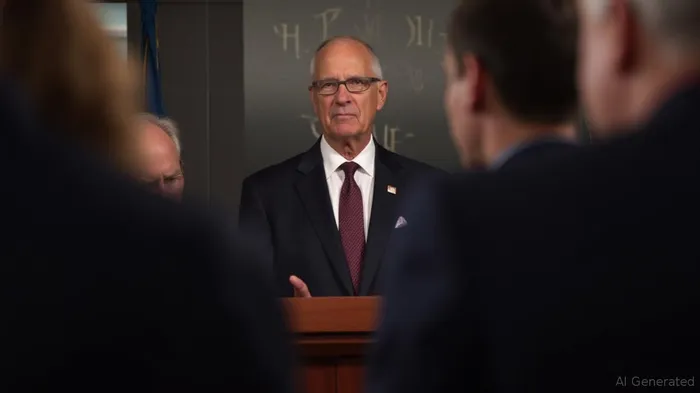
Jerome Powell, chair of the U.S. Federal Reserve, has reaffirmed his commitment to maintaining leadership stability as speculation about his resignation intensified in recent weeks. On July 22, 2025, Powell addressed banking sector resilience at a public conference, stating he has no plans to step down from his role. Official communications from the Fed have confirmed no changes to his tenure, which is scheduled to expire in May 2026. The absence of leadership adjustments has been met with calm in financial markets, where both traditional assets and cryptocurrencies have shown no significant volatility linked to the rumors.
President Donald Trump publicly endorsed Powell’s continuation, emphasizing the need for continuity in central banking policies. Market observers noted that core cryptocurrencies like BitcoinBTC-- (BTC) and EthereumETH-- (ETH) retained their pre-rumor performance metrics, with on-chain data reflecting stable activity levels. Analysts attributed the muted market response to Powell’s track record of maintaining institutional credibility, even amid political scrutiny. Institutions and crypto industry figures have also reported no substantive discussions about Fed governance instability, underscoring confidence in the central bank’s operational framework.
While historical precedents show resignation speculation can trigger short-term market fluctuations, the current environment appears insulated from such impacts. Powell’s recent public statements have prioritized regulatory refinements for large banks, emphasizing capital adequacy and risk management. “We need our large banks to be well capitalized and to manage their key risks well,” he remarked, reiterating the Fed’s commitment to its dual mandate of price stability and maximum employment. The chair also highlighted the Fed’s openness to evolving its regulatory approach, a stance analysts interpret as a signal of adaptability amid economic uncertainties.
Debates about Powell’s future have centered on concerns about the Fed’s political neutrality. Prominent critics, including former Treasury Secretary Neel Kashkari and economist Mohamed El-Erian, have argued that prolonged leadership under a polarized political climate risks politicizing the central bank. Kashkari, a potential successor candidate, has called for internal reforms to strengthen the Fed’s governance structure, while El-Erian has suggested resignation could preserve institutional independence. However, Powell’s continued tenure appears to align with broader market expectations for stability, with analysts forecasting minimal disruption unless leadership changes occur.
The Fed’s upcoming policy decisions on interest rates and inflation management will remain pivotal in shaping perceptions of its leadership. Powell’s term as a Fed governor extends through 2028, creating a potential overlap with a successor to ensure a gradual transition. Critics and supporters alike acknowledge the challenges of balancing the Fed’s independent mandate with external pressures from policymakers. For now, the central bank’s focus remains on its economic objectives, with Powell’s leadership continuity serving as a stabilizing factor in both traditional and digital financial ecosystems.
Analysts project that the absence of immediate resignation plans will sustain market confidence in the Fed’s institutional resilience. While the debates over leadership and governance persist, Powell’s emphasis on regulatory improvements and market stability has reinforced the Fed’s role as a key architect of economic policy. The outcome of these discussions will likely influence the central bank’s long-term credibility and its ability to navigate an increasingly complex financial landscape.

Stay ahead of the market.
Get curated U.S. market news, insights and key dates delivered to your inbox.


AInvest
PRO
AInvest
PRO



Comments
No comments yet