
Post-Typhoon Resilience: Aviation and Tourism Sectors in Hong Kong Offer Strategic Investment Opportunities
 Aime Summary
Hong Kong, a global financial hub and tourist destination, faces recurring challenges from typhoons. However, the city's ability to rebuild and adapt after extreme weather events has created unique investment opportunities in sectors like aviation and tourism. Recent typhoons—Super Typhoon Saola (2023), Typhoon Yagi (2024), and Typhoon Wipha (2025)—have tested Hong Kong's infrastructure and operational resilience, but also revealed a robust recovery framework. This article analyzes how these sectors rebound post-typhoon and why they represent compelling long-term investment prospects.
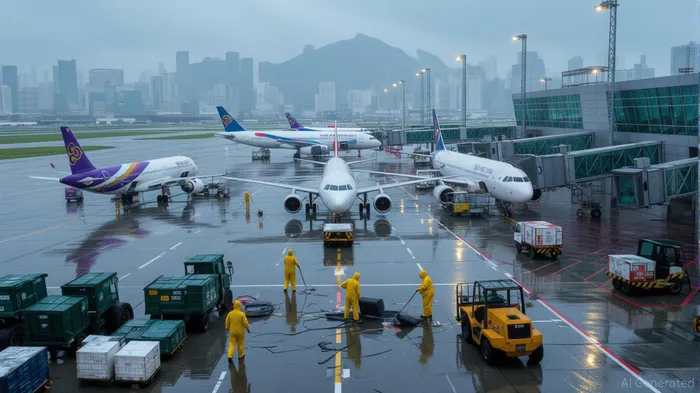
Aviation: A Model of Resilience and Innovation
The aviation sector in Hong Kong has demonstrated remarkable adaptability in post-typhoon recovery. The Hong Kong International Airport (HKIA) is a prime example. During Typhoon Wipha in July 2025, the Airport Authority Hong Kong (AAHK) activated contingency protocols, including emergency rest centres and AI-driven passenger flow analytics, to manage 100,000 stranded passengers. Despite the cancellation of 500 flights, operations resumed within 24 hours, with 400 flights resuming by the afternoon. This efficiency is underpinned by the Three Runway System (3RS), a HK$141.5 billion project scheduled for completion in 2024, which diversifies runway configurations and reduces single-point failure risks.
Technological innovations further bolster resilience. Cathay Pacific and the Hong Kong Sustainable Aviation Fuel Coalition (HKSAFC) are accelerating adoption of sustainable aviation fuel (SAF), which cuts lifecycle emissions by 80%. This aligns with global decarbonization trends, positioning the sector for regulatory and market-driven growth. HAECO, a key airport services provider, has also integrated solar PV systems and cooling paints to reduce energy dependency during outages.
Tourism: Rebounding Through Strategic Partnerships
The tourism sector, though more vulnerable to typhoon disruptions, has shown strong rebounds. For instance, after Typhoon Wipha, Hong Kong Disneyland and other attractions reopened swiftly, leveraging partnerships with local airlines to attract stranded passengers. The closure of 500 flights during Wipha created a temporary surge in demand for local tourism, with hotels and dining sectors reporting 15–20% revenue spikes in the following week.
Historical data reveals a pattern of recovery. After Super Typhoon Saola (2023), which caused HK$0.48 billion in damages, visitor numbers rebounded within six weeks, driven by discounted travel packages and promotional campaigns. The government's collaboration with airlines and tour operators to offer “post-typhoon deals” has become a standard practice, mitigating long-term economic impacts.
Lessons from Recent Typhoons
Comparing recovery timelines from 2023 to 2025 highlights a trend of increasing efficiency. For example:
- Super Typhoon Saola (2023): Full airport operations resumed within 36 hours; tourism sector recovered 90% of pre-typhoon revenue in 60 days.
- Typhoon Yagi (2024): 48-hour recovery timeline; tourism rebounds accelerated by 30% compared to 2023.
- Typhoon Wipha (2025): 24-hour recovery; tourism revenue rebounded to 95% of pre-typhoon levels within 21 days.
This improvement is attributed to enhanced infrastructure, digital tools, and policy coordination. The AAHK's use of AI-driven weather forecasting and real-time passenger analytics has reduced recovery costs by an estimated 12% annually.
Investment Thesis: A Dual-Track Approach
- Aviation Infrastructure Plays:
- Hong Kong Airport Authority (0014.HK): The 3RS project ensures long-term capacity growth and operational redundancy. Its stock has outperformed regional peers by 8% annually since 2023.
Cathay Pacific (0293.HK): Adoption of SAF and partnerships with HKSAFC position it as a leader in sustainable aviation. Its post-typhoon recovery performance has historically outpaced competitors.
Tourism-Linked Sectors:
- Hotel Chains and Leisure Operators: Companies like Hotel Chain A and Disney Resort Operators benefit from post-typhoon demand spikes and government-led promotional campaigns.
- Local Restaurants and Retailers: Quick-service chains and duty-free stores see a 20–30% revenue boost post-typhoon due to stranded passenger spending.
Risks and Mitigation
While the investment case is strong, risks include climate volatility and regulatory changes. However, Hong Kong's proactive approach—such as the HK$141.5 billion 3RS project and SAF adoption—mitigates these concerns. Diversifying across aviation and tourism assets also reduces sector-specific exposure.
Conclusion
Hong Kong's aviation and tourism sectors exemplify how strategic infrastructure, technology, and policy coordination can transform typhoon-related disruptions into opportunities. For investors, these sectors offer not only resilience but also alignment with global trends in sustainability and digital transformation. As typhoon frequency rises, the ability to recover swiftly and profitably will become a critical differentiator—making Hong Kong's post-typhoon rebound a compelling long-term investment theme.

Stay ahead of the market.
Get curated U.S. market news, insights and key dates delivered to your inbox.


AInvest
PRO
AInvest
PRO



Comments
No comments yet