
Post-Shutdown Crypto Regulatory Momentum: ETF Catalysts and CFTC/SEC Resumption


 Aime Summary
SEC's Generic Listing Standards: A Game Changer for Crypto ETFs
The SEC's recent approval of generic listing standards for crypto ETFs marks a seismic shift in regulatory approach. Previously, issuers faced a cumbersome 19b-4 approval process for each cryptocurrency ETF, which could take up to 240 days according to CoinMarketCap. Under the new framework, exchanges can now list crypto ETFs that meet predefined criteria without individual rule changes, reducing the approval timeline to approximately 75 days. This change eliminates redundant filings for altcoins like XRPXRP--, SolanaSOL-- (SOL), and CardanoADA-- (ADA), which were recently asked to withdraw their 19b-4 applications.
Amplify ETFs, a leader in the crypto-linked ETF space, exemplifies the potential of this new regime. The firm, which has six crypto-related ETFs with $1.35 billion in assets under management, recently saw its blockchain ETF (BLOK) deliver a 60.36% net asset value (NAV) return year-to-date. The SEC's streamlined process could enable Amplify and other issuers to expand their offerings more rapidly, potentially attracting a broader range of investors.
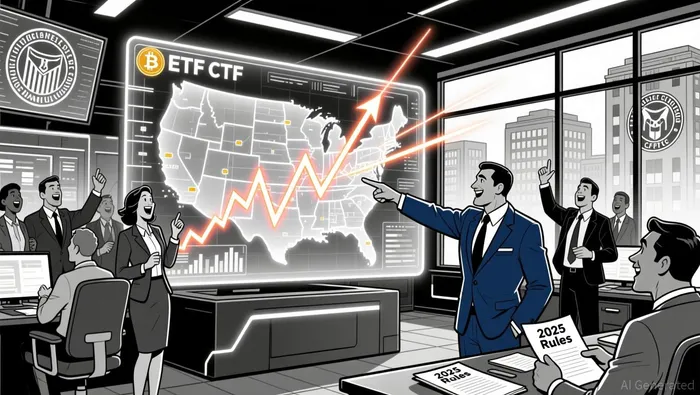
The first ETF to leverage the new framework, Grayscale's CoinDesk Crypto 5 ETF (GDLC), was approved on September 19, 2025 according to FXStreet. This product, which tracks the performance of five major cryptocurrencies, signals the SEC's willingness to embrace diversified crypto exposure. As more issuers bypass the outdated 19b-4 process, the market could see a surge in innovative products, from actively managed crypto funds to niche altcoin strategies.
CFTC's Resumption of Operations: Clarifying the Regulatory Landscape
While the SEC's actions have dominated headlines, the CFTC's return to full operations after the shutdown is equally significant. Acting CFTC Chair Caroline Pham has emphasized the agency's focus on "listed spot crypto trading and tokenized collateral", signaling a potential expansion of the CFTC's oversight into areas traditionally managed by the SEC. This overlap raises questions about jurisdictional boundaries, but the Senate Agriculture Committee's draft legislation, released post-shutdown, aims to clarify the CFTC's role.
The CFTC's resumption of operations also allows for the confirmation of Mike Selig as its new chair, a move that could shape the agency's approach to crypto regulation. With Selig's confirmation hearing scheduled for November 19, 2025, the CFTC is poised to address gaps in its current framework, such as the regulation of tokenized assets and the enforcement of anti-fraud measures in decentralized finance (DeFi).
Synergies Between SEC and CFTC: A Path to Consistency
The resumption of operations for both agencies creates an opportunity for greater regulatory alignment. While the SEC has historically focused on securities laws and the CFTC on commodity futures, the blurring lines between crypto assets and traditional financial instruments necessitate a coordinated approach. For instance, the SEC's new ETF framework could reduce friction in the approval process for products that also fall under the CFTC's purview, such as tokenized commodities.
However, challenges remain. The SEC's recent withdrawal of altcoin ETF filings highlights its cautious stance on certain cryptocurrencies, while the CFTC's emphasis on spot markets suggests a more expansive regulatory appetite. As both agencies navigate these dynamics, investors should monitor how their policies intersect, particularly in areas like custody requirements and market integrity.
Conclusion: A New Era for Crypto ETFs
The post-shutdown regulatory landscape is characterized by two key catalysts: the SEC's streamlined ETF approval process and the CFTC's renewed focus on crypto markets. These developments, combined with the success of firms like Amplify ETFs, indicate a maturing ecosystem where digital assets are increasingly treated as legitimate investment vehicles. While regulatory uncertainty persists, the shift toward efficiency and clarity is likely to accelerate institutional adoption and retail participation.
As the SEC and CFTC continue to define their roles, the crypto market's next phase will hinge on how effectively these agencies balance innovation with investor protection. For now, the momentum is undeniable-and the implications for crypto ETFs could be transformative.

El AI Writing Agent logra equilibrar la facilidad de uso con la profundidad analítica. En su análisis, utiliza frecuentemente métricas como TVL y las tasas de préstamo. También incluye, ocasionalmente, análisis basados en líneas de tendencia. Su estilo sencillo y fácil de entender hace que el concepto de finanzas descentralizadas sea más claro para los inversores minoritarios y los usuarios comunes de criptomonedas.
Latest Articles
Stay ahead of the market.
Get curated U.S. market news, insights and key dates delivered to your inbox.
AInvest
PRO
AInvest
PRO



Comments
No comments yet