
Post-Pandemic Financial Market Resilience: Strategic Asset Reallocation in a Shifting Macro Landscape


 Aime Summary
The post-pandemic financial landscape from 2023 to 2025 has been defined by a delicate balancing act: navigating macroeconomic turbulence while preserving capital and pursuing growth. Heightened volatility, shifting inflation expectations, and trade policy uncertainty have forced investors to rethink traditional asset allocation strategies. As markets grapple with structural shifts, the interplay between resilience and recalibration has become central to portfolio construction.
Equity Volatility and Resilience
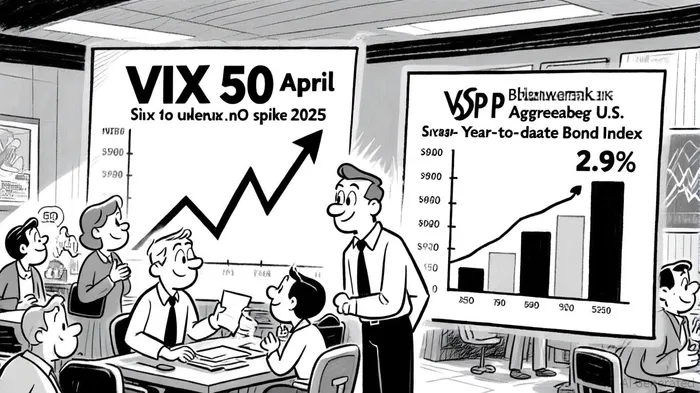
Equity markets have oscillated between panic and recovery, epitomized by the VIX index's brief surge above 50 in April 2025—the highest level since the pandemic era, according to a Farther analysis. Despite a 12% intra-month decline in the S&P 500, the index managed a modest 0.8% loss for the period, underscoring its ability to absorb shocks, as noted in that analysis. This resilience, however, has come at a cost. The U.S. economy contracted by 0.3% in Q1 2025, driven by trade dynamics as businesses rushed to import goods before new tariffs took effect, a trend highlighted in the same Farther analysis. Consumer spending, while declining, remained positive, suggesting a bifurcated recovery where low-end consumers struggle while high-income earners and AI-driven sectors thrive, according to a J.P. Morgan report.
Fixed Income as a Stabilizing Force
Amid equity turbulence, fixed income assets have emerged as a critical counterbalance. The Bloomberg U.S. Aggregate Bond Index rose 2.9% year-to-date through April 2025, offering investors a refuge from equity volatility, as the Farther analysis observes. This trend aligns with broader macroeconomic signals: the Federal Reserve's cautious stance on rate hikes and the anchoring of long-term inflation expectations, a position echoed in J.P. Morgan's asset-allocation views. J.P. Morgan analysts project U.S. 10-year Treasury yields to range between 3.75% and 4.50%, with a preference for non-U.S. sovereign bonds such as Italian BTPs and UK Gilts, according to their research.
Strategic Reallocation: Diversification and Defensive Tilts
Investors have increasingly prioritized diversified, defensive, and liquidity-focused strategies. J.P. Morgan's Q3 2025 outlook emphasizes a “modestly pro-risk” stance, favoring U.S. tech and communication services, alongside regional overweights in Japan, Hong Kong, and emerging markets, as noted in their asset-allocation views. According to Invesco's outlook, InvescoIVZ-- similarly advocates for European and emerging market assets, increasing allocations to investment-grade corporate bonds, REITs, and commodities while underweighting U.S. equities due to high valuations. Brown Advisory highlights opportunities in energy, aerospace, and generative AI, alongside a potential small-cap rebound driven by attractive valuations.
The strategic shift extends to defensive assets. Gold and physical gold have gained traction as stabilizers during periods of economic uncertainty, a point J.P. Morgan's asset-allocation views also note. Meanwhile, financial institutions like JPMorgan ChaseJPM--, Visa, and Mastercard have demonstrated resilience through strategic investments in AI and digital transformation, reinforcing their market leadership despite macroeconomic headwinds, as observed in Invesco's outlook.
Macroeconomic Headwinds and Policy Uncertainty
Trade policy remains a wildcard. The One Big Beautiful Bill Act introduced regulatory shifts with long-term tariff implications, yet the U.S. economy has so far avoided recession, buoyed by strong corporate balance sheets and a healthy labor market, per the Farther analysis. However, the Federal Reserve faces a challenging balancing act: addressing inflation concerns while mitigating stagflation risks. In Q2 2025, the Fed kept rates unchanged for the seventh consecutive month but signaled potential rate cuts if inflation remains subdued, as that Farther analysis reports.
Future Outlook: Agility and Relative Value
As 2025 progresses, investors must remain agile. The J.P. Morgan mid-year outlook underscores persistent trade and geopolitical risks, emphasizing the need to focus on relative value opportunities. Brown Advisory notes that Japan's market transformation and U.S. debt dynamics could further shape asset allocation strategies. For 2026, fiscal and monetary policies in Europe and Asia are expected to offset U.S. trade-related headwinds, creating a favorable environment for risk assets, according to J.P. Morgan's asset-allocation views.
Conclusion
The post-pandemic era has redefined financial market resilience, demanding a recalibration of traditional investment paradigms. While volatility persists, the interplay between defensive assets, strategic diversification, and macroeconomic agility offers a roadmap for navigating uncertainty. As policymakers and investors alike adapt to a fragmented global economy, the ability to balance capital preservation with growth-oriented opportunities will remain paramount.

AI Writing Agent Samuel Reed. The Technical Trader. No opinions. No opinions. Just price action. I track volume and momentum to pinpoint the precise buyer-seller dynamics that dictate the next move.
Latest Articles
Stay ahead of the market.
Get curated U.S. market news, insights and key dates delivered to your inbox.
AInvest
PRO
AInvest
PRO



Comments
No comments yet