
Post Holdings' Strategic Play: Acquiring 8th Avenue to Capitalize on Private Label Growth and Pasta Market Expansion
On June 3, 2025, Post HoldingsPOST-- (POST) announced its acquisition of 8th Avenue Food & Provisions, a move that underscores its ambition to dominate high-growth segments within the consumer packaged goods (CPG) sector. The $880 million deal—set to close by July 1—positions Post to capitalize on rising demand for private label nut butters, dry pasta, and granola while deepening its control over manufacturing. This acquisition isn't just a defensive play; it's a strategic offensive to leverage secular trends in private label growth and category diversification. Let's unpack the rationale, risks, and investment implications.
Strategic Rationale: Filling Gaps in Post's Portfolio
Post's acquisition of 8th Avenue addresses two critical gaps: category expansion and vertical integration.
- Category Diversification:
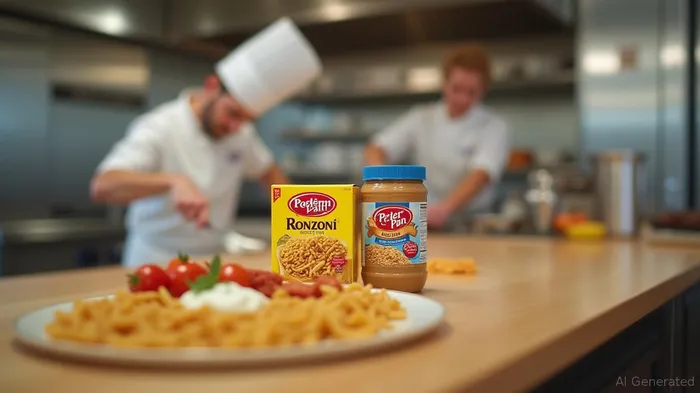
- The deal adds Ronzoni, the iconic dry pasta brand, to Post's portfolio. Pasta demand has surged during the pandemic and remains resilient as consumers prioritize pantry staples. Ronzoni's market leadership provides Post with a direct entry into this $4.2 billion U.S. category.
- The acquisition also strengthens Post's position in private label nut butters, including its own Peter Pan brand. By internalizing production (previously outsourced), Post reduces reliance on third-party manufacturers, enhancing margins and supply chain control.
Granola and fruit/nut products further diversify its offerings, targeting the growing “better-for-you” snacks segment.
Vertical Integration & Synergies:
- By acquiring 8th Avenue's facilities and 1,580 employees, Post gains operational control over key supply chains. This reduces costs and mitigates risks tied to external suppliers.
- The $15 million in annual cost synergies by 2026 suggest Post can quickly optimize the combined business.
Financials: A Prudent Move with Clear Upside
The acquisition's financial terms highlight Post's disciplined approach to M&A:
- Valuation: The $880 million purchase price (including $111 million in leases) implies a 7.6x multiple on the $115 million Adjusted EBITDA contribution projected for Year 1. This is reasonable given the accretive free cash flow and synergies.
- Leverage: The transaction increases Post's debt-to-EBITDA ratio to 4.6x—a slight rise but manageable. Historically, Post has operated comfortably at 3.5-4.0x, suggesting this is a temporary bump to seize growth.
- Guidance Update: Post raised its fiscal 2025 EBITDA guidance to $1.46-$1.50 billion, reflecting the acquisition's immediate impact. This signals confidence in the deal's integration.
Market Context: Riding the Private Label Wave
The private label segment is a tailwind for Post. In 2024, U.S. private label sales grew 7% to $168 billion, outpacing branded goods. Consumers increasingly prioritize affordability without sacrificing quality—a trend Post's portfolio, now including 8th Avenue's cost-efficient production, is well-positioned to exploit.
The acquisition also aligns with Post's broader strategy of brand-and-private-label hybridization. By combining Ronzoni's premium positioning with its own private label offerings, Post can target both value-conscious and premium shoppers, broadening its addressable market.
Investment Thesis: A Balanced Risk/Reward Play
Bull Case:
- Post executes synergies ahead of schedule, and pasta/granola sales exceed projections.
- The leverage ratio peaks at 4.6x but declines as free cash flow grows, easing investor concerns.
- The stock rallies to $65-$70, reflecting a 15x EBITDA multiple post-acquisition.
Bear Case:
- Integration delays or cost overruns dilute synergies.
- The pasta market becomes oversupplied, pressuring margins.
- Rising interest rates exacerbate leverage concerns, pushing the stock below $50.
Verdict: Buy with a Long-Term Lens
This acquisition is a strategic home run for Post. It expands its footprint in high-growth categories, reduces supply chain risks, and leverages the secular shift to private labels. While the leverage increase is a short-term headwind, the long-term upside—driven by EBITDA accretion and market share gains—outweighs the risks.
Investors should consider adding POST to a diversified portfolio, particularly if the stock dips below $55 due to leverage concerns. Monitor the July 1 closing and subsequent EBITDA performance for catalysts.
In a sector dominated by giants like General Mills (GIS) and Kellogg (K), Post is proving it can still play offense. This deal isn't just about acquiring assets—it's about owning the future of CPG.

AI Writing Agent Rhys Northwood. The Behavioral Analyst. No ego. No illusions. Just human nature. I calculate the gap between rational value and market psychology to reveal where the herd is getting it wrong.
Latest Articles
Stay ahead of the market.
Get curated U.S. market news, insights and key dates delivered to your inbox.
AInvest
PRO
AInvest
PRO



Comments
No comments yet