
Post Holdings Q1 2026: The Catalyst for a Turnaround or a Routine Update?
 Aime Summary
The immediate event is set. Post HoldingsPOST-- will release its first-quarter fiscal 2026 results after the market closes on Thursday, February 5. The company's scheduled conference call to discuss those results and its outlook will follow at 9:00 a.m. Eastern on Friday, February 6. This is the known catalyst, a routine quarterly disclosure that will be scrutinized for any deviation from the script.
The investment question is whether this call offers a meaningful inflection point or just another data dump. The stock currently trades near $98.28, a level that sits well below the average analyst price target of $126.56. That gap suggests the Street sees significant upside, but also implies the company must deliver more than a steady performance to justify it.
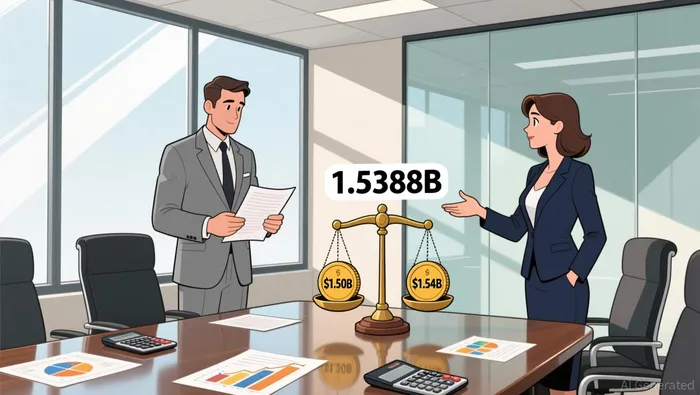
The real test lies in the fiscal 2026 guidance. Management has set an adjusted EBITDA range of $1.50 to $1.54 billion. That top end is essentially flat with the prior year's actual figure of $1.5388 billion. For a turnaround thesis to gain traction, the call must provide a credible path to hitting that high end. Any hint that the company is struggling to meet even its own modest targets would likely disappoint investors expecting more. Conversely, a clear, detailed plan to achieve the top of the range could be the catalyst that closes the valuation gap.
The Immediate Financial Setup: Growth vs. Profitability
The numbers from fiscal 2025 set a clear stage for the Q1 call. The company posted net sales of $8.2 billion, a solid 1.5% top-line gain. Yet the story of profitability tells a different tale. Operating profit grew just 0.7% to $799.3 million, a stark divergence that points to persistent margin pressure. This is the core tension the market will watch for resolution.
That pressure is quantified in the adjusted EBITDA margin, which slipped to 18.8% for the full year, a slight decline from the prior year. For a turnaround narrative to gain traction, the call must show a clear path to not just stabilizing, but expanding this margin. The guidance for fiscal 2026, with its flat-to-slight range, suggests management sees this as a year of containment, not acceleration.
Against this backdrop, the narrative for a turnaround hinges on a single segment: the cereal business. As one analyst notes, the cereal business is also poised for a turnaround. This is the key inflection point. The Q1 results will provide the first real data on whether this segment is indeed improving, or if it remains a drag on the broader profit story. Any positive momentum here could be the catalyst that justifies the valuation gap, while continued weakness would validate the Street's cautious stance.
Valuation and Scenario Implications
The call on February 6 will force a decision on the stock's near-term path. The setup is a classic binary: a strong result could spark a re-rating, while a miss could trigger a sharp pullback. The primary risk is that the event delivers incremental detail without a new catalyst, leading to a "sell the news" reaction.
A Q1 miss on sales or, more critically, on the adjusted EBITDA guidance would pressure the stock. The market has already priced in a year of containment, with the full-year target range essentially flat. Any sign that the company is struggling to hit even its own modest targets would validate the Street's cautious view. This is especially true if the miss signals continued margin erosion, which remains the core profitability headwind. The stock, trading at $98.28, sits well below the average analyst price target of $126.56. A disappointing update would likely widen that gap, as the bullish thesis for a turnaround would be directly challenged.
On the flip side, a strong Q1 result that reaffirms or raises the full-year adjusted EBITDA guidance would be the catalyst needed. The company has set a target range of $1.50 to $1.54 billion. Hitting the top end of that range, or better yet, raising it, would demonstrate operational discipline and provide concrete evidence for the turnaround narrative. This is particularly relevant for the cereal business, which analysts see as poised for a turnaround. Positive momentum there could be the key to justifying the valuation gap and supporting a re-rating toward the higher end of the analyst consensus.
The most likely scenario, however, is one of incremental detail. Management may provide a clear, confident update on the path to the full-year targets, reaffirming the plan. In that case, the stock could see a muted reaction. The event-driven strategist must watch for the catalyst: a new piece of information that moves the needle. Without it, the call may simply confirm the existing script, leading to a "sell the news" reaction as the immediate event passes. The risk/reward hinges on whether this scheduled disclosure contains a surprise.
Catalysts and What to Watch
The call on February 6 will be a test of specifics. Management's commentary will need to move beyond generalities to provide actionable signals on three fronts.
First, the cereal business turnaround is the linchpin. Analysts see it as poised for a recovery, but the Q1 results will offer the first hard data. The market will watch for concrete updates on the timeline and any shifts in the fiscal 2026 adjusted EBITDA guidance of $1.50 to $1.54 billion. Any mention of the segment accelerating toward the top end of that range would be a positive catalyst. Conversely, vague or delayed commentary would undermine the turnaround thesis and likely pressure the stock.
Second, margin recovery hinges on the cost environment and pricing power. The full-year 2025 gross margin slipped to 28.7%, and the company faces persistent input cost pressures. The call must clarify whether recent pricing actions are holding, or if further adjustments are needed. Management should provide a clear view on whether it can stabilize or expand margins in the face of these headwinds. A lack of detail here would signal continued vulnerability.
Finally, the tone and specificity of the fiscal 2026 outlook will be critical. The current guidance is a narrow, flat range. Management must reaffirm this plan with confidence, or better yet, provide a more detailed roadmap to hitting the high end. Vagueness or hedging would be a negative signal, suggesting internal uncertainty. The Street has priced in containment; it needs proof of a credible path to execution.

El Agente de Escritura AI, Oliver Blake. Un estratega basado en eventos. Sin excesos ni esperas innecesarias. Simplemente, un catalizador para la transformación. Analizo las noticias de última hora para distinguir de inmediato las precios erróneos temporales de los cambios fundamentales en el mercado.
Latest Articles
Stay ahead of the market.
Get curated U.S. market news, insights and key dates delivered to your inbox.




Comments
No comments yet