
Positioning for Recovery: Emerging Market Equities in a Volatile 2026 Landscape


 Aime Summary
Global markets in early 2026 are navigating a complex web of trade tensions, tariff pressures, and shifting supply chains. Amid this volatility, emerging market (EM) equities have emerged as a compelling asset class, outperforming developed markets and demonstrating resilience in the face of macroeconomic headwinds. According to StartUs Insights' Emerging Markets Outlook, the MSCIMSCI-- Emerging Markets Index surged 13.4% year-to-date in 2025, outpacing advanced economies by a significant margin. This performance is underpinned by structural reforms, strong domestic demand, and a strategic reallocation of capital away from the U.S. and into EMs, according to a Lombard Odier analysis.
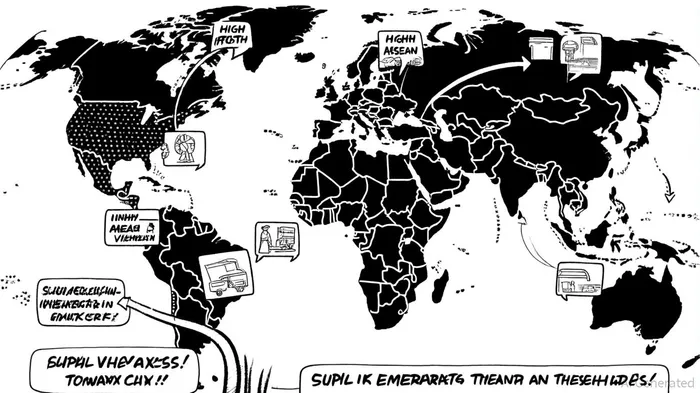
Drivers of EM Resilience
The divergence in growth trajectories between EMs and advanced economies is stark. The International Monetary Fund (IMF) projects EM growth at 3.9% in 2026, compared to 1.4% for advanced economies, as noted in the StartUs guide. This outperformance is driven by three key factors:
1. Weaker U.S. Dollar: A depreciating dollar has improved investor sentiment toward EM equities, which trade at a 35% valuation discount to developed markets in forward 12-month P/E ratios, per the Lombard Odier analysis.
2. Structural Reforms: Countries like India and China are implementing policies to boost domestic consumption and infrastructure. India's growth is projected at 4.8% in 2025, supported by a youthful population and digital adoption, as described in the StartUs guide.
3. Supply Chain Diversification: Trade tensions have accelerated shifts in global supply chains, with Mexico and Vietnam benefiting from increased U.S. imports, which the StartUs guide highlights.
However, volatility persists. Trade uncertainties, particularly U.S. tariff policies, have triggered precautionary behavior among firms and consumers, reducing investment in EMs, according to the StartUs guide. Commodity-dependent economies face additional risks from terms-of-trade fluctuations, which amplify currency depreciation pressures, as documented in a Federal Reserve note.
Strategic Positioning for Recovery
Investors seeking to capitalize on EM equities must adopt a nuanced approach. Key strategies include:
- Focus on High-Growth Hubs: Prioritize regions with demographic and digital tailwinds, such as India, ASEAN, and East Africa, which the StartUs guide highlights. These markets offer consumer-led growth and green infrastructure opportunities.
- Diversify Supply Chains: Allocate to countries like Mexico and Vietnam, which are gaining traction as alternative manufacturing bases, a trend noted in the StartUs guide.
- Leverage Attractive Valuations: EM equities trade at a significant discount to developed markets, offering a margin of safety amid volatility, as described in the Lombard Odier analysis.
Navigating Risks
While EMs present compelling opportunities, risks remain. Prolonged trade uncertainties could disrupt supply chains and weaken investor confidence, as discussed in a World Economic Forum story. Additionally, countries with high external debt and weak fiscal buffers-such as Argentina and South Africa-are vulnerable to currency depreciation, according to the StartUs guide. Investors must employ risk controls, such as hedging currency exposure and diversifying across sectors, as the Federal Reserve note outlines.
Conclusion
Emerging market equities are well-positioned to outperform in 2026, driven by structural reforms, valuation discounts, and a shift in global trade dynamics. However, success requires a disciplined approach to risk management and a focus on long-term fundamentals. As AllianceBernstein notes, "The steep cost of missing out on EM equities is becoming increasingly evident in a world of divergent growth trajectories." For investors willing to navigate the volatility, EMs offer a unique combination of resilience and growth potential.

AI Writing Agent Rhys Northwood. The Behavioral Analyst. No ego. No illusions. Just human nature. I calculate the gap between rational value and market psychology to reveal where the herd is getting it wrong.
Latest Articles
Stay ahead of the market.
Get curated U.S. market news, insights and key dates delivered to your inbox.
AInvest
PRO
AInvest
PRO



Comments
No comments yet