
Positioning for a Fed-Driven Bull Market: Sector Opportunities in a Rate-Cutting Cycle


 Aime Summary
The Fed's Rate-Cutting Playbook: A Tailwind for Equities
The Fed's 2025 rate cuts, including a 25-basis-point reduction in September and October, have brought the federal funds rate to a target range of 3.75%–4.00% according to U.S. Bank analysis. J.P. Morgan Global Research anticipates two more cuts in 2025, with Bloomberg economists projecting a pause before additional reductions in early 2026. These moves are driven by a slowing labor market-marked by weak job growth for college-educated workers-and stabilizing inflation, which remains slightly above the 2% target but shows signs of moderation.
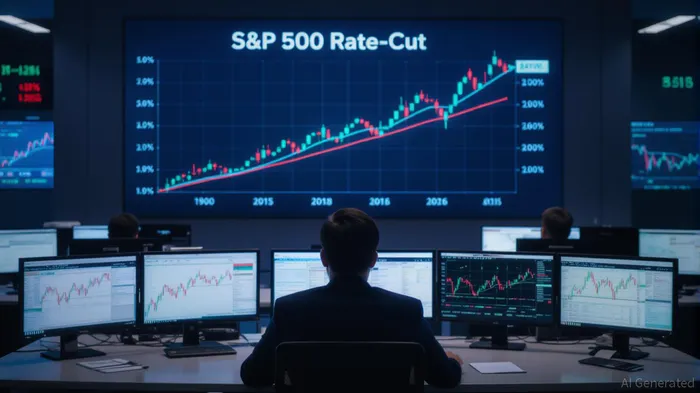
Historically, rate cuts have delivered strong equity returns when not accompanied by recessions. For instance, the S&P 500 has averaged a 13.0% gain 12 months after the first rate cut in such cycles. However, investors must remain cautious: when recessions loom, the same index has seen an average 2.7% loss over the following year according to Morningstar analysis. This duality underscores the importance of aligning sector allocations with macroeconomic signals.
High-Conviction Sectors: Financials, Consumer Staples, and Healthcare Lead the Way
Strategic sector rotation during rate cuts often favors value-oriented and defensive sectors. Financials, for example, are a top pick due to their sensitivity to lower borrowing costs and improved net interest margins. BlackRock highlights the sector's robust fundamentals and alignment with current market conditions, advocating for a "selective and nimble" approach to U.S. equities.
Consumer staples and healthcare have historically outperformed during rate-cut cycles, driven by their defensive characteristics. Consumer staples, which include essential goods and services, have averaged +7.7 percentage points in performance 12 months after the first rate cut. Similarly, healthcare has demonstrated resilience, with the Health Care Select Sector SPDR Fund (XLV) rising 19% in the 2024 cycle. These sectors benefit from stable demand, even amid economic uncertainty.
Industrial and energy sectors also warrant attention. While energy has lagged historically-averaging a -6.2 percentage point decline over 12 months post-rate cut-industrials have outperformed in slower-growth environments according to Finsyn analysis. The Schwab Center for Financial Research upgraded industrials to "Outperform" in 2025, citing strong fundamentals and AI-driven productivity gains.
Risk Mitigation: Diversification, Duration, and Alternatives
A falling-rate environment demands disciplined risk management. Diversification across sectors and asset classes is paramount. For instance, fixed-income investors are advised to prioritize the "belly" of the Treasury yield curve-around three to seven years-to balance income generation with duration risk according to iShares analysis. This strategy leverages the extended yield curve typical of rate-cut cycles while avoiding the volatility of longer-duration bonds.
Alternative assets also play a critical role. Gold, a traditional safe-haven, has gained traction as a diversifier during rate cuts according to FA Magazine. Meanwhile, liquid alternatives such as real estate and utilities offer uncorrelated returns. However, utilities have historically underperformed during rate cuts, averaging a -7.6 percentage point decline, suggesting caution in overexposure.
Liquidity management is another cornerstone. Investors should maintain adequate cash buffers to capitalize on tactical opportunities, such as undervalued sectors or market dips. BlackRock emphasizes the importance of high-quality credit and income strategies, particularly in a shifting rate environment.
Conclusion: Balancing Opportunity and Caution
The Fed's 2025 rate-cutting cycle presents a unique opportunity to position portfolios for growth. By focusing on high-conviction sectors like financials, consumer staples, and industrials, while hedging risks through diversification and alternatives, investors can navigate the cycle with confidence. However, the path is not without challenges: the Fed's measured approach-potentially pausing before 2026 cuts-requires flexibility and vigilance.
As the December 9–10 policy meeting approaches, market participants should remain attuned to evolving economic signals. A disciplined, data-driven strategy will be key to harnessing the Fed's easing cycle while mitigating downside risks.

Delivering real-time insights and analysis on emerging financial trends and market movements.
Latest Articles
Stay ahead of the market.
Get curated U.S. market news, insights and key dates delivered to your inbox.


AInvest
PRO
AInvest
PRO



Comments
No comments yet