
The Port of Paranaguá: A Gateway to Economic Growth and Investment Opportunities in Brazil's Logistics Sector


 Aime Summary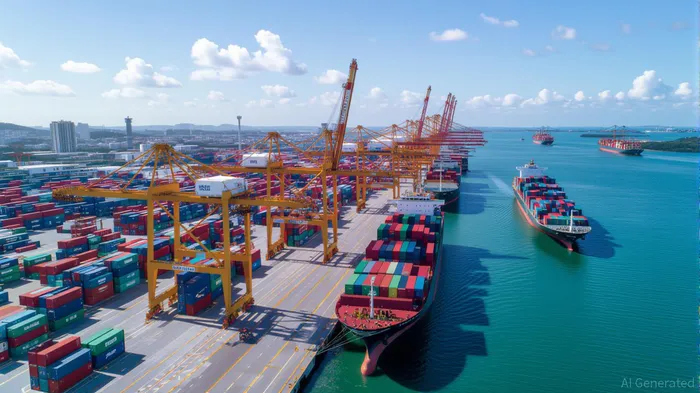
Brazil's Paraná state is on the cusp of a transformative economic leap, driven by a bold vision from Governor Carlos Massa Ratinho Jr. and a $15.5 billion infrastructure push centered on the Port of Paranaguá. This port, already the largest in Brazil, is being reimagined as a 21st-century logistics engine, with projects like the Liquipar Terminal expansion and the Moegão grain terminal poised to redefine regional trade dynamics. For investors, this is more than just a local story—it's a macroeconomic catalyst with ripple effects across global supply chains and logistics stocks.
The Infrastructure Boom: Building a Logistics Powerhouse
The Port of Paranaguá is undergoing a $15.5 billion overhaul, with the Liquipar Terminal expansion alone injecting $589 million into liquid bulk capacity. This project, now in its pre-operational phase, will handle 2 million tons annually, doubling the port's ability to export fuels, soybean oil, and fertilizers. Meanwhile, the Moegão grain terminal—67% complete with a $1.1 billion investment—will triple ship loading speeds to 8,000 tonnes per hour, slashing bottlenecks for agribusiness. These upgrades are not just about scale; they're about speed and efficiency, critical for a region that already handles 40% of Brazil's soy and corn exports.
The Eastern Export Corridor (Corex) is another linchpin. With $650 million from BNDES and $54.7 billion from the Novo PAC infrastructure plan, this corridor is spurring real estate growth and demand for cold storage and distribution centers. The synergy between port modernization and urban development is elevating land values and creating a virtuous cycle of investment.
Macroeconomic Impact: A GDP Doubling Strategy
Governor Ratinho Jr. isn't just talking about infrastructure—he's betting on it. His administration projects Paraná's GDP will double in eight years, from $715 billion in 2025 to over $1.4 trillion by 2033. This isn't pie-in-the-sky optimism; it's rooted in hard data. The state's GDP has already grown 63% since 2018, driven by a 37% contribution from agriculture and a surge in industrial and services sectors. With $300 billion in private investments since 2019 and an A+ credit rating, Paraná is a fiscal discipline poster child.
The port's role is central. By 2025, Paranaguá is expected to handle 66.77 million tons of cargo annually, with liquid bulk and grains accounting for the lion's share. This translates to higher tax revenues, 500+ jobs during construction, and a stronger supply chain ecosystem. For context, the port's efficiency gains alone could reduce Brazil's trade costs by 15%, making it a magnet for global agribusiness players like Cargill and Louis Dreyfus Company.
Investment Implications: Where to Put Your Money
The logistics sector is the obvious beneficiary. Companies like Cargill (CG) and Louis Dreyfus Company (LDC) are already sinking hundreds of millions into Paranaguá's infrastructure, ensuring they're positioned to capitalize on the port's growth. Investors should also eye regional logistics stocks, such as GOL Linhas Aéreas (GOLL4) and Vale (VALE), which stand to gain from improved cargo throughput and reduced transportation costs.
Moreover, the BNDES and Novo PAC funding streams are creating a tailwind for construction and engineering firms. Look for Brazilian contractors like Odebrecht (OBR) and Andrade Gutierrez (ANDR3), which are likely to secure contracts for port expansions and rail modernization.
The Bigger Picture: A Model for Global Logistics
Paraná's strategy mirrors the U.S. Inland Empire's transformation into a logistics hub. By combining infrastructure, fiscal discipline, and strategic partnerships, the state is positioning itself as the “Amazon of South America.” For investors, this means opportunities in:
1. Port-related equities (e.g., Cargill, Louis Dreyfus).
2. Construction and engineering firms (e.g., Odebrecht, Andrade Gutierrez).
3. Real estate in Corex, where land values are projected to rise 20% annually.
Conclusion: A Golden Opportunity
The Port of Paranaguá isn't just a regional asset—it's a linchpin in Brazil's global trade ambitions. With Ratinho Jr.'s GDP-doubling plan anchored in infrastructure, investors who act now can ride the wave of a state growing at 4–5% annually, well above the national average. This is a rare confluence of macroeconomic momentum and strategic investment, where the port's expansion isn't just moving cargo—it's moving markets.
Final Call to Action: Diversify your portfolio with logistics and infrastructure plays in Paraná. The port's growth is a harbinger of Brazil's next economic frontier—and the time to anchor your investments is now.

Delivering real-time insights and analysis on emerging financial trends and market movements.
Latest Articles
Stay ahead of the market.
Get curated U.S. market news, insights and key dates delivered to your inbox.
AInvest
PRO
AInvest
PRO



Comments
No comments yet