
Port of Los Angeles Sees 117-Year High in June Amid Tariff Surge
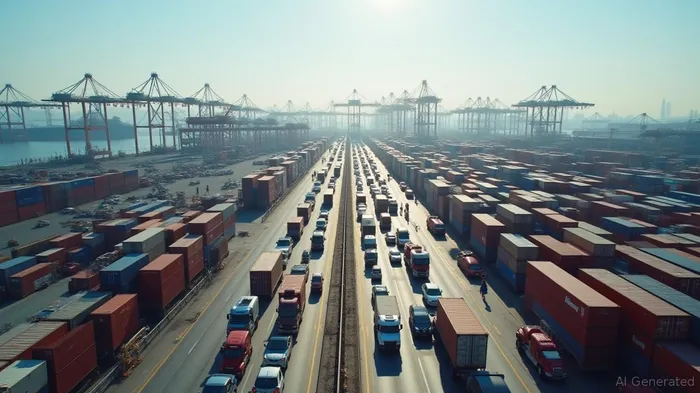
The Port of Los Angeles experienced its busiest month in 117 years during June, driven by a surge in shipping activity sparked by the fluctuating tariff policies of the United States. The port handled 892,340 standard containers, a significant increase from the same period last year. This surge in activity is attributed to businesses rushing to import goods ahead of potential tariff hikes, a phenomenon known as "rush shipping." The heightened demand has led to congestion at the port, with ships waiting for extended periods to unload their cargo. The situation has prompted concerns about potential disruptions to the supply chain and increased costs for businesses. The port's management is working to address the congestion by increasing operational efficiency and coordinating with shipping lines to manage the influx of vessels. The surge in activity at the Port of Los Angeles highlights the broader impact of trade policies on global supply chains and the need for effective management to mitigate disruptions.
This surge in shipping activity is a direct result of the "tariff whipsaw effect," where businesses accelerate their imports to avoid impending tariff increases. The port's executive director noted that while the data shows a historic high, it is not indicative of sustained growth but rather a temporary spike due to policy changes. The port had seen a significant drop in import volumes in May and early June, which was followed by a sudden increase in June as businesses rushed to beat the tariff deadline. The executive director also warned that if the tariffs are reinstated in August, import volumes could drop sharply again, as predicted by the National Retail Federation, which expects a double-digit decline in cargo volumes from August to November.
Despite the temporary relief from tariffs, businesses are already feeling the financial strain. The dual impact of tariffs on Chinese goods and stainless steel has significantly increased the cost of importing kitchen appliances. Previously, the cost of a container was between 1500 to 2000 dollars, but it has now surged to 40,000 to 50,000 dollars, placing immense pressure on corporate profits. Some importers are opting to transport only essential goods, such as back-to-school items, while others are adopting a wait-and-see approach. The extended deadline provided by the U.S. administration offers importers only a brief respite, as sea freight typically takes 20 to 30 days, and even longer for routes from Asia to the U.S. East Coast. For those who did not plan ahead, air freight remains the only, albeit expensive, alternative.
The shifting of manufacturing bases is reshaping global supply chains, forcing logistics teams to rethink transportation routes and adapt to new lead times from production sites to end markets. Despite the strong performance at the Port of Los Angeles in June, the overall slowdown in global trade provides a buffer for supply chains to adjust to these changes. The reduced demand allows the industry to absorb the transition more smoothly. However, for some companies, the tariff pressure has led to a reduction in product offerings and a temporary scaling back of orders. The uncertainty surrounding tariff policies has made it difficult for businesses to plan ahead, with some having to temporarily adjust prices in response to changing conditions. The situation underscores the need for stable trade policies to support a resilient and efficient global supply chain.

Stay ahead of the market.
Get curated U.S. market news, insights and key dates delivered to your inbox.


AInvest
PRO
AInvest
PRO



Comments
No comments yet