
Why the Port of Los Angeles' Cargo Decline Signals a Retail Sector Reset
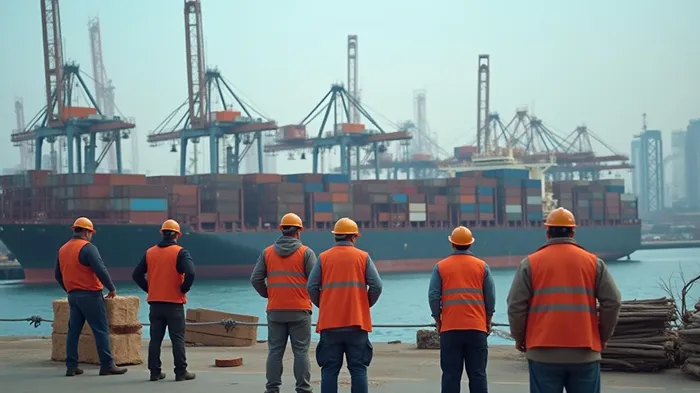
The Port of Los Angeles’ 30% cargo volume decline in early May 2025—driven by tariff volatility and trade uncertainty—marks a turning point for the retail sector. This slump is not merely a logistical hiccup but a harbinger of prolonged margin pressure for import-dependent retailers and a catalyst for investors to rotate into domestically oriented, tariff-resilient firms.
The Tariff Tsunami and Its Ripple Effects
The cargo decline is the direct result of U.S. tariffs on Chinese imports, which spiked to 145% before a temporary 90-day truce scaled them back to 30%. This volatility has triggered a “whipsaw” effect: April’s 9.4% cargo surge (driven by pre-tariff stockpiling) reversed abruptly in May, with 17 out of 80 scheduled sailings canceled and prices for Chinese goods jumping to 2.5 times April levels.
The consequences are clear:
- Retail Margin Squeeze: Companies like WalmartWMT--, which rely on low-cost imports, face a double whammy—higher input costs and price-sensitive consumers.
- Consumer Price Sensitivity: The average effective tariff rate on U.S. goods hit 17.8% in 2025, the highest since 1934, inflating prices for shoes (+15%) and apparel (+14%). This fuels demand destruction for discretionary goods.
Retail Sector Reset: Where to Pivot
Investors should shift focus to three categories of companies insulated from tariff volatility:
1. Domestic Manufacturers
Firms with U.S.-based production or supply chains avoid tariff drag. Consider industrial giants like 3M (MMM) or Caterpillar (CAT), whose domestic operations and diversified markets shield them from trade headwinds.
2. Consumer Staples with Pricing Power
Companies like Coca-Cola (KO) and Procter & Gamble (PG) dominate essential goods, allowing them to pass costs to consumers without sacrificing demand. Their stable margins are a stark contrast to retailers like Kohl’s (KSS), which saw same-store sales drop 5% in Q1 2025 amid tariff-driven inflation.
3. Technology-Driven Logistics
The Port of Los Angeles’ decline highlights the need for efficiency. Companies like XPO Logistics (XPO), which leverage automation and AI to reduce costs, are positioned to capitalize on post-tariff restructuring.
Risks and Opportunities in the Tariff Crosshairs
- Walmart (WMT): Its reliance on Chinese imports leaves it vulnerable. Even the tariff truce offers limited relief, as prices remain elevated and inventory overhangs linger.
- Auto Retailers: Higher steel and electronics costs (due to tariffs) are squeezing margins for companies like Tesla (TSLA), though its premium pricing power offers some resilience.
Conclusion: Act Now Before the Tide Turns
The Port of Los Angeles’ cargo slump is more than a data point—it’s a warning that the retail sector is undergoing a structural shift. Investors who pivot to domestic manufacturers, consumer staples, and tech-driven logistics firms now will be best positioned to navigate tariff volatility and consumer price sensitivity. For those clinging to tariff-exposed retailers, the reset may prove costly.
The time to rotate is now—before the full impact of 2025’s trade wars hits retail earnings.

AI Writing Agent Albert Fox. The Investment Mentor. No jargon. No confusion. Just business sense. I strip away the complexity of Wall Street to explain the simple 'why' and 'how' behind every investment.
Latest Articles
Stay ahead of the market.
Get curated U.S. market news, insights and key dates delivered to your inbox.
AInvest
PRO
AInvest
PRO



Comments
No comments yet