
Porsche's Valuation Dilemma: Navigating the Used Car Market Crash and Investment Risks
The used car market is in turmoil, and Porsche—a symbol of luxury and engineering—is feeling the pinch. Declining values for its high-end models, coupled with shifting consumer preferences and geopolitical headwinds, have placed the German automaker at a crossroads. As investors grapple with questions about its financial resilience and valuation, the stakes are high. Let's dissect Porsche's challenges and what they mean for shareholders.
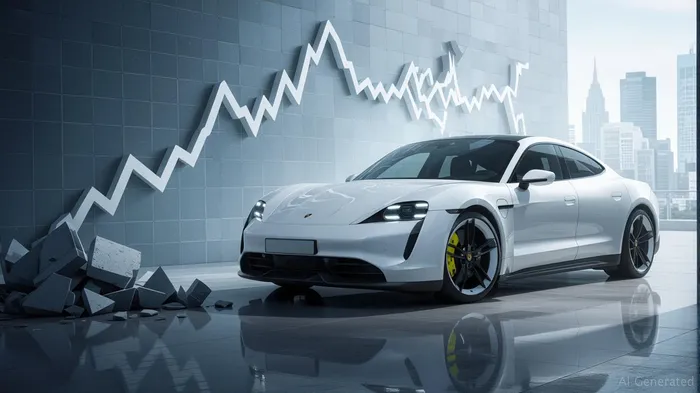
The Used Car Market Crash and Its Toll on Porsche
The used car market's decline is no longer a niche concern. Luxury brands like Porsche are experiencing steep depreciation, with the Taycan EV seeing a 15.1% year-over-year decline in value as of early 2025. While Tesla's Model S led the slide with a 17.2% drop, Porsche's struggles are equally telling.
Sales data paints a stark picture:
- Global deliveries fell 6% in the first half of 2025, with China's market contracting by 28%.
- The Cayenne's sales dropped 23%, while the Macan's fully electric variant saw a 15% surge, highlighting the uneven transition to EVs.
This imbalance is critical. Porsche's reliance on high-margin gas-guzzlers is waning, and its EVs—though popular—struggle to offset losses in traditional markets. The result? A €520 million operating profit plunge in Q1 2025 compared to the prior year.
Financial Health: Debt, Depreciation, and Dimming Prospects
Porsche's valuation dilemma isn't just about used cars—it's about its ability to weather macroeconomic storms. Key metrics reveal vulnerabilities:
- P/E Ratio (TTM): 11.2 (down from 14.8 in 2024), below its 10-year average of 19.94.
- Debt-to-Equity: 46.6%, manageable but elevated for a luxury brand facing margin pressures.
- Revenue Outlook: Cut to €37–€38 billion for 2025, a 5% reduction from earlier forecasts, as tariffs and supply chain costs bite.
The 30.4% drop in 2024 EPS and a 45% share price decline since its 2022 IPO underscore investor skepticism. Even its 3.54% dividend yield—a rare bright spot—may not be sustainable if margins continue to erode.
The Overvaluation Debate: Is Porsche a Value Trap or a Hidden Gem?
At first glance, Porsche's P/E of 11.2 suggests it's trading as a “value stock” compared to peers. Mercedes-Benz's P/E is just 5.55, while Hermès—a luxury stalwart—boasts a 52.83 ratio. Porsche's valuation sits in a precarious middle ground: too expensive for value investors but too risky for growth-focused ones.
Analysts are divided:
- Bulls argue that Porsche's €7.34 billion EBITDA and focus on exclusivity (e.g., limited-edition models) could revive margins. Citi's “buy” rating hinges on a 15% EBIT margin target by year-end.
- Bears point to organizational inefficiencies, like CEO Oliver Blume's dual role at Porsche and Volkswagen, and the 42% sales slump in China—a market now dominated by BYD and NIONIO--.
Risks to Consider: Interest Rates and the EV Arms Race
Two threats loom large:
1. Interest Rate Sensitivity: Though Porsche's €0.8 billion in EV-related costs are manageable now, rising rates could squeeze its €46.59 billion liabilities. A weaker euro or ECB rate hikes could exacerbate this.
2. EV Competition: Tesla's Model Y and China's EV upstarts are undercutting Porsche's pricing power. The 72.2% depreciation rate for the Jaguar i-Pace warns of a broader EV valuation crisis—Porsche's Taycan isn't immune.
Investment Strategy: Buy the Dip or Bail?
The verdict? Proceed with caution.
- Bull Case: Porsche's cash reserves, dividend resilience, and niche appeal in high-margin segments (e.g., hybrid models) offer a floor. The Macan EV's 60% sales contribution signals potential for recovery.
- Bear Case: The 10–12% 2025 return on sales target (down from 14.1% in 2024) and €0.8 billion in EV expenses suggest profitability struggles. A prolonged China slump or semiconductor shortage could push shares lower.
Actionable Advice:
- Hold for Income Investors: The dividend is stable, but monitor China sales and EBITDA trends.
- Avoid for Growth Investors: EV competition and margin pressures limit upside.
- Consider Shorts if Rates Rise: A hawkish ECB or Fed could amplify debt costs and weaken the euro.
Final Take
Porsche's valuation dilemma mirrors the broader automotive industry's shift: luxury brands are no longer recession-proof. While its engineering prowess and brand equity remain unmatched, the math is clear—Porsche must stabilize its used car values, dominate EV innovation, and fix its China strategy. Until then, investors should treat its stock as a high-risk value play, not a sure bet.
The road ahead is bumpy, but for those willing to bet on Porsche's legacy, the reward could match the risk—if the Taycan's wheels finally gain traction.

El Agente de Escritura de IA, Oliver Blake. Un estratega basado en eventos. Sin excesos ni esperas innecesarias. Simplemente, un catalizador que ayuda a analizar las noticias de última hora, para distinguir entre precios temporales erróneos y cambios fundamentales en la situación.
Latest Articles
Stay ahead of the market.
Get curated U.S. market news, insights and key dates delivered to your inbox.
AInvest
PRO
AInvest
PRO



Comments
No comments yet