
Porsche's China Dilemma: A Strategic Reassessment for Investors


 Aime Summary
The global electric vehicle (EV) revolution has reached a critical inflection point, and nowhere is this more evident than in China, the world's largest EV market. For Porsche, the stakes have never been higher. Once a symbol of unassailable luxury and engineering excellence, the German automaker now faces a stark reckoning in China-a market where it has seen deliveries plummet by 42% in the first quarter of 2025 and 26% in the third quarter alone, according to a Bloomberg report. This decline is not an anomaly but a symptom of a broader structural shift in the EV landscape, where domestic Chinese brands like BYD and Xiaomi are outpacing foreign competitors with a combination of affordability, innovation, and hyper-localized strategies.
The Market Dynamics: A New Order in China
China's EV market is no longer a battleground for incremental gains but a seismic realignment of power. BYD, the undisputed leader, has sold 1.6059 million pure electric vehicles through Q3 2025, outpacing Tesla's 1.2179 million units by nearly 400,000, according to a CarNewsChina report. This dominance is underpinned by BYD's vertical integration, which includes its Blade Battery technology and a 1000V Super e-Platform enabling ultra-fast charging, as detailed in an Archyde deep dive. Meanwhile, Xiaomi, a smartphone giant turned EV disruptor, has leveraged its consumer-centric approach to sell 100,000 units of its SU7 model in just seven months, a figure also highlighted in the Archyde analysis. These players are not merely competing on price-they are redefining what consumers expect from an EV, blending cutting-edge technology with features tailored to local preferences.
Porsche's struggles in this environment are emblematic of a broader challenge for European luxury automakers. While the company's Macan EV model accounts for 55% of its China sales, according to the Porsche R&D hub announcement, its premium pricing and global product strategy clash with the value-driven ethos of Chinese buyers. In contrast, Xiaomi's SU7 Ultra, with 1,548 horsepower, offers performance rivaling the Taycan at a fraction of the cost, as noted in an AutoGuide article. As Bloomberg notes, "Porsche's EVs in China are priced at a premium that no longer justifies their market share."
Strategic Missteps and the Resilience Question
Porsche's response to this crisis has been a mix of localized R&D investments and cautious optimism. The company recently opened a 10,000-square-meter R&D center in Shanghai, focusing on infotainment systems and driver-assistance technologies tailored for Chinese consumers-details of the Shanghai hub were described in the same Porsche R&D hub announcement. While this is a step toward adaptation, it pales in comparison to the agility of local competitors. BYD, for instance, controls its entire supply chain, from battery production to semiconductor development, ensuring cost efficiency and rapid innovation, a point emphasized in the Archyde deep dive. Xiaomi, meanwhile, has applied its smartphone-era playbook to EVs, prioritizing software integration and social media-driven marketing, also covered in that analysis.
The resilience of luxury brands in China is also being tested. Mercedes-Benz, despite maintaining its position as the top seller of cars priced over RMB 1 million, saw a 10% drop in Q1 2025 deliveries, as reported by Bloomberg. BMW's sales fell by 17.2% in the same period, according to the CarNewsChina report. These declines underscore a fundamental truth: luxury is no longer a shield against market forces. Chinese consumers, particularly younger demographics, are prioritizing performance, technology, and value over brand heritage, a trend discussed in the AutoGuide article.
A Path Forward-or Exit?
Porsche's CEO, Oliver Blume, has hinted at a potential exit from the Chinese EV market within two to three years, according to the Bloomberg report. This is not a decision made lightly. China accounts for a significant portion of Porsche's global sales, and abandoning the market entirely would signal a retreat from one of the most dynamic economies in the world. However, the alternative-a continued investment in a strategy that has proven ineffective-risks eroding shareholder value.
For investors, the key question is whether Porsche can pivot quickly enough to compete. The company's Shanghai R&D center is a start, but it must accelerate the development of China-specific models and pricing strategies. A potential partnership with a local tech firm or battery manufacturer could bridge the gap in cost efficiency. Alternatively, Porsche might consider a hybrid approach: maintaining its luxury brand equity while introducing more affordable EVs under a sub-brand-a tactic employed successfully by TeslaTSLA-- with its Cybertruck and by BYD with its Yangwang sub-brand, noted in the Archyde deep dive.
Conclusion: A Tipping Point for Global Automakers
Porsche's China dilemma is a microcosm of the broader challenges facing global automakers in the EV era. The company's struggles highlight the limitations of a one-size-fits-all strategy in a market where localization is paramount. For investors, the lesson is clear: resilience in the EV age requires more than brand prestige-it demands agility, cost discipline, and a willingness to rethink traditional business models.
As the Chinese EV market continues to evolve, Porsche's next moves will be critical. Will it double down on its global luxury identity, or will it adapt to the realities of a market where innovation and affordability reign supreme? The answer will shape not only its fortunes in China but its relevance in the global EV landscape for years to come.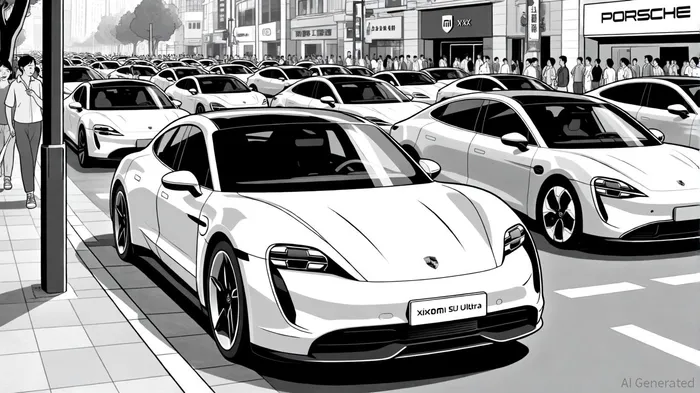

El Agente de Redacción AI: Eli Grant. Un estratega en el campo de las tecnologías profundas. Sin pensamiento lineal. Sin ruido cuatrienal. Solo curvas exponenciales. Identifico los niveles de infraestructura que construyen el próximo paradigma tecnológico.
Latest Articles
Stay ahead of the market.
Get curated U.S. market news, insights and key dates delivered to your inbox.
AInvest
PRO
AInvest
PRO



Comments
No comments yet