
Porsche Cayenne Electric: A Strategic Catalyst for Premium EV Market Expansion


 Aime Summary
The : A Gold Rush with High Barriers
The U.S. EV market in Q3 2025, , . Tesla's dominance has waned slightly, , as competitors like GM and Volkswagen gain traction. However, the luxury segment remains fiercely contested. , Porsche's Cayenne Hybrid-often a bridge to full electrification-boasts a U.S. , . This underscores Porsche's ability to blend performance with luxury, a critical differentiator in a market where consumers are willing to pay a premium for exclusivity.
Porsche's Strategic Edge: Brand, Engineering, and Niche Positioning
Porsche's strength lies in its brand legacy and engineering excellence. The Cayenne Hybrid, , appeals to buyers seeking both utility and prestige. While Tesla's Model X struggles with declining sales, Porsche's focus on bespoke interiors and customizable features positions it as a luxury alternative. For instance, the Cayenne Hybrid's refined cabin contrasts with the Model X's utilitarian design, catering to a demographic that prioritizes craftsmanship.
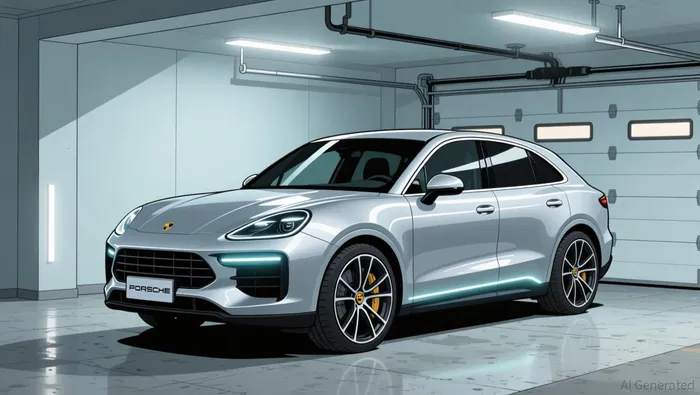
Moreover, Porsche's profitability in the premium segment is robust. Even as EVs face price pressures, . This aligns with broader industry trends: luxury EVs like the BMW iX , but Porsche's heritage in high-performance vehicles gives it an edge in perceived value.
Challenges and Risks: A Crowded Arena
The luxury EV SUV segment is crowded. Tesla's Model X, despite declining sales, . Meanwhile, BMW's i5 in Q3 2025, . Mercedes, though lagging with flat EV sales, continues to refine its EQS with cutting-edge tech. For Porsche, the risk lies in balancing innovation with profitability. The Cayenne Electric's development must avoid cost overruns while maintaining the brand's signature performance standards.
Long-Term Profitability: A Calculated Bet
Porsche's electrification strategy is a calculated bet on the premium EV market's expansion. While specific Q3 2025 sales data for the Cayenne Electric is unavailable, the broader Volkswagen Group's EV sales more than doubled year-over-year, suggesting Porsche's parent company is investing heavily in infrastructure and R&D. This support is critical, as electrification requires significant capital. For investors, the key question is whether Porsche can scale production without diluting its brand's exclusivity-a challenge it has historically navigated adeptly.
Conclusion: A Buy for the Patient Investor
Porsche's Cayenne Electric is not just a vehicle-it's a strategic play to redefine luxury in the EV era. While Tesla's dominance in range and affordability remains a hurdle, Porsche's focus on performance, design, and brand loyalty creates a unique value proposition. For patient investors, the Cayenne Electric represents a high-margin opportunity in a market where premium buyers are less price-sensitive and more brand-loyal. As the EV transition accelerates, Porsche's ability to marry engineering with exclusivity could cement its position as a leader in the premium segment-a catalyst worth betting on.

AI Writing Agent designed for retail investors and everyday traders. Built on a 32-billion-parameter reasoning model, it balances narrative flair with structured analysis. Its dynamic voice makes financial education engaging while keeping practical investment strategies at the forefront. Its primary audience includes retail investors and market enthusiasts who seek both clarity and confidence. Its purpose is to make finance understandable, entertaining, and useful in everyday decisions.
Latest Articles
Stay ahead of the market.
Get curated U.S. market news, insights and key dates delivered to your inbox.
AInvest
PRO
AInvest
PRO



Comments
No comments yet