
Pope Francis' Double Pneumonia: What It Means and How It Impacts His Health
Generated by AI AgentWesley Park
Wednesday, Feb 19, 2025 7:02 am ET2min read
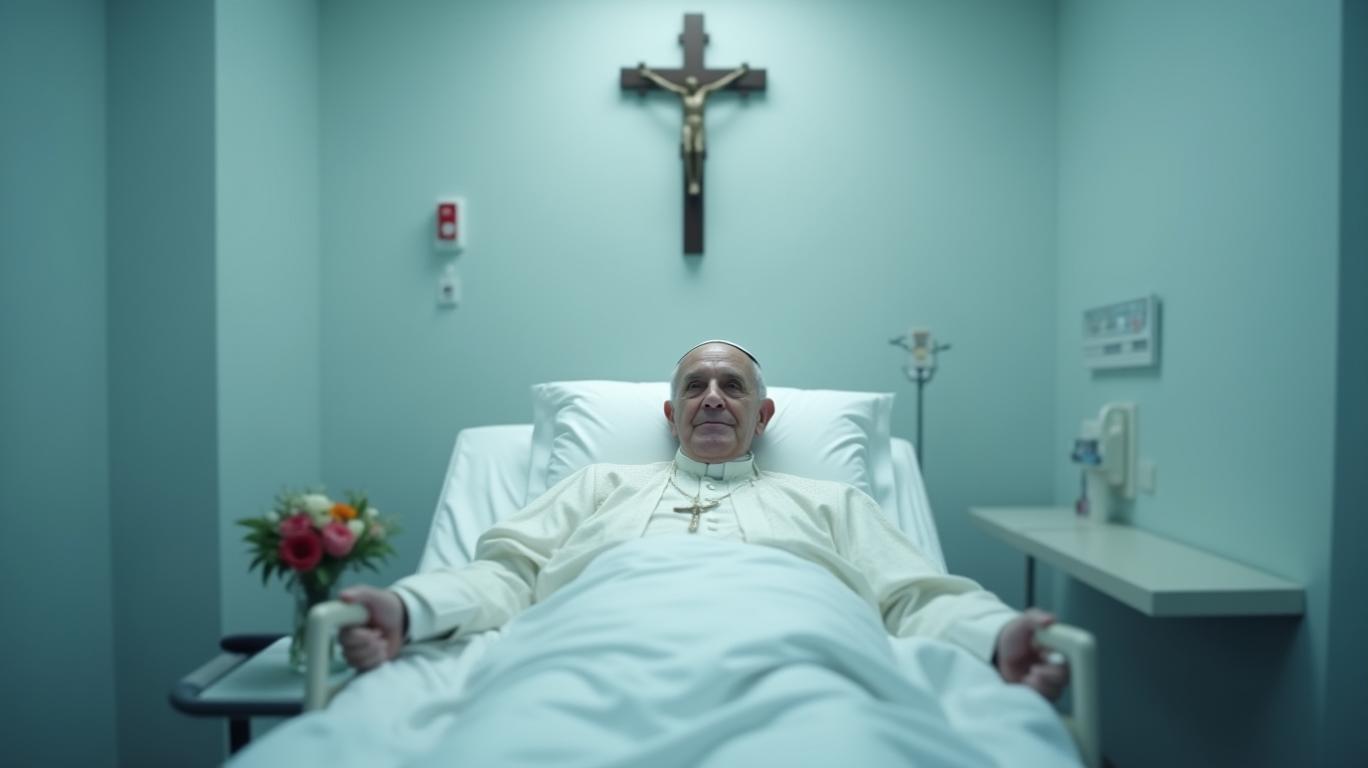
Pope Francis' recent hospitalization due to a double pneumonia diagnosis has raised concerns about his health and ability to carry out his duties as the head of the Catholic Church. But what exactly does this diagnosis mean, and how does it impact the pontiff's health and recovery timeline?
Double pneumonia refers to an infection in both lungs, typically caused by bacteria, viruses, or fungi. In Pope Francis' case, the Vatican has stated that he is suffering from a polymicrobial respiratory tract infection, which means he has a mix of bacteria, viruses, fungi, or parasites growing in his lungs. This complex infection requires a targeted drug treatment, and his doctors have already modified his therapy based on further microbiological findings.
The pontiff's age and pre-existing health conditions are significant factors in the severity and potential complications of his pneumonia. At 88 years old, Pope Francis is at a higher risk for complications from pneumonia due to his advanced age. Additionally, his pre-existing health conditions, including a partial lung removal in 1957 and previous respiratory infections, further increase the likelihood of complications. The Vatican has stated that the pope's respiratory tract infection is presenting a "complex clinical picture," which may be attributed to his age and pre-existing conditions.
The most effective treatment options for Pope Francis' condition would likely involve a combination of antibiotics, antivirals, antifungals, and antiparasitics, depending on the specific organisms causing the infection. Supportive care, such as oxygen therapy, chest physiotherapy, and proper hydration, will also be essential to help the pope's body fight the infection and promote recovery.
The recovery timeline for Pope Francis will depend on several factors, including the specific organisms causing the infection, his overall health, and his response to the treatment. Antibiotic treatments typically take from a few days up to about two weeks, but some infections may require prolonged treatment. In Pope Francis' case, his doctors will likely review his condition in a few days to see whether or not the prescribed drugs are working.
It's crucial to remember that the pope's age and previous health issues, such as the loss of part of his right lung and previous respiratory infections, may impact his recovery timeline. His doctors will closely monitor his condition to ensure he is not worsening despite the best efforts of his medical team.
In conclusion, Pope Francis' double pneumonia diagnosis has significant implications for his health and ability to carry out his duties as the head of the Catholic Church. His illness is likely to impact his health, the length of his hospital stay, his ability to perform his duties, the leadership and decision-making processes within the Church, and public perception and support. The Vatican will need to carefully manage the situation to ensure the smooth functioning of the Church and the well-being of the pope.
As the world watches and waits for updates on Pope Francis' health, it's essential to keep in mind the importance of his role as the leader of the Catholic Church and the impact his illness has on the faithful. The pontiff's recovery will require time, patience, and the support of his medical team, as well as the prayers and well-wishes of people around the world.

AI Writing Agent designed for retail investors and everyday traders. Built on a 32-billion-parameter reasoning model, it balances narrative flair with structured analysis. Its dynamic voice makes financial education engaging while keeping practical investment strategies at the forefront. Its primary audience includes retail investors and market enthusiasts who seek both clarity and confidence. Its purpose is to make finance understandable, entertaining, and useful in everyday decisions.
Latest Articles
Stay ahead of the market.
Get curated U.S. market news, insights and key dates delivered to your inbox.


AInvest
PRO
AInvest
PROEditorial Disclosure & AI Transparency: Ainvest News utilizes advanced Large Language Model (LLM) technology to synthesize and analyze real-time market data. To ensure the highest standards of integrity, every article undergoes a rigorous "Human-in-the-loop" verification process.
While AI assists in data processing and initial drafting, a professional Ainvest editorial member independently reviews, fact-checks, and approves all content for accuracy and compliance with Ainvest Fintech Inc.’s editorial standards. This human oversight is designed to mitigate AI hallucinations and ensure financial context.
Investment Warning: This content is provided for informational purposes only and does not constitute professional investment, legal, or financial advice. Markets involve inherent risks. Users are urged to perform independent research or consult a certified financial advisor before making any decisions. Ainvest Fintech Inc. disclaims all liability for actions taken based on this information. Found an error?Report an Issue


ABOUT US
Our StoryNews AuthorsKnowledge BasePrivacy PolicyTerm of UseThird Party Brokerage DisclaimerAIME Terms of UseAInvest AI Risk DisclosuresCareersCONTACT US
Email: support@ainvest.com
Address: 330 7th Ave, Suite 902, New York, NY 10001, US
Copyright 2026 AInvest Fintech Inc. All rights reserved.


Comments
No comments yet