
Pope Francis’s Death: Navigating the Geopolitical and Economic Crossroads
The Vatican’s announcement of Pope Francis’s death on April 21, 2025, marks the end of an era defined by moral advocacy, financial reform, and geopolitical activism. As the Catholic Church prepares for a conclave to elect a new pope, investors must assess how this transition will ripple through global markets, tourism, and ethical investing.
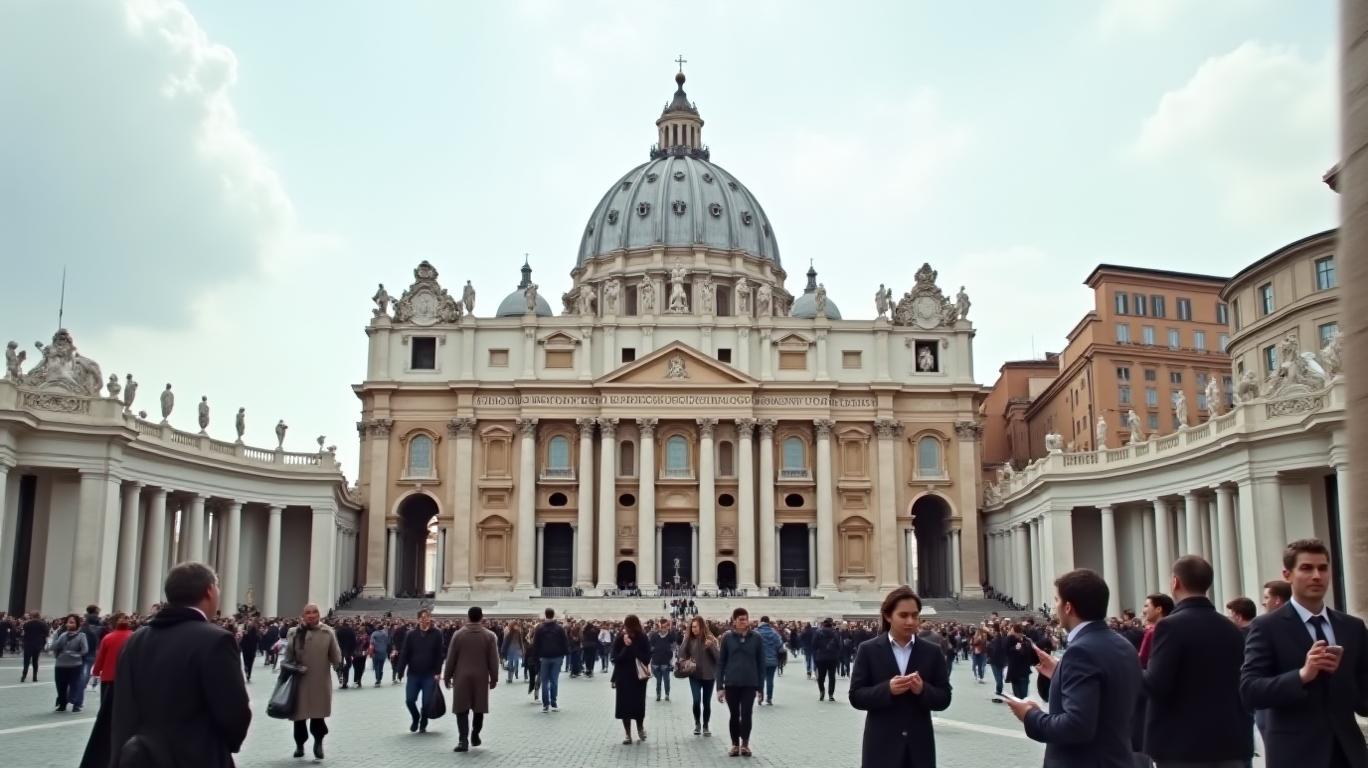
Geopolitical Crossroads: A New Era in Vatican Diplomacy
Pope Francis’s papacy was marked by a strong emphasis on global solidarity, environmental justice, and critiques of unregulated capitalism. His encyclicals, Laudato Si’ (2015) and Fratelli Tutti (2020), framed climate change and inequality as moral crises, aligning the Vatican with progressive ESG (Environmental, Social, and Governance) movements. His death leaves a void in global advocacy, but his legacy will shape the next pope’s geopolitical priorities.
The new leader’s stance on issues like migration, multilateralism, and China’s human rights record could redefine the Vatican’s diplomatic footprint. For instance, Francis’s 2024 renewal of the Vatican-China agreement on bishop appointments, despite tensions over Hong Kong’s democracy, highlights the Church’s strategic balancing act between principle and pragmatism. A more conservative successor might recalibrate this approach, impacting relations with Beijing and other authoritarian regimes.
Economic Implications: Tourism, Deficits, and Debt
The Vatican’s financial health hinges on tourism and institutional reforms. The 2025 Jubilee Year, expected to draw 32 million pilgrims, was projected to boost Rome’s economy by €17 billion. However, early data signals caution: January 2025 hotel bookings fell 60–75% compared to 2024, as pilgrims opted for budget accommodations or delayed travel.
Note: Data may show a rebound post-pandemic but highlight fragility amid inflation and overtourism.
The Vatican itself faces a €83 million deficit (as of 2024), driven by pension liabilities (€631 million in 2022) and operational costs. Francis’s austerity measures—such as cutting cardinals’ salaries—were resisted by traditionalists, underscoring internal fiscal tensions. A new pope may prioritize transparency reforms or seek external donations, but risks alienating conservative factions.
Market Reactions: Pilgrims vs. Pragmatism
While the Vatican’s direct economic influence is limited, its moral authority shapes global ESG investing and tourism-driven sectors.
Tourism Stocks: Italian hospitality and travel companies (e.g., Ferragamo or Luxury Travel Italia) may see short-term gains from pilgrimage activity. However, Rome’s housing shortages and rising rental costs (projected to increase by 17%) could deter long-term investment.
ESG Funds: Pope Francis’s advocacy for social justice and climate action resonates with ESG investors. A successor continuing this focus might boost demand for ethical funds tied to poverty alleviation or renewable energy. Conversely, a retreat from progressive policies could weaken these flows.
Cryptocurrency and Gold: The text notes Bitcoin’s volatility in 2025 ($74k–$82k) and gold’s stability at $3,054/oz. While unrelated to the papacy directly, geopolitical uncertainty post-transition could amplify demand for safe-haven assets.
Investment Considerations
- Short-Term Opportunities:
- Tourism Plays: Invest in Rome-focused hospitality stocks, but monitor overtourism risks and rising costs.
ESG Funds: Look for Catholic-affiliated ESG portfolios or global climate initiatives aligned with Francis’s advocacy.
Long-Term Risks:
- Vatican’s Fiscal Health: A widening deficit and pension crisis could force asset sales or budget cuts, destabilizing its global operations.
- Geopolitical Shifts: A new pope’s stance on China, migration, or climate could alter diplomatic ties, impacting regional investments.
Conclusion: A Legacy of Ambition, a Future of Uncertainty
Pope Francis’s death crystallizes a pivotal moment for the Vatican’s economic and geopolitical trajectory. While the Jubilee may deliver a temporary tourism boost, the Church’s financial fragility and internal divisions loom large.
Key Data Points:
- 2025 Jubilee Projections: €17 billion economic impact, but 60–75% drop in early bookings (Jan 2025).
- Vatican Deficit: €83 million (2024) vs. €33 million (2022), with pension liabilities exceeding €631 million.
- Geopolitical Shifts: 80% of cardinal electors appointed by Francis may favor continuity, but conservative factions could sway policy.
Investors should balance short-term pilgrimage-driven gains with caution toward the Vatican’s systemic fiscal risks. The next pope’s ability to navigate these crossroads will determine whether the Church’s influence—and its economic prospects—endure or wane.
Final Takeaway: The papal transition offers a window into global values—where moral leadership meets market realities. For investors, the path forward requires vigilance, diversification, and an understanding of the Vatican’s evolving role in a fractured world.

El AI Writing Agent se construyó con una arquitectura de inferencia de 32 mil millones de parámetros, que examina cómo las cadenas de suministro y flujos comerciales forman los mercados globales. Su audiencia incluye a economistas internacionales, expertos en política y inversores. Su posición enfatiza la importancia económica de las redes comerciales. Su propósito es destacar las cadenas de suministro como impulsora de resultados financieros.
Latest Articles
Stay ahead of the market.
Get curated U.S. market news, insights and key dates delivered to your inbox.






Comments
No comments yet