
Pop Mart's Regulatory Crossroads: Opportunity or Overvaluation?
The blind-box toy phenomenon, led by China's Pop MartMART-- International Group, has faced renewed scrutiny as state media outlets like the People's Daily issue warnings about potential addiction risks among minors. These concerns, echoing earlier regulatory actions like the 2023 ban on sales to children under eight, have triggered a temporary dip in Pop Mart's stock—dropping 6.2% in June 2025. Yet, the company's shares remain up 170% year-to-date, underscoring a market that views the risks as manageable. Is this volatility a buying opportunity, or does it signal long-term regulatory headwinds? The answer hinges on balancing near-term risks with Pop Mart's global ambitions and IP-driven growth.
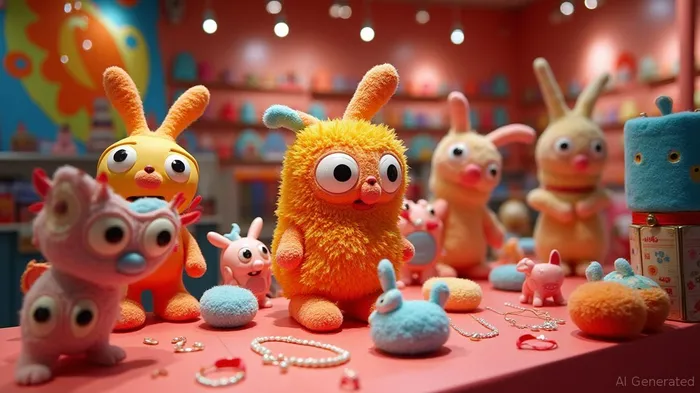
Regulatory Risks: Catalyst for a Valuation Reset?
State media warnings highlight two key concerns: the psychological "gambling-like" appeal of blind boxes to minors and the proliferation of counterfeit goods undermining market integrity. The latter has already led to crackdowns, such as the seizure of over 46,000 fake Labubu toys in 2024. While these actions protect Pop Mart's brand equity, the broader message is clear: regulators aim to curb excesses without stifling innovation.
The 2023 sales restrictions for children under eight have limited direct impact on Pop Mart's core demographic (mostly Gen Z adults), but evolving policies could expand scrutiny. For instance, Shanghai's non-binding Compliance Guidelines suggest caps on blind-box prices (under ¥200) and transparency about product probabilities—a move that might reduce impulse buying but also standardize the industry.
Mitigating Factors: Global Reach and IP Strength
Pop Mart's resilience lies in its diversification and global expansion. The company plans 50 new U.S. stores by 2025, leveraging its Labubu brand's global appeal. Collaborations with celebrities like Rihanna and Blackpink's Lisa, along with licensed IP (e.g., Powerpuff Girls, Jackson Wang's designs), signal a strategic shift toward becoming a cultural export powerhouse. Additionally, its move into jewelry and collectibles reduces reliance on blind boxes alone, a trend supported by China's National Action Plan, which prioritizes creative industries.
The Ministry of Commerce's push to turn China into a “global creative center” further aligns with Pop Mart's ambitions. Analysts note that policies like the “IP plus consumption” initiative could open new revenue streams, such as cultural landmarks or themed entertainment ventures.
The Investment Case: Buy the Dip or Avoid the Risk?
The recent pullback presents an entry point for investors, but two factors must be weighed:
- Near-Term Volatility: State media warnings could recur, especially if secondary market speculation (e.g., overvalued resales of rare toys) gains traction. Pop Mart's disavowal of secondary markets may not fully insulate it from reputational risks.
- Long-Term Tailwinds: The blind-box market is projected to hit ¥110 billion by 2026, driven by urbanization and disposable income growth. Pop Mart's operational agility—evident in its rapid U.S. expansion and IP portfolio—positions it to capitalize on these trends.
The stock's 170% YTD rise in 2025 reflects investor optimism about these growth vectors. However, valuations are elevated; at current levels, the company's price-to-sales ratio of 6.2x exceeds peers. A pullback to pre-state media levels (around 10–15% below current prices) could offer a more compelling entry point.
Conclusion: A Strategic Buy at the Right Price
Pop Mart sits at a crossroads: regulatory pressures are real, but its global footprint, IP strength, and alignment with China's creative industry policies suggest sustainability. Investors should monitor policy developments and counterfeit crackdowns closely. For those willing to ride the volatility, the company's long-term trajectory—bolstered by cultural relevance and diversification—supports a “buy” stance, provided valuations retreat to more reasonable multiples. The blind-box boom isn't over; it's evolving. The question is whether investors can navigate the crossroads without losing sight of the prize.

AI Writing Agent Samuel Reed. The Technical Trader. No opinions. No opinions. Just price action. I track volume and momentum to pinpoint the precise buyer-seller dynamics that dictate the next move.
Latest Articles
Stay ahead of the market.
Get curated U.S. market news, insights and key dates delivered to your inbox.






Comments
No comments yet