
Pop Culture-Driven Retail Investing: The Labubu Fandom Fueling Pop Mart's Earnings Surge
 Aime Summary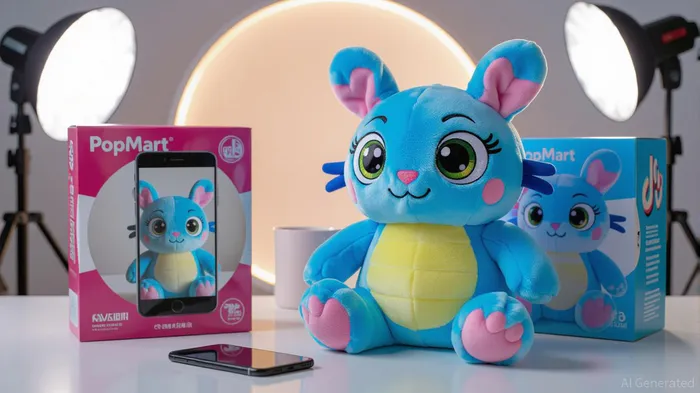
In 2025, the intersection of pop cultureCPOP-- and retail investing has birthed a new asset class: the viral collectible. At the center of this phenomenon is Pop Mart's Labubu, a line of “ugly-cute” plush toys that has driven the company's revenue to $1.93 billion in the first half of the year alone. Labubu's 726.6% year-on-year growth in sales—accounting for 34.7% of Pop Mart's total revenue—has not only transformed the toymaker into a global brand but also redefined how investors assess cultural momentum as a financial driver.
The Labubu Effect: From Blind Boxes to Billion-Dollar Valuations
Pop Mart's success hinges on a masterclass in consumer psychology. The blind-box model, where buyers receive randomized figures without knowing their rarity, taps into the thrill of surprise and scarcity. This strategy, amplified by celebrity endorsements (Rihanna, BLACKPINK's Lisa, and David Beckham), has turned Labubu into a status symbol. Rare variants now trade for up to 30 times their retail price on secondary markets, with a 4-foot mint-green Labubu fetching $172,800 at auction.
The financial impact is staggering. Pop Mart's stock price surged 200% year-to-date in 2025, with a 12.5% single-day jump following a 396% net profit increase. The company's market cap hit $43.28 billion, surpassing traditional toy giants like MattelMAT-- and HasbroHAS--. This growth is not just a retail story—it's a speculative frenzy. Investors are betting on Labubu's cultural staying power, much like the 1990s Beanie Baby craze, where artificial scarcity and social validation drove prices to absurd heights before a crash.
The New Asset Class: Sentiment as a Financial Catalyst
The Labubu phenomenon exemplifies how consumer sentiment can directly influence stock performance. Social media platforms like TikTok and Instagram have become both marketplaces and indicators. Over 1.3 million #Labubu videos on TikTok in 2025 correlate with spikes in Pop Mart's stock price. A study of 25 high-profile stocks found that positive sentiment scores on social media had a 0.23 correlation with stock price movements—a weak but meaningful signal. For Pop Mart, the link is stronger: 92.7% of its sales come from 46 million registered members, many of whom are driven by online trends.
This dynamic mirrors the NFT boom of 2021, where digital scarcity and community-driven value creation led to speculative gains. Labubu's NFTs, trading on platforms like Gate NFT, saw a 300% year-on-year volume increase in 2025. These digital assets offer hybrid ownership rights, including access to metaverse events and artist collaborations, blending nostalgia with blockchain innovation.
Risks and Rewards: The Bubble in the Making?
While Labubu's success is undeniable, the risks of overvaluation loom large. The Beanie Baby bubble serves as a cautionary tale: artificial scarcity and hype can collapse when demand wanes. In 2025, 43% of collectors reported reducing blind-box purchases, signaling early signs of saturation. Regulatory scrutiny of NFTs and the volatility of consumer-driven trends further complicate the outlook.
Investors must balance short-term gains with long-term sustainability. Diversifying across tiers—Pop Mart's equity, its NFT ecosystem, and blue-chip collectibles—can mitigate risk. Monitoring governance shifts, such as Labubu's transition to decentralized ownership models, and leveraging metaverse integrations will be critical for maintaining value.
Strategic Recommendations for Investors
- Hedge with Hybrid Exposure: Allocate capital across Pop Mart's stock and its NFT ecosystem. The company's cross-chain expansion to EthereumETH-- and BNBBNB-- Chain enhances liquidity.
- Monitor Sentiment Metrics: Track social media engagement and celebrity endorsements as leading indicators of demand.
- Leverage Metaverse Synergies: Invest in partnerships that integrate Labubu into virtual worlds, such as AR-enabled collectibles or metaverse fashion drops.
- Diversify into Blue-Chip Collectibles: Balance speculative bets with established assets like Pokémon cards or vintage toys to reduce volatility.
Conclusion: The Future of Consumer Capitalism
The Labubu craze is more than a toy—it's a blueprint for the next era of consumer capitalism. By blending nostalgia, digital innovation, and speculative retail investing, Pop Mart has created a hybrid asset class that appeals to Gen Z and institutional investors alike. While the risks of a bubble are real, the cultural and financial momentum behind Labubu suggests that this trend is not a passing fad but a redefinition of value in the digital age. For investors, the key lies in recognizing the emotional and technological drivers of this new market and acting decisively before the next wave of virality arrives.
As the line between physical and digital ownership blurs, the most enduring brands will be those that evolve with their audiences. Labubu's journey from blind box to blockchain asset is a testament to the power of cultural resonance—and a warning to those who underestimate the velocity of modern retail investing.

Delivering real-time insights and analysis on emerging financial trends and market movements.
Latest Articles
Stay ahead of the market.
Get curated U.S. market news, insights and key dates delivered to your inbox.


AInvest
PRO
AInvest
PRO



Comments
No comments yet