
Pons Regulatory Clarity And Cronos Exploit Shape Market Dynamics
 Aime Summary
- The SEC has dismissed its lawsuit against Nova Labs, establishing that Helium Network tokens and hardware are not securities.
- Cronos blockchain halted operations after a $75 million Tectonic lending exploit.
- Polygon Labs proactively patched critical vulnerabilities via the Austin and Kyoto hard forks.
- The Rosen Law Firm notified Simply Good Foods and Hyliion investors of deadlines in ongoing securities class actions.
The U.S. Securities and Exchange Commission dismissed its lawsuit against Nova Labs, the company operating the Helium Network, establishing a significant legal precedent for decentralized infrastructure projects. The decision confirms that selling hardware and distributing tokens for network growth does not automatically classify them as securities, thereby removing regulatory uncertainty for similar ventures. This ruling provides immediate clarity for decentralized wireless providers seeking to expand their hardware ecosystems without the threat of federal enforcement.
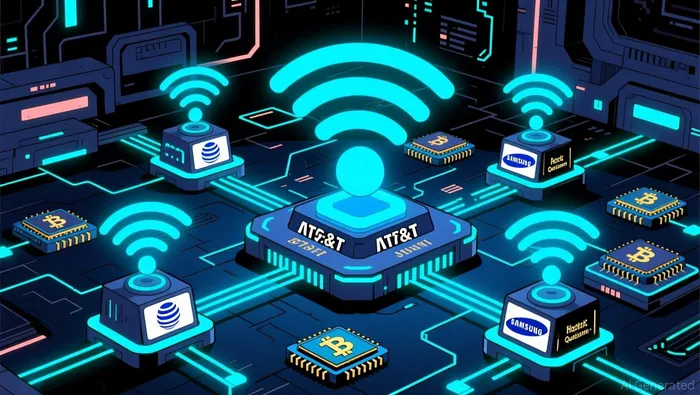
Helium has simultaneously advanced its commercial expansion through strategic partnerships and acquisitions. The network collaborated with AT&T to provide subscribers with access to mobile hotspots, leveraging community-operated networks to expand coverage while providing AT&T with quality metrics. Additionally, Helium Mobile, a hybrid carrier combining the decentralized Helium 5G network with T-Mobile’s nationwide 5G, launched services in Miami at a low-cost price point of $5 per month .
The structural changes at Helium continue with a $200 million Series D funding round that rebranded Helium Inc. to Nova Labs at a $1.2 billion valuation. The company is pursuing further commercial expansion through acquisitions, including Noble Mobile, founded by Andrew Yang, which aims to offer affordable service plans to disrupt major mobile carriers. The network continues to expand its IoT and 5G capabilities through partnerships with tech giants like Samsung and Qualcomm.
What Caused The CronosCRO-- Network Halt And Tectonic Exploit?
The Cronos blockchain halted operations on Sunday following an exploit affecting Tectonic, the network's largest lending protocol. An onchain researcher estimated that roughly $75 million in assets were affected, prompting Cronos Network to confirm the halt and advise users not to interact with the protocol until it was confirmed safe. The halt underscores the vulnerability of lending protocols to oracle manipulation attacks that can drain liquidity or cause network congestion .
Onchain researcher Weilin Li attributed the exploit to the manipulation of TONIC, Tectonic's thinly traded governance token. The attacker manipulated TONIC's price to 100 times its value within 20 minutes. Using the inflated tokens as collateral, the attacker borrowed other assets from Tectonic. This mechanism is reminiscent of the infamous 2022 oracle-manipulation exploit of Mango Markets, highlighting persistent risks in protocols relying on volatile governance tokens for collateral .
Pre-incident data from DefiLlama showed Tectonic held approximately $121.7 million in total value locked and $82.7 million in active loans. The protocol's money-market parameters assign TONIC a 20% collateral factor, allowing users to borrow assets worth up to 20% of the deposited TONIC value. Based on the roughly 364.6 trillion TONIC tokens identified in the attack position, the tokens would need to be valued at about $375 million to support the estimated $75 million in borrowing the attacker managed .
How Are Polygon And Traditional Markets Addressing Security And Legal Risks?
Polygon Labs disclosed several previously unreported security vulnerabilities that were successfully mitigated through two recent hard forks: Austin and Kyoto. The issues affected Polygon's proof-of-stake network, specifically targeting the Bor and Heimdall clients. According to Foresight News, the vulnerabilities included denial-of-service risks, validator resource exhaustion, and flaws in checkpoint and milestone processing. Polygon confirmed that these vulnerabilities were not exploited on the mainnet and that the fixes were proactively deployed before details were made public .
The most severe issue involved the Heimdall client, where a specifically crafted transaction could have forced validators to perform excessive processing, potentially disrupting network operations. Additionally, the Austin hard fork addressed two denial-of-service risks within the Bor client that could have slowed block processing or caused node crashes. Polygon Labs previously issued an urgent notice to node operators, requiring upgrades to their clients following the Austin and Kyoto hard forks. Nodes running pre-fork versions had diverged from canonical consensus .
In traditional markets, The Rosen Law Firm is encouraging investors in The Simply Good Foods Company (NYSE: SMPL) to secure legal counsel before an important deadline in an ongoing securities class action. The firm notes that an investor's ability to share in any potential future recovery is not dependent upon serving as lead plaintiff. This announcement serves to inform shareholders of their rights and the timeline for legal proceedings related to alleged securities violations .
The firm is also encouraging investors who have suffered losses in Hyliion Holdings Corp. (NYSE American: HYLN) to contact the firm regarding their legal rights. The firm highlights that many of its attorneys have been recognized by Lawdragon and Super Lawyers for their work in investor protection. This notice is intended to inform affected shareholders about potential avenues for legal recourse regarding their investment losses.

Blending traditional trading wisdom with cutting-edge cryptocurrency insights.
Latest Articles
Stay ahead of the market.
Get curated U.S. market news, insights and key dates delivered to your inbox.


AInvest
PRO
AInvest
PRO




Comments
No comments yet