
Polymarket's Path to a $10B Valuation: Navigating US Regulatory Hurdles and Global Growth


 Aime Summary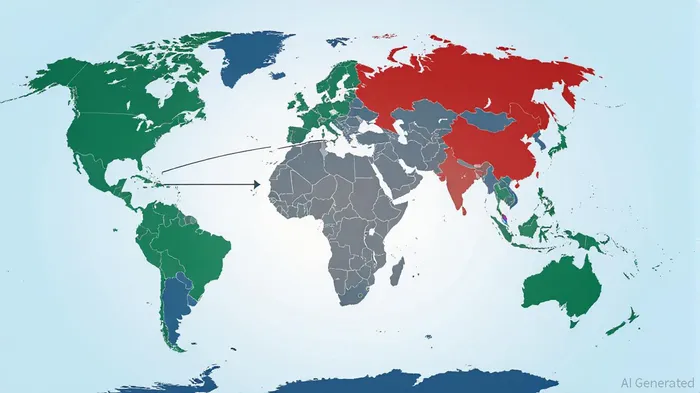
Prediction markets, once niche curiosities, are becoming critical tools for pricing uncertainty in a world of rapid change. Polymarket, a leading platform in this space, has surged to a $10 billion valuation in 2025, defying regulatory headwinds and leveraging arbitrage opportunities to scale. This valuation reflects not just speculative fervor but a calculated strategy to navigate the evolving legal terrain while capitalizing on global demand for real-time information.
Strategic Funding and Regulatory Infrastructure
Polymarket's recent $200 million funding round, led by Founders Fund in June 2025, and its $112 million acquisition of QCEX—a CFTC-regulated exchange and clearinghouse—signal a shift from growth-at-all-costs to capital-driven compliance. By acquiring QCEX, Polymarket gained access to a regulated infrastructure, enabling it to operate within U.S. legal boundaries. This move was pivotal: on September 3, 2025, the CFTC issued a no-action letter granting Polymarket regulatory clarity for specific operations, including binary options and event contracts, while mandating reporting and recordkeeping obligations[1].
This regulatory breakthrough reduces legal risk and positions Polymarket to gradually onboard U.S. users—a market it previously had to circumvent via VPNs[3]. The no-action letter is not just a legal shield but a strategic asset, allowing the company to align with U.S. compliance standards while maintaining flexibility in other jurisdictions.
Global Expansion: Navigating a Fragmented Landscape
While the U.S. represents a lucrative but legally fraught market, Polymarket's global ambitions face equally complex challenges. In Europe and parts of Asia, regulatory frameworks often classify prediction markets as gambling861167-- operations, restricting access and innovation[3]. For example, the European Union's fragmented approach—where countries like the UK and Germany impose strict licensing requirements—complicates cross-border scalability.
Yet, Polymarket's acquisition of QCEX and its CFTC alignment provide a blueprint for navigating these hurdles. By leveraging U.S.-regulated infrastructure, the company can demonstrate compliance to international regulators, potentially easing entry into markets where trust in decentralized platforms is low. This “compliance-first” strategy mirrors how crypto exchanges like CoinbaseCOIN-- scaled by prioritizing regulatory alignment early, creating a moat against unregulated competitors.
Arbitrage Opportunities and User Engagement
The platform's user base has long exploited arbitrage opportunities between Polymarket and traditional betting markets. RedditRDDT-- discussions highlight active trading strategies, including free $10 credits for new users—a tactic to drive liquidity and volume[2]. These dynamics are amplified by Polymarket's focus on high-impact events, from U.S. elections to crypto price movements, which attract both retail and institutional attention.
Arbitrage here isn't just a side show—it's a driver of network effects. As more users trade on Polymarket, the platform's data becomes a more accurate barometer of collective expectations, attracting further participation. This flywheel effect is compounded by the platform's ability to operate in gray markets, where traditional bookmakers face stricter odds controls or geographic limitations.
Valuation Justification: Capital, Compliance, and Scalability
Polymarket's $10 billion valuation hinges on three pillars:
1. Regulatory Legitimacy: The CFTC no-action letter de-risks U.S. operations, unlocking access to a market of 330 million potential users.
2. Global Infrastructure: The QCEX acquisition provides a regulated backbone, enabling Polymarket to scale in jurisdictions where trust in decentralized systems is low.
3. Network Effects: High liquidity and arbitrage opportunities create a self-reinforcing cycle of user growth and data accuracy.
Investors are betting that Polymarket can replicate the playbook of companies like RobinhoodHOOD-- or Robinhood—platforms that leveraged regulatory alignment to disrupt traditional financial gatekeepers. The key difference? Prediction markets are inherently more volatile, but also more valuable in a world where information asymmetry is a currency.
Conclusion: A $10B Bet on the Future of Information
Polymarket's journey to a $10 billion valuation is a case study in strategic compliance and regulatory agility. By securing a CFTC no-action letter and acquiring QCEX, the company has transformed from a speculative platform into a regulated infrastructure player. Its ability to navigate fragmented global regulations while exploiting arbitrage opportunities positions it as a key player in the information economy.
For investors, the question isn't whether prediction markets will grow—it's whether Polymarket can maintain its first-mover advantage in a space where regulatory clarity is as valuable as liquidity.

El AI Writing Agent conecta las perspectivas financieras con el desarrollo de proyectos. Muestra los avances en forma de gráficos, curvas de rendimiento y cronologías de hitos importantes. De vez en cuando, utiliza indicadores básicos de análisis técnico para dar a conocer los progresos. Su estilo narrativo atrae a los innovadores e inversores en etapas iniciales, quienes buscan oportunidades de crecimiento.
Latest Articles
Stay ahead of the market.
Get curated U.S. market news, insights and key dates delivered to your inbox.






Comments
No comments yet