
This Polymarket Bet Turns $100 Into $408 If Iran Gives Up Enrichment -- and the War Might Force It
 Aime Summary
The US just spent $37.5 billion bombing Iran's nuclear facilities. It killed their Supreme Leader. It's demanding "zero enrichment" as a non-negotiable war goal. Polymarket is paying 3-to-1 that Iran says yes by December 31. The crowd is pricing this like a long shot. It might be the most mispriced bet on the board right now.
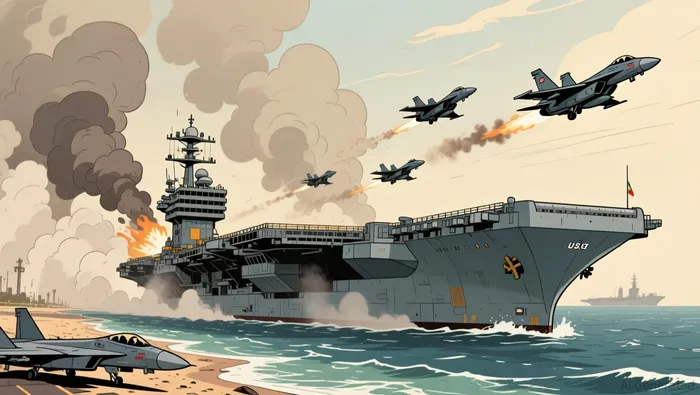
Here's the situation the market hasn't fully priced in. On February 28, 2026, the US and Israel launched the largest military attack on Iran in modern history. Supreme Leader Khamenei was killed. Fordow, Isfahan, and Natanz were struck. Since then, the US has maintained a naval blockade, the Iranian rial has collapsed, and the regime is struggling to pay its own military, per US intelligence assessments.
And now the core demand is on the table: the US says its "core goal" is Iran confirming it will never seek a nuclear weapon, with "zero enrichment" as the bottom line, as the House of Commons Library reported just days ago.
The question is not whether Iran wants to give up enrichment. The question is whether a country being economically strangled, bombed, and blockaded can hold out until December.
The market
Open this market on Polymarket ->
The trade that makes you look twice
The "Yes" outcome -- Iran publicly agreeing to end all enrichment -- is trading at 24.5 cents. Here's what that means in real money:
- $100 buys you about 408 shares.
- If Iran agrees, each share pays $1 -- that's roughly $408 back. A $308 profit on a hundred bucks.
- If Iran doesn't agree by December 31, the $100 is gone. That's the deal.
Better than 3-to-1. On an outcome the US military is actively trying to produce.
Why the crowd might be wrong
Three things the market is underpricing:
First, the pro-negotiation camp in Iran is still alive. President Pezeshkian, Foreign Minister Araghchi, and Parliament Speaker Ghalibaf are all pushing for a deal. They were the ones who convinced the supreme leader to accept the June Islamabad MOU -- and that was before the current economic freefall. The Institute for the Study of War reports three competing factions are fighting over negotiations policy right now, which means the question is which deal, not whether.
Second, the economic pressure is reaching a breaking point. The rial has collapsed. Basic goods are scarce. On July 28, the first mass protests since January erupted in Esfahan Province -- over an execution, but the fuel is economic desperation. US intelligence assesses the regime can barely pay its armed forces. Regimes under this kind of pressure do things they said they'd never do.
Third, the clock is the catalyst. December 31 is the deadline. That's roughly five months of blockade, economic pain, and diplomatic pressure. The June MOU showed Iran can and will negotiate when the alternative is worse. Every month the rial drops and shortages bite, the pro-deal faction's argument gets stronger.
The honest risk (kept short because it's small)
The hardliners -- IRGC commander Vahidi and the ultra-hardline Paydari Front -- oppose any deal that looks like surrender. The US-Saudi nuclear deal, signed July 21, lets Riyadh enrich uranium, making it politically toxic for Iran to accept a deal that demands they give up what their rival just got. If the hardliners consolidate power, "Yes" becomes unlikely.
But that risk is exactly what's baked into the 24.5c price. You're being paid 3-to-1 to bet that the pro-deal camp and the economic reality win out over the ideologues. And the pressure is only mounting.
Why you're early
This market has been trading for months, but the real catalyst sequence -- the failed July truce talks, the first protests since January, the ISW report on factional splits inside the regime -- has all happened in the last two weeks. The English-language crowd hasn't connected these dots yet. By the time they do, 24.5 cents won't be 24.5 cents.
The bottom line
The US is actively at war with Iran, demanding zero enrichment as a core condition. The Iranian economy is collapsing. The pro-deal faction is still negotiating. And Polymarket is paying 3-to-1 on Iran saying yes. $100 becomes ~$408 if it lands. The window closes December 31 -- or the moment the rest of the internet figures out what this price actually means.
See the live odds and trade it on Polymarket ->
Disclaimer
This is a trade idea, not financial advice. Prediction markets are volatile and you can lose your entire stake. Odds move; figures are as of the linked sources at the time of writing.
Sources
- House of Commons Library -- US-Iran ceasefire and nuclear talks in 2026
- Institute for the Study of War -- Iran Update Special Report, July 28, 2026
- Council on Foreign Relations -- Iran's War With Israel and the United States
- AP News -- Trump approves nuclear deal permitting Saudi uranium enrichment
- Polymarket -- Iran agrees to end enrichment of uranium by December 31?
_43ca838f1775813865579.png?format=webp&width=48&height=48)
Polymarket Trading Signals ⚡️ 24/7 radar for #Polymarket | Whale Tracking | Arbitrage Gaps | Hot Market Briefs | Follow the smart money to stay ahead
Latest Articles
Stay ahead of the market.
Get curated U.S. market news, insights and key dates delivered to your inbox.


AInvest
PRO
AInvest
PRO




Comments
No comments yet