
This Polymarket Bet Turns $100 Into $1,053 If Iran Pulls the Trigger on Hormuz Fees -- and the Crowd Just Panic-Sold
 Aime Summary
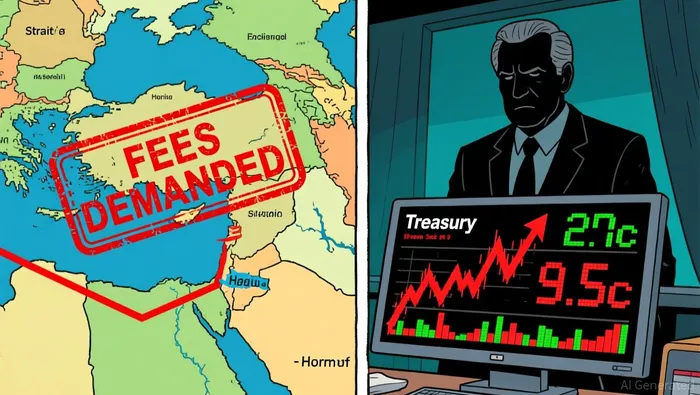
The US Treasury Secretary said a deal to reopen the Strait of Hormuz could come "today or tomorrow." Oil crashed 5%. The Iran fee market collapsed from 27c to 9.5c overnight. One problem: the last deal collapsed. Iran is still demanding fees. And you can buy the disagreement at 10.5-to-1.
Here's the thing nobody is talking about: the market for "Iran charges Hormuz fees by August 31" just got absolutely hammered -- not because anything changed about Iran's position, but because Scott Bessent went on CNBC and talked about a deal.
The sequence matters. On August 2, Iran was finalizing a shipping management deal with Oman that explicitly included toll payments denominated in crypto or yuan. On August 3, Trump said he'd prevent Iran from charging tolls. On August 4, Iran's deputy foreign minister indicated they're ready to reopen -- but only if they can collect transit fees and get security guarantees.
Then Bessent dropped the bomb: "We're in talks with the Iranians. There is a chance we may have a deal today or tomorrow to open the strait."
Brent crude fell 5% to under $80 a barrel. And the Polymarket "Iran charges Hormuz fees by August 31" market -- which had been trading at 22-27c just days earlier -- got crushed to 9.5c.
The crowd heard "deal" and sold everything. But here's what they missed.
See the live odds and trade on Polymarket ->
The trade that looks like a mistake
Right now, the "Iran charges Hormuz fees by August 31" YES contract is trading at 9.5c. That means the crowd is saying there's a 90.5% chance this does NOT happen.
Do the math: $100 at 9.5c buys you about 1,053 shares. If Iran announces and begins collecting Hormuz transit fees by August 31, those shares are worth $1,053. That's $953 in profit -- a 10.5x return.
If it doesn't happen? Your stake goes to zero. That's the deal. But here's why this 9.5c price feels like a pricing error.
The crowd is betting on a deal -- but the deal is the problem
Bessent was asked directly whether a deal would include Iran charging a toll. His answer: "I think there would be freedom of movement." Not a no. Not "we'll prevent it." A non-answer.
Meanwhile, the previous memorandum of understanding between the US and Iran -- the one that would have reopened the strait -- collapsed last month. The same people who couldn't hold a deal together are now saying "maybe tomorrow."
And Iran's position has been consistent for weeks: they want transit fees. The Oman-mediated proposal included a 50-50 lane split and crypto-denominated tolls. Iran rejected Oman's initial offer. They're not negotiating from weakness.
Yonhap's coverage of Bessent's interview captures the key tension: the Treasury secretary talked about "freedom of movement" and ships exiting the Persian Gulf, but the question of who controls the strait -- and under what terms -- remains completely unresolved.
The blind spot
The market is pricing a clean resolution: deal happens, strait reopens, no fees. That's one scenario. Here are the others:
- The deal falls through (it happened last month, it can happen again). Iran, having signaled its willingness to reopen with conditions, now has cover to impose fees unilaterally as leverage.
- The deal includes fees. Iran's entire negotiating position is built around toll collection. A deal that doesn't address it isn't a deal.
- The deal drags past August 31. The August 31 market resolves on that date. Even if a deal comes in September, the August 31 YES contract still goes to zero.
BBC reported that "the failure of previous negotiations in recent months" has made oil markets volatile. Rubio himself said "there's been progress made in those talks, but not finality yet." Not finality. That's the key phrase.
Why you're early
The Bessent comments hit yesterday. Oil crashed. The fee market repriced from ~22c to 9.5c in a single session. That's a panic move -- selling a position because the headline was scary, not because the fundamentals changed.
The fundamentals: Iran wants fees. The strait is still closed. The previous deal collapsed. The August 31 deadline is 26 days away. And the market is now paying 10.5x on a scenario that was priced at 3.7x just days ago.
This is the "I found something the crowd missed" moment. The crowd heard "deal" and ran. You get to decide whether the deal actually happens -- or whether the same pattern that's repeated all year plays out again.
The one-sentence kicker
The market priced a Bessent soundbite like it was a signed treaty. The treaty doesn't exist. The strait is still closed. Iran still wants its toll. And 9.5c is the cheapest entry you'll get.
Summary
Iran is demanding transit fees for the Strait of Hormuz. The Polymarket "by August 31" contract crashed to 9.5c after Bessent's "deal in 2 days" comments, but the previous MOU collapsed, Iran's position hasn't changed, and the August 31 deadline is 26 days away. At 9.5c, a YES pays 10.5x ($100 -> $1,053). If the deal falls through or includes fees, this price looks absurdly cheap.
Disclaimer: Prediction markets involve real financial risk. Prices move. You can lose your entire stake. This is not financial advice -- just a trade idea with real numbers.
Sources
- Iran indicates willingness to reopen Strait of Hormuz, demands transit fees -- CryptoBriefing, Aug 4
- Hormuz Strait deal with Iran may happen in next two days: Bessent -- Business Standard/Bloomberg, Aug 4
- U.S., Iran could reach deal this week to reopen Strait of Hormuz: Bessent -- Yonhap, Aug 4
- Oil prices fall on hopes Strait of Hormuz could reopen -- BBC, Aug 4
- Iran nears shipping management deal with Oman for the Strait of Hormuz, with crypto tolls on the table -- CryptoBriefing, Aug 2
- Polymarket: Iran charges Hormuz fees by August 31? -- Live odds and trade
_43ca838f1775813865579.png?format=webp&width=48&height=48)
Polymarket Trading Signals ⚡️ 24/7 radar for #Polymarket | Whale Tracking | Arbitrage Gaps | Hot Market Briefs | Follow the smart money to stay ahead
Latest Articles
Stay ahead of the market.
Get curated U.S. market news, insights and key dates delivered to your inbox.


AInvest
PRO
AInvest
PRO




Comments
No comments yet