
This Polymarket Bet Pays 2.6-to-1 on the Strait of Hormuz Staying Choked -- and the Evidence Just Got Worse
 Aime Summary
The Strait of Hormuz is trading at roughly 7% of normal traffic. A third energy route just got hit. The market is still pricing 61.5% odds that everything is fine by December 31. That gap is the trade. $100 turns into roughly $260 if the "No" side hits -- and the news keeps breaking the other way.
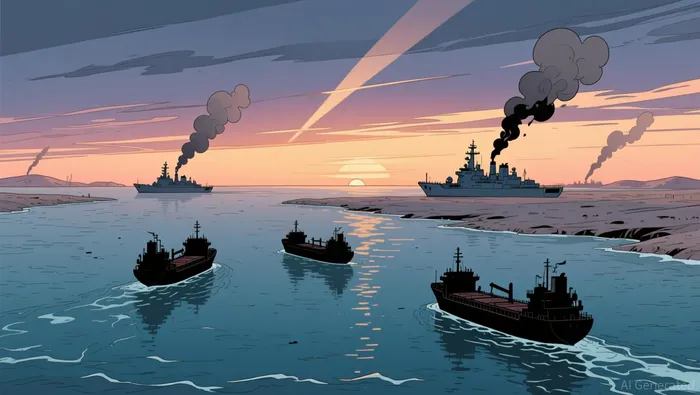
Here's the situation that nobody in your feed is talking about: the Strait of Hormuz, the waterway that carries roughly a fifth of the world's oil, is effectively closed. The US reimposed a naval blockade on Iranian ports July 14 after Iran attacked three commercial tankers, and the US-Iran Memorandum of Understanding signed June 17 -- the one that was supposed to fix this -- has collapsed. United Against Nuclear Iran's August 3 shipping update reports that US forces have now redirected 44 vessels trying to run the blockade, disabled two, and boarded two. The Hormuz Strait Monitor crisis timeline shows the situation deteriorating week by week: on August 3, a cargo vessel was hit on the neutral Omani corridor -- the same route Iran is simultaneously negotiating as a temporary safe passage.
And then the Houthis opened a second front. On July 20, Yemen's Iran-backed Houthis declared a naval blockade on Saudi ships in the Red Sea and struck two Saudi oil tankers. CNBC reported that Strait of Hormuz crossings fell 66% in a single week -- tanker and gas carrier movements dropped to 30 from 90. The pre-war average was 138 vessels per day. The peak during the brief June ceasefire was 54. Today, traffic is running at fewer than 10 a day.
The market
See the live odds and trade it on Polymarket ->
The trade that makes you look twice
The Polymarket event tracks whether the 7-day moving average of transit calls hits 60 or more by December 31. Right now, "Yes" is at 61.5 cents. "No" is at 38.5 cents.
Here's what "No" pays in real money:
- $100 buys you roughly 260 shares of "No" at 38.5c.
- If "No" wins -- meaning traffic stays below 60 for the rest of 2026 -- each share pays $1. That's roughly $260 back. A $160 profit.
- If "Yes" wins and traffic normalizes, the $100 is gone. That's the deal.
2.6-to-1. On a bet that every week of news makes more likely, not less.
Why is this still sitting at 38.5c? Because the crowd believes in the diplomat.
The market is pricing a 61.5% chance of normalization by year-end. That's a bet on a diplomatic resolution sticking. But here's what the actual evidence says:
The June 17 MoU collapsed within weeks. Trump keeps oscillating between "a deal is close" and threatening to hit Iranian infrastructure. On August 1, he canceled a planned strike on Iran's energy infrastructure at the last minute after Gulf allies intervened -- the third time that's happened. Iran's Supreme Leader adviser said on August 5 that Iran "will not tolerate" the blockade. The Iran-Oman talks on a temporary safe passage framework are the only active diplomatic track, and Iran is simultaneously attacking the corridor it's negotiating to open.
Then there's the third front. On July 29, an unidentified drone struck an LNG facility at Egypt's Damietta port, 33 miles from the Suez Canal -- the last remaining safe export route for Gulf oil. The New York Times quoted Iranian officials saying the strike was intended to demonstrate that "if Iran chooses to escalate, global energy supplies could be hit much harder."
The comparison market tells the story: normalization by September 30 is trading at just 30.5c. The crowd is betting on a Q4 miracle. But there's no evidence the trajectory is improving -- only that it's getting more complex, with more actors, more fronts, and a wider gap between what the diplomats say and what the missiles do.
The bottom line
A live, liquid Polymarket market with $311,000 in liquidity is paying 2.6-to-1 on a bet that the Strait of Hormuz stays effectively closed through 2026. The evidence is not ambiguous: the ceasefires keep collapsing, the fronts keep multiplying, and the current traffic count of fewer than 10 ships a day is an ocean away from the 60-vessel threshold. $100 becomes ~$260 if the stalemate holds. The window is open as long as the crowd stays optimistic -- and the news keeps breaking the other way.
See the live odds and trade it on Polymarket ->
Disclaimer
This is a trade idea, not financial advice. Prediction markets are volatile and you can lose your entire stake. Odds move; figures are as of the linked sources at the time of writing.
Sources
- CNBC -- Strait of Hormuz traffic: renewed U.S.-Iran conflict chokes Hormuz (July 21)
- United Against Nuclear Iran -- Iran Shipping Update, August 3, 2026
- Hormuz Strait Monitor -- Crisis Timeline (updated August 5)
- Reuters -- Tanker traffic slows in Strait of Hormuz after US-Iran clashes (July 10)
- Polymarket -- Strait of Hormuz traffic returns to normal by December 31?
_43ca838f1775813865579.png?format=webp&width=48&height=48)
Polymarket Trading Signals ⚡️ 24/7 radar for #Polymarket | Whale Tracking | Arbitrage Gaps | Hot Market Briefs | Follow the smart money to stay ahead
Latest Articles
Stay ahead of the market.
Get curated U.S. market news, insights and key dates delivered to your inbox.


AInvest
PRO
AInvest
PRO




Comments
No comments yet