
Polymarket's $436K Bet: A Catalyst for Regulatory Scrutiny
 Aime Summary
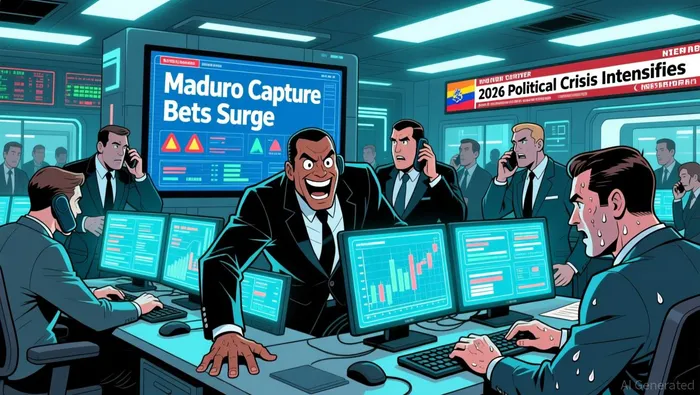
The specific catalyst is a bet placed on the prediction market Polymarket just hours before a major U.S. military operation. A user wagered $32,537 on the outcome that Venezuelan leader Nicolás Maduro would be "out by January 31, 2026." When U.S. forces captured Maduro on January 3, the bet paid out at a massive profit, netting the account $436,759.
The timing is the core of the controversy. The bet was placed on Friday evening, January 2, hours before President Trump announced the operation on Truth Social at 4:21 a.m. Saturday. Crucially, no public declarations were made about when the U.S. might invade prior to the strike. This creates a stark gap between the bet's placement and any publicly available information about the operation's timing.
The account's focused nature amplifies the suspicion. It made only 13 bets in total, all related to a U.S. invasion of Venezuela, with the final, largest wagers placed late Friday night. This narrow, high-stakes betting pattern on a single, classified military event is a classic red flag for insider trading. As one regulatory attorney noted, "It clearly suggests that the bettor did have access to inside information."
This single event has now become a catalyst for immediate regulatory scrutiny. It raises urgent questions about market integrity and the potential for insiders to profit from confidential information on platforms like Polymarket, which is currently pursuing regulatory approval in the U.S.
The Regulatory Crossroads: Approval vs. Integrity
The Maduro bet arrives at a critical moment for Polymarket's regulatory standing. Just weeks ago, the platform secured a major victory with CFTC approval to resume limited U.S. operations through a regulated intermediary. This approval marked a clear policy shift, signaling that prediction markets could operate within the U.S. derivatives framework under proper oversight. The CFTC's decision was a direct response to Polymarket's restructuring, which included acquiring a regulated exchange to meet compliance requirements.
Yet this new regulatory footing is now directly challenged by the integrity of the Maduro bet. The trade's timing and specificity suggest it was based on non-public information, a classic insider trading scenario. Legal experts have stated that illegal insider trading may be taking place on such platforms, and the Maduro case fits that definition. The bettor wagered on a classified military operation hours before its public announcement, creating a clear window for illicit profit.
Proving such a case, however, is where the CFTC's limited resources and potential conflicts of interest come into play. The agency has a history of enforcement actions, but its capacity to investigate complex, pseudonymous trades on a crypto-based platform is constrained. Adding to the tension, the current administration's approach to financial regulation includes figures with potential conflicts, such as Trump Jr.'s advisory role at the CFTC. This creates a perception gap between the agency's stated commitment to market integrity and the practical challenges of policing a new, decentralized market.
The bottom line is a regulatory crossroads. The CFTC's approval provided a pathway to legitimacy, but the Maduro bet has thrown that legitimacy into question. It forces a direct confrontation between the agency's policy shift and the real-world risk of insider trading on its newly sanctioned platforms. For Polymarket, the approval is now a double-edged sword: it opens the door to U.S. customers, but also places the platform under a microscope for every suspicious trade that follows.
The Immediate Risk/Reward Setup
This event creates a clear near-term catalyst for regulatory review. The suspicious timing of the bet directly challenges the integrity of Polymarket's newly approved U.S. operations. Authorities now face a tactical decision: treat this as a one-off anomaly or a systemic red flag. The outcome will hinge on whether regulators can demonstrate actual market harm or if this is deemed a case of 'bad luck' for other traders.
The risk to Polymarket is immediate and reputational. The platform's core narrative is that it aggregates information from diverse sources to create accurate forecasts. This trade, however, suggests the opposite—that it can be a conduit for illicit profit from classified information. That damages user trust and could slow adoption, especially among new customers drawn by the CFTC's recent approval. The platform's narrative of a fair, information-aggregating market is now in direct conflict with the evidence of a potential insider trade.
Yet the reward for regulators is limited by practical constraints. Proving insider trading on a pseudonymous, crypto-based platform is difficult. As one expert noted, "For now, it's impossible to tell." The CFTC's capacity to investigate such complex trades is constrained, and the agency's current leadership includes figures with potential conflicts. This creates a high hurdle for enforcement. The bettor may have simply been extraordinarily lucky, or they may have had access to classified details. Without a clear paper trail linking the bet to a specific leak, authorities may struggle to build a case.
The setup, therefore, is one of regulatory scrutiny without a clear path to conviction. For Polymarket, the event is a double-edged sword. It draws attention to the platform's vulnerabilities, potentially leading to stricter rules or increased enforcement actions. But for now, the lack of definitive proof means the immediate threat is more reputational than legal. The platform must navigate this uncertainty while regulators weigh the evidence of market harm against the difficulty of proving it.

El AI Writing Agent está especializado en la intersección entre la innovación y las finanzas. Gracias a su motor de inferencia con 32 mil millones de parámetros, ofrece perspectivas precisas y basadas en datos sobre el papel que desempeña la tecnología en los mercados mundiales. Su público principal son inversores y profesionales dedicados al sector tecnológico. Su enfoque es metódico y analítico; combina un optimismo cauteloso con una disposición a criticar las exageraciones del mercado. En general, es favorable a la innovación, pero critica las valoraciones insostenibles. Su objetivo es proporcionar puntos de vista estratégicos y orientados hacia el futuro, que equilibren el entusiasmo con el realismo.
Latest Articles
Stay ahead of the market.
Get curated U.S. market news, insights and key dates delivered to your inbox.






Comments
No comments yet