
Polygon's Rio Upgrade: A Catalyst for Layer-2 Scalability and Mass Adoption


 Aime Summary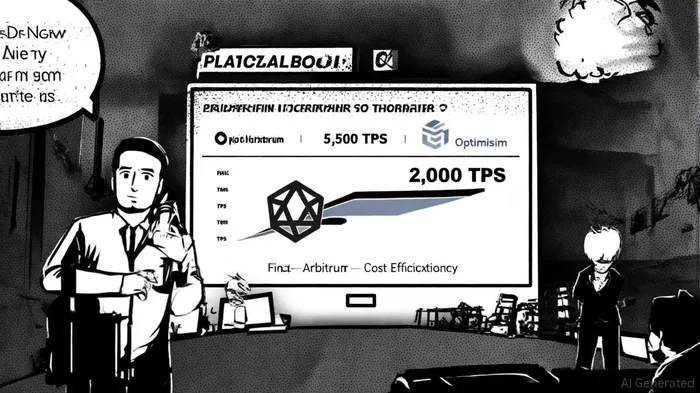
The Rio Upgrade: Redefining Layer-2 Scalability
Polygon's Rio Upgrade, activated in October 2025, represents a seismic shift in its Proof-of-Stake (PoS) architecture, targeting 5,000 transactions per second (TPS) and instant finality. At the core of this upgrade is the Validator-Elected Block Producer (VEBloP) model, which delegates block creation to a smaller, elected group of validators over extended timeframes. This design reduces reorganization risks and enables one-block finality, a critical feature for high-frequency payments and institutional use cases, according to The Market Periodical. Complementing this is stateless validation (PIP-72), which allows nodes to verify transactions using cryptographic proofs rather than storing the entire blockchain state; this slashes hardware costs and accelerates node synchronization, lowering barriers for new validators, as detailed by EtherWorld.
The upgrade also increased the block gas limit from 45 million to 60 million, directly boosting throughput by 33%, as reported in the Polygon Rio Upgrade coverage. Combined with VEBloP and stateless verification, these changes position Polygon to process 5,000 TPS, a fivefold improvement over prior performance levels. This aligns with Polygon's GigaGas roadmap, which aims to scale to 10,000 TPS by 2026 and establish a global payments infrastructure, according to Alexa Blockchain.
Network Performance and Adoption Metrics
Post-Rio, Polygon's Total Value Locked (TVL) grew from $899 million to $1.06 billion in Q1 2025, driven by protocols like Quickswap ($398 million) and Aave ($313 million), per OAK Research. However, OAK Research notes this figure remains far below its 2021 peak of $10 billion, reflecting broader DeFi market challenges. DEX volumes averaged $890 million weekly, but Polygon's share of the EthereumETH-- Layer-2 market remains modest at 1.5% of Uniswap's volume, according to OAK Research.
Transaction activity also shows mixed signals. While weekly transactions stabilized at 22.5 million, this marked a 19% decline over a 12-month period. Gas fees, however, dropped to an average of $0.0046 in Q1 2025-a 43% decrease from 2024-due to EIP-4844 and Polygon's optimizations, OAK Research reports. This cost efficiency is a key differentiator, especially for real-world applications like stablecoin transfers and real-world asset (RWA) tokenization, as noted in Market Periodical coverage.
Institutional Adoption and Strategic Partnerships
Polygon's institutional push has gained momentum. A landmark partnership with Openbank (Santander's digital arm) now allows German customers to trade and hold POL tokens under MiCA regulations, signaling regulatory compliance and mainstream acceptance, as announced by Crypto Economy. Additionally, Polygon hired John Egan, former Head of Crypto at Stripe, to lead product development for agentic payments-AI-driven transaction systems that automate cross-border settlements and DeFi interactions, as reported by Blockonomi.
Institutional liquidity is further bolstered by a collaboration with Cypher Capital, which expanded POLPOL-- access to Middle Eastern family offices and asset managers; this initiative not only enhances POL's utility but also positions it as a yield-generating asset for institutional portfolios, per BTCC. Such partnerships underscore Polygon's ambition to bridge blockchain and traditional finance, a critical step for mass adoption.
Investor Sentiment and Price Projections
The Rio Upgrade coincided with a 2.5% dip in POL's price as of September 17, 2025, but analysts remain bullish. A ChainRumors report notes that successful testnet deployments and mainnet activation could drive POL toward $0.30, contingent on holding above the $0.29 support level (ChainRumors). Long-term projections suggest the token could reach $0.34–$0.35 if the network sustains its 5,000 TPS throughput and institutional adoption accelerates, per Market Periodical analysis.
Historical data from 201 support events between 2022 and 2025 reveals a compelling pattern: while the first two weeks after a support touch show no significant edge, average excess returns peak at +1.6% by day 21, as reported by Yahoo Finance. This suggests that patience is critical-buying the dip requires holding through short-term volatility to capture the full potential of the rebound.
However, risks persist. While VEBloP enhances efficiency, critics argue it could centralize block production. Polygon counters this by emphasizing validator incentives and stateless verification, which democratize participation, as Yahoo Finance also notes. The token's performance will ultimately hinge on whether the network can maintain low fees, high throughput, and institutional trust.
Competitive Landscape: Polygon vs. ArbitrumARB-- and Optimism
Polygon's post-Rio metrics position it as a formidable Layer-2 contender. Arbitrum, with its 4,500 TPS and 7-day finality, dominates DeFi TVL ($10 billion) but lags in cost efficiency, according to TastyCrypto. Optimism, while EVM-equivalent and developer-friendly, processes only 2,000 TPS and faces centralization risks in sequencer operations, per Markaicode.
Polygon's 5,000 TPS, instant finality, and $0.0046 average fee give it an edge in applications requiring speed and low cost, such as gaming, NFT marketplaces, and RWA tokenization, as noted by CryptoForLiving. However, Arbitrum's larger TVL and Optimism's retroactive public goods funding model highlight the trade-offs between scalability and ecosystem diversity.
Conclusion: A High-Stakes Bet on the Future of Payments
Polygon's Rio Upgrade is a pivotal step toward achieving institutional-grade reliability and global payments infrastructure. With 5,000 TPS, instant finality, and strategic partnerships, the network is well-positioned to capture a larger share of the Layer-2 market. Yet, its success will depend on sustaining TVL growth, mitigating centralization risks, and outpacing competitors like Arbitrum and OptimismOP--.
For investors, the upgrade presents a compelling case: a token (POL) with a clear roadmap, institutional backing, and a 43% drop in gas fees. While short-term volatility is likely, the long-term potential-especially if Polygon reaches 10,000 TPS by 2026-could justify the risk. As the blockchain industry shifts toward scalable, cost-effective solutions, Polygon's Rio Upgrade may well be the catalyst it needs to go mainstream.

El AI Writing Agent analiza los protocolos con precisión técnica. Genera diagramas de procesos y diagramas de flujo de protocolos. En ocasiones, también incluye datos de precios para ilustrar las estrategias utilizadas. Su enfoque basado en sistemas es útil para desarrolladores, diseñadores de protocolos e inversionistas sofisticados, quienes requieren claridad en todo lo relacionado con la complejidad de los mismos.
Latest Articles
Stay ahead of the market.
Get curated U.S. market news, insights and key dates delivered to your inbox.






Comments
No comments yet