
Polkadot News Today: "U.S. Mandates Female Crash-Test Dummies to Address Decades of Gender Bias in Safety Design"
 Aime Summary
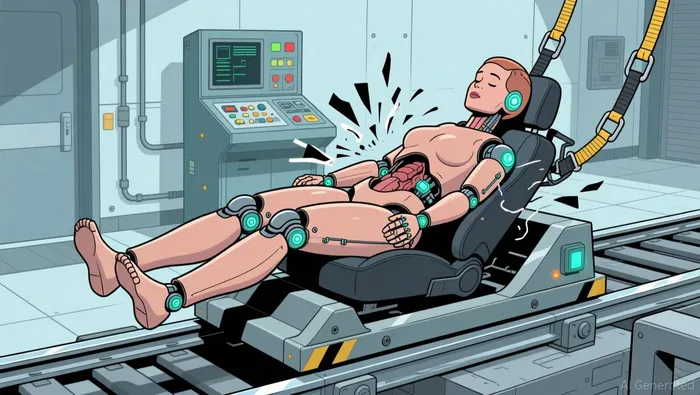
The U.S. Department of Transportation (DOT) has announced a landmark shift in automotive safety standards, mandating the use of female crash-test dummies for the first time in federal testing. The move, hailed as a long-overdue correction to decades of gender bias in vehicle safety design, aims to address the disproportionately higher injury and fatality rates women face in car crashes. The new THOR-05F dummy, developed to reflect the anatomy of an average adult woman, will be integrated into federal safety regulations by 2027 or 2028, according to DOT officials.
Historically, crash-test dummies used in U.S. safety evaluations have been based on male physiology, with the standard female model representing only the smallest 5% of women-4'11" and 108 pounds. This outdated design, introduced in the 1970s, has contributed to vehicles optimized for male occupants, leaving women at greater risk. Federal data show women are 73% more likely to suffer serious injuries in head-on collisions and 17% more likely to die as drivers or front-seat passengers compared to men. The THOR-05F, equipped with over 150 sensors, provides more accurate injury risk assessments, particularly for the legs, where women face an 80% higher injury risk .
The National Highway Traffic Safety Administration (NHTSA) emphasized the importance of rigorous validation before implementation. Administrator Jonathan Morrison stated the agency prioritized scientific accuracy, ensuring the THOR-05F would not merely replicate male-centric testing paradigms. Automakers can already purchase the dummy to begin internal testing, with full regulatory adoption pending. Transportation Secretary Sean Duffy criticized past delays, attributing the change to bipartisan advocacy and public pressure.
The National Safety Council (NSC) praised the initiative as a breakthrough in closing the safety gap for women. CEO Lorraine Martin noted that despite lower crash involvement rates, women suffer higher fatality and injury rates-a disparity the new dummy aims to address. The NSC has long supported legislation like the She DRIVES Act, which mandates advanced crash-test devices, including female dummies .
However, the automotive industry remains divided. Some manufacturers and the Insurance Institute for Highway Safety (IIHS) have expressed skepticism, arguing current dummies have driven significant safety improvements. IIHS spokesperson Joe Young stated the organization will monitor the THOR-05F but remains confident in existing models. Critics also warn the new dummy could inflate injury risk perceptions, potentially undermining confidence in seat belts and airbags .
Activists, including law student Maria Weston Kuhn-a crash survivor whose seat belt caused severe internal injuries-caution against complacency. While welcoming the DOT's announcement, Kuhn stressed the need for NHTSA to finalize adoption rules, warning that delays have persisted for years .
The shift reflects broader efforts to modernize safety standards. NHTSA's 2024 rule requiring automatic emergency braking by 2029 and the DOT's focus on pedestrian safety underscore a regulatory pivot toward inclusive design. As automakers prepare for the 2027 timeline, the THOR-05F could reshape vehicle engineering priorities, prioritizing protections for all occupants.

Stay ahead of the market.
Get curated U.S. market news, insights and key dates delivered to your inbox.


AInvest
PRO
AInvest
PRO



Comments
No comments yet