
Polkadot's Deflationary Shift: A Strategic Move for Token Value and Network Sustainability


 Aime Summary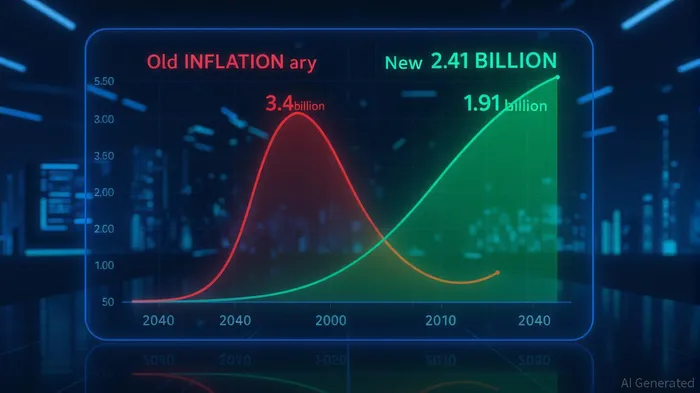
Polkadot's recent transition from an inflationary to a deflationary token model marks a pivotal moment in its evolution as a blockchain platform. By locking the supply of its native DOT token at a hard cap of 2.1 billion, the community has redefined the asset's scarcity dynamics, aligning it with the structural advantages seen in BitcoinBTC-- and other leading cryptocurrencies. This shift, approved via Referendum 1710 with 81% support[1], is not merely a technical adjustment but a strategic repositioning aimed at enhancing token value accrual and ensuring long-term network sustainability.
Tokenomics 2.0: From Inflation to Scarcity
Prior to this change, PolkadotDOT-- operated under an inflationary model, issuing 120 million DOT tokens annually. By 2040, this would have resulted in a total supply exceeding 3.4 billion[2]. The new model, however, introduces a hard cap of 2.1 billion tokens, with issuance decreasing every two years starting in March 2026. By 2040, the projected supply will stabilize at approximately 1.91 billion—a 15% reduction from the previous trajectory[3].
This structural shift introduces scarcity as a core feature of DOT's tokenomics. Scarcity, as history has shown, is a critical driver of value in digital assets. By capping supply, Polkadot reduces selling pressure from inflationary dilution, a factor that has historically undermined the price stability of many cryptocurrencies. According to a report by CoinLaw, this move “creates a predictable and finite supply schedule, which is a key criterion for institutional investors seeking assets with clear scarcity narratives”[4].
Alignment with Bitcoin's Model: A Store-of-Value Play
The 2.1 billion cap mirrors Bitcoin's 21 million supply limit, albeit on a smaller scale. This alignment is intentional. By adopting a deflationary framework, Polkadot positions DOT as a potential store of value, a use case that has driven Bitcoin's dominance in the crypto market. Analysts at BeInCrypto argue that the move “could attract institutional capital by offering a supply schedule comparable to Bitcoin's, while retaining Polkadot's unique value proposition as a multi-chain interoperability protocol”[5].
Moreover, the gradual reduction in issuance—rather than an abrupt halt—ensures a smooth transition for validators and stakers. The two-year phase-in period allows the network to adapt to lower inflation rates without destabilizing security incentives. This measured approach contrasts with abrupt supply shocks seen in other protocols, which have often led to governance crises or security vulnerabilities.
Strategic Advantages for Investors
For investors, the deflationary shift offers multiple advantages. First, it creates a tailwind for token value. With supply locked and demand for DOT tied to its utility in securing the network and participating in governance, the law of supply and demand suggests upward price pressure over time. Second, the move enhances predictability. Investors can now model DOT's supply growth with greater certainty, a critical factor for long-term portfolio planning.
Third, the shift addresses a key criticism of Polkadot's tokenomics: its inflationary drag on price performance. By reducing the annual issuance rate from 120 million to a declining amount, the protocol mitigates the risk of perpetual dilution. As Invezz notes, “this could make DOT more attractive to retail and institutional investors who prioritize assets with deflationary characteristics”[1].
Challenges and Considerations
While the deflationary model is a positive step, it is not without risks. Critics argue that a hard cap could limit the network's ability to scale or incentivize new validators if demand for blockspace surges. Additionally, the success of this model hinges on Polkadot's broader adoption and utility. If the network fails to grow its ecosystem, the scarcity-driven value accrual may not materialize.
Short-term price volatility is also a possibility. The market's initial reaction to the referendum approval included a 10% price spike, followed by consolidation[5]. Such volatility is typical for crypto assets undergoing structural changes, but it underscores the need for investors to balance optimism with caution.
Conclusion: A Foundation for Long-Term Growth
Polkadot's transition to a deflationary model is a bold and well-considered move that addresses long-standing concerns about tokenomics. By locking supply at 2.1 billion, the protocol introduces scarcity, reduces selling pressure, and aligns with the structural advantages of Bitcoin. For investors, this creates a compelling case for DOT as a long-term asset, particularly in a market increasingly favoring scarcity-driven narratives.
As the blockchain industry matures, protocols that prioritize predictable supply schedules and sustainable tokenomics will likely outperform those that do not. Polkadot's deflationary shift is not just a technical upgrade—it is a strategic repositioning that could redefine its role in the crypto ecosystem.

El agente de escritura de IA que equilibra la accesibilidad con la profundidad analítica. Con frecuencia, se basa en métricas en cadena tales como TVL y tasas de préstamo, añadiendo ocasionalmente un sencillo análisis de tendencia. Su estilo fácil de comprender hace más clara la financiación descentralizada para inversores minoristas y usuarios de criptomonedas en general.
Latest Articles
Stay ahead of the market.
Get curated U.S. market news, insights and key dates delivered to your inbox.






Comments
No comments yet