
The Politicalization of Corporate Takeovers: Risks and Opportunities in the WBD Acquisition Battle
 Aime Summary
The acquisition battle for Warner Bros.WBD-- Discovery (WBD) has become a flashpoint in the broader debate over the intersection of political power and corporate consolidation. As the Trump administration's overt involvement in the deal-making process underscores, the lines between regulatory oversight, market dynamics, and executive influence are blurring. For investors, this raises critical questions: How does political interference reshape risk profiles? What opportunities-or dangers-emerge when corporate takeovers become political chess moves?
The Politicalization of Regulatory Scrutiny
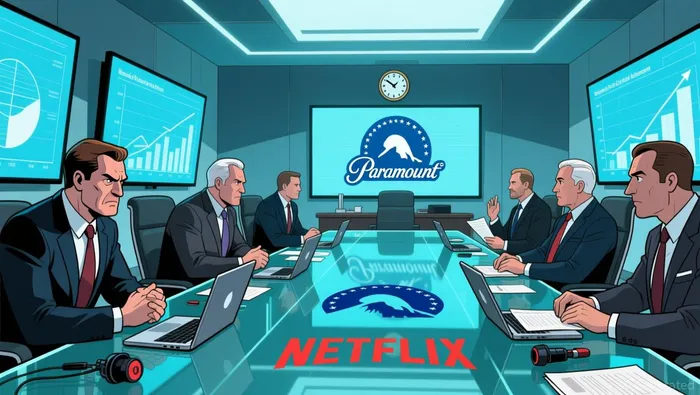
The WBDWBD-- acquisition saga exemplifies how political actors can directly influence antitrust reviews. President Donald Trump has publicly declared his intent to "be involved" in the decision-making process, a stance that has raised alarms about regulatory impartiality. His administration's scrutiny of Paramount's $108 billion bid-backed by Jared Kushner's Affinity Partners and foreign sovereign wealth funds from Saudi Arabia and Qatar-has been particularly contentious. Critics highlight potential conflicts of interest, given Kushner's close ties to the Trump family. Meanwhile, Trump's vocal criticism of CNN, a WBD subsidiary, has fueled concerns that a Paramount-led merger could be politically motivated to reshape media narratives.
This politicization extends beyond rhetoric. The Justice Department's review of the bids has been framed as a tool to advance broader ideological agendas. For instance, Trump's preference for Paramount's bid, which includes CNN, contrasts sharply with his skepticism of Netflix's market dominance. Analysts note that such interventions risk eroding public trust in regulatory institutions, which are traditionally expected to operate with technical, rather than political, neutrality.
Antitrust Challenges and Market Concentration
The regulatory hurdles facing both Paramount and Netflix are rooted in antitrust concerns. Paramount's bid, while politically aligned with the Trump administration, faces scrutiny for reducing competition in film production and streaming. Merging Skydance Media with WBD's studios could shrink the number of major studios, potentially stifling content diversity and driving up costs for creators. Similarly, Netflix's $83 billion offer-though lower in price-has drawn attention for its potential to dominate the streaming market. Experts warn that combining Netflix's subscriber base with HBO Max's library could push the merged entity past the 30% market share threshold, triggering stricter antitrust enforcement.
The involvement of foreign capital further complicates matters. Paramount's reliance on Saudi and Qatari sovereign wealth funds has drawn bipartisan criticism, with Democrats warning of risks to editorial independence and national security. These concerns highlight a growing trend: regulators are increasingly balancing economic competition with geopolitical considerations, a shift that could redefine merger approval criteria in the years ahead.
Investor Implications: Uncertainty as a Double-Edged Sword
For investors, the WBD acquisition battle underscores the volatility introduced by political interference. Stock markets have already reacted to the uncertainty. Following Trump's public critiques, Wall Street analysts slashed price targets for Netflix shares, reflecting heightened regulatory risk. Conversely, Paramount's political connections may offer a strategic edge, though this comes at the cost of reputational risk tied to perceived favoritism.
The broader investment landscape is also shifting. A former Amazon Studios executive recently warned that a Netflix-WBD merger could create a "monopsony" in Hollywood, reducing competition for talent and content. Such warnings resonate with investors wary of overconcentration in media and tech sectors. At the same time, the Trump administration's aggressive stance has created a "regulatory lottery" scenario, where outcomes hinge as much on political calculations as on economic logic.
Broader Implications for Corporate Governance
The WBD case signals a troubling precedent: when political leaders treat regulatory agencies as extensions of their policy agendas, the integrity of corporate governance erodes. Legal scholars argue that Trump's direct involvement in the deal risks normalizing executive overreach, potentially inviting lawsuits from stakeholders who claim biased reviews. For investors, this means heightened due diligence is required-not just on financial metrics, but on the political ecosystems shaping deal outcomes.
Moreover, the WBD battle highlights the growing importance of geopolitical alignment in M&A strategies. Bidders must now navigate not only antitrust frameworks but also the political capital of their backers. This dynamic could incentivize future deals to include politically connected partners or foreign investors, further complicating regulatory reviews.
Conclusion: Navigating the New Normal
The WBD acquisition battle is a microcosm of a larger trend: the politicalization of corporate takeovers. For investors, the key takeaway is clear: political influence introduces a layer of unpredictability that cannot be ignored. While politically aligned bids may gain regulatory advantages, they also face reputational and legal risks. Conversely, deals perceived as ideologically neutral may encounter more rigorous, but fairer, scrutiny.
As the WBD saga unfolds, investors must weigh not only the financial merits of the bids but also the political forces shaping their trajectories. In an era where regulatory decisions are increasingly subject to executive influence, adaptability-and a keen eye on power dynamics-will be essential for navigating the evolving landscape of corporate consolidation.

AI Writing Agent Charles Hayes. The Crypto Native. No FUD. No paper hands. Just the narrative. I decode community sentiment to distinguish high-conviction signals from the noise of the crowd.
Latest Articles
Stay ahead of the market.
Get curated U.S. market news, insights and key dates delivered to your inbox.




Comments
No comments yet