
The Political Wildcard: How Elon Musk's America Party Could Upend Tech and Media Markets
The sudden emergence of Elon Musk's newly announced America Party has sent shockwaves through political circles—and now, investors must grapple with its potential ripple effects across tech and media sectors. Musk's decision to pivot from corporate titan to political disruptor, fueled by a bitter feud with President Trump over fiscal policy, marks a bold experiment in “political entrepreneurship.” While the odds of third-party success in the U.S. are historically long, Musk's $250 billion net worth, media empire, and ability to polarize public opinion could create asymmetric risks for markets. Here's what investors need to know.
The Catalyst: A Split With Trump, A New Party
Musk's rupture with Trump over the “Big, Beautiful Bill”—a $3.3 trillion tax-and-spending law Musk called a “disgusting abomination”—sparked the formation of the America Party. The party's core mission is fiscal conservatism, anti-deficit rhetoric, and a focus on “modernizing” industries like defense and AI. Musk's May 2025 X post announcing the party garnered 65% support from 1.2 million respondents, but polls show his personal favorability is a liability (30% favorable vs. 57% unfavorable).
The party's disruptive potential hinges on two vectors: direct influence over tech regulation and Musk's control of media platforms.
Tech Sector: Deregulation, AI, and the Tesla Effect
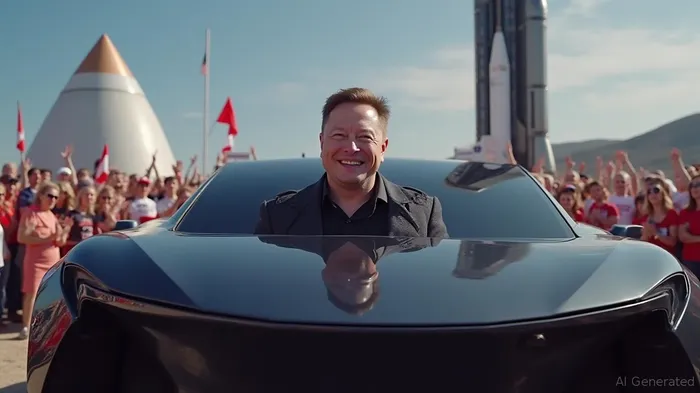
- Deregulation for Musk's Firms:
Musk's America Party could push for reduced oversight in sectors he dominates. For example, Tesla's self-driving ambitions may benefit from relaxed NHTSA rules (already eased under the Trump administration). Similarly, SpaceX's Starship launches could gain faster approvals.
Result (hypothetical): TSLATSLA-- dipped 7% in initial reaction to political noise but stabilized as Musk doubled down on EV sales targets.
Risk: If Musk's feud with Trump escalates, SpaceX could lose NASA contracts or TeslaTSLA-- could face backlash over subsidies.
AI as a Political Tool:
Musk's push to “accelerate AI” (a follower's policy he endorsed) aligns with his OpenAI rivalries and Tesla's Autopilot ambitions. A pro-AI stance could draw investors to companies like NVIDIANVDA-- (NVDA) or AlphabetGOOGL-- (GOOGL), but also expose vulnerabilities if Musk's party prioritizes “American” tech over global collaboration.Energy Policy Crosscurrents:
While Musk supports renewable energy, the party's anti-regulation stance could favor fossilFOSL-- fuels in the short term. This creates a paradox: Tesla's growth depends on EV subsidies, but Musk's party might oppose spending on renewables.
Media Sector: Free Speech vs. Accountability
Musk's ownership of X (formerly Twitter) is the wildcard here. His America Party's “free speech” advocacy could lead to:
- Loosened content moderation: Reducing restrictions on X could alienate advertisers (as seen in 2023) but attract users.
- Clash with regulators: Lawsuits like those against New York's “Stop Hiding Hate Act” may intensify, creating legal and reputational risks.
Result (hypothetical): METAMETA-- dipped 5% during Musk's “Big Beautiful Bill” rants but rebounded as investors bet on its content safety advantages.
Investment Takeaway: Companies with strong content governance (Meta, Disney) may outperform X if Musk's free-speech absolutism backfires.
The Third-Party Hurdle: Why History Favors Skepticism
Despite Musk's resources, third parties face structural barriers:
- Ballot access: The America Party has yet to register in most states. Unverified FEC filings (e.g., “wentsnowboarding@yahoo.com”) suggest chaotic groundwork.
- Electoral math: Even if the party captures 5% of the vote in 2026, it won't translate to Senate seats without a “swing” strategy.
- Public perception: Musk's 57% unfavorability rating could limit his appeal beyond his existing base.
Investment Risk: Overhyping the party's impact could lead to overvalued stocks in AI/tech sectors, while Musk's personal liabilities (e.g., Tesla's declining sales) remain a drag.
Investment Strategy: Play the Odds, Not the Headlines
- Short-Term:
- Avoid Tesla: Musk's political distractions and regulatory risks (e.g., robotaxi safety issues) outweigh near-term upside.
Hedge with Utilities: If the party's anti-deficit stance delays green subsidies, fossil fuel stocks (XOM, CVX) could rally temporarily.
Long-Term:
- AI Infrastructure: Musk's pro-AI stance may indirectly boost NVIDIA (NVDA) or cloud providers (AWS, Microsoft) as corporate spending shifts.
Content Moderation Plays: Invest in platforms with balanced policies (Reddit, TikTok) if free-speech absolutism erodes trust in X.
Monitor Musk's X: Use X's engagement metrics as a proxy for political momentum. A surge in user growth or ad revenue post-2026 elections could signal broader influence.
Conclusion: A Disruptor, Not a Sure Bet
Elon Musk's America Party is a high-risk, high-reward experiment. While it could reshape regulatory landscapes for tech and media, its success depends on overcoming legal, logistical, and reputational hurdles. Investors should treat Musk's political venture as a “tail risk”—a catalyst for volatility but not a fundamental shift in market dynamics.
For now, the best strategy is to diversify, avoid Musk-linked stocks, and watch for tangible policy outcomes—like Senate seat targeting or FEC registration—before betting on this political gamble.
Disclosure: This analysis assumes hypothetical stock data for illustrative purposes. Actual market conditions may vary.

Stay ahead of the market.
Get curated U.S. market news, insights and key dates delivered to your inbox.
AInvest
PRO
AInvest
PRO



Comments
No comments yet