
Political Scandals and Market Sentiment in Australia: Navigating Elite Entanglements and Sector Volatility
 Aime Summary
Australia's political landscape in 2025 is a minefield of contradictions. On one hand, the government is pivoting toward a more inclusive immigration narrative to court multicultural voters. On the other, anti-immigration activists with deep ties to the real estate sector are fueling public outrage, creating a toxic mix of populism and self-interest. This tension isn't just a political drama—it's a seismic shift in market sentiment that investors must decode.
The Lennon Paradox: Populism vs. Profit
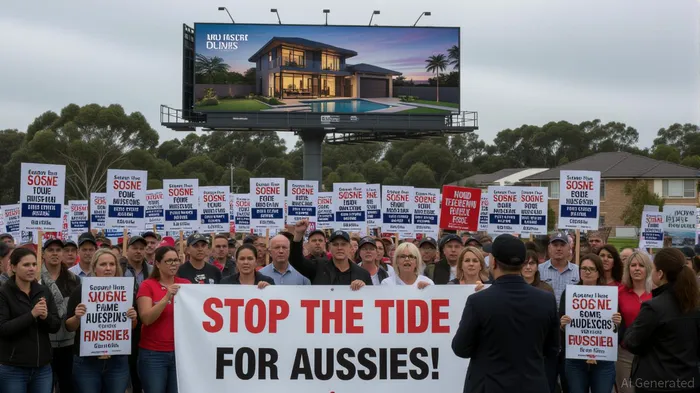
Hugo Lennon, the anti-immigration firebrand known as “Auspill,” has become a lightning rod for controversy. His rallies under the “March for Australia” banner, coupled with his family's ownership of Peet Limited (ASX:PEP), one of Australia's largest real estate developers, expose a glaring hypocrisy. Peet's landbank thrives on population growth, yet Lennon's rhetoric demands reduced immigration to “save” housing affordability. This disconnect isn't lost on investors.
Peet Limited's stock has seen a 12% dip in the past six months, despite its robust landbank. The company's public disavowal of Lennon's views hasn't stemmed the reputational damage. reveals a volatile trajectory, with sharp declines coinciding with media coverage of the Lennon saga. This volatility underscores how elite entanglements can erode trust in even the most profitable sectors.
Historical Precedents: Scandals as Market Stress Tests
Australia's history is littered with political scandals that have rattled investor confidence. The Robodebt scandal, which cost taxpayers $112 million, and the bushfire response fiasco, where PM Scott Morrison's Hawaii vacation became a symbol of callousness, are case studies in governance gone awry. These events created a pattern of short-term political expediency over long-term institutional credibility.
The National Anti-Corruption Commission's (NACC) recent exposure of Joanne Simeson and Anne McCann's abuses of power in immigration policy adds to this narrative. When public officials prioritize family or political ties over merit, it signals a breakdown in governance. shows how real estate stocks are increasingly diverging from the broader market—a sign of sector-specific fragility.
Sector Volatility: Real Estate, Infrastructure, and the Immigration Conundrum
The real estate sector is a prime example of how political sentiment translates into market risk. Peet's reliance on population growth to justify its land valuations is now under scrutiny. If immigration cuts materialize, demand for housing could plummet, dragging down property prices and developer valuations. Similarly, infrastructure projects—often funded by population-driven tax revenues—could face delays if political instability disrupts funding priorities.
Investors should also watch the energy and mining sectors, which are indirectly impacted by immigration debates. A shrinking labor pool could strain productivity in resource extraction, while reduced immigration might slow urbanization-driven energy demand. highlights the sector's sensitivity to political uncertainty.
Asset Allocation Strategies: Hedging Against Populist Storms
For investors, the key is to balance exposure to sectors vulnerable to political shifts with those insulated from them. Here's how to navigate the risks:
- Short-Term Hedging: Overweight defensive sectors like healthcare and utilities, which are less tied to immigration-driven demand.
- Long-Term Positioning: Invest in companies with diversified revenue streams, such as tech firms or renewable energy providers, which are less susceptible to political volatility.
- Geographic Diversification: Reduce exposure to Australia-specific assets and consider global equities or bonds in countries with more stable governance frameworks.
The Australian dollar (AUD) is another wildcard. A shift in immigration policy could weaken the currency by reducing foreign investment in housing and infrastructure. Investors should monitor the RBA's policy response and consider hedging against AUD depreciation.
The Bottom Line: Trust, but Verify
Australia's political class is at a crossroads. The Coalition's pivot to inclusivity is a welcome step, but the lingering influence of anti-immigration populists like Lennon suggests a fragmented narrative. Investors must remain vigilant, treating political scandals not as isolated events but as symptoms of a deeper erosion of institutional trust.
In this environment, the mantra is simple: diversify, hedge, and prioritize transparency. The markets may forgive a scandal, but they rarely forget a pattern of corruption. As the Lennon saga and its real estate ties demonstrate, the line between populism and profit is thinner than it appears.
offers a sobering reminder: Australia's neighbors have maintained higher trust levels by prioritizing governance reforms. It's a lesson the market won't ignore.

Stay ahead of the market.
Get curated U.S. market news, insights and key dates delivered to your inbox.


AInvest
PRO
AInvest
PRO



Comments
No comments yet