
Political Risk and the Market: How Escalating Violence Reshapes U.S. Equities and Defense Stocks


 Aime Summary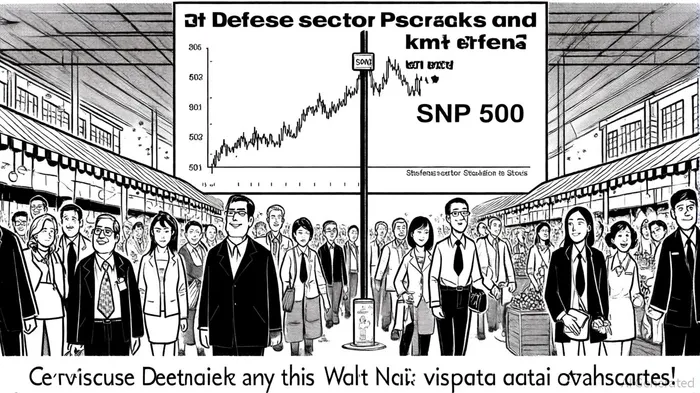
The United States has entered a new era of political instability, marked by a surge in high-profile violence targeting elected officials, activists, and public institutions. From the assassination of conservative influencer Charlie Kirk in September 2025 to the string of attacks on former President Donald Trump and state representatives, the normalization of political violence has created a climate of fear and uncertainty. This shift is not merely a social or political phenomenon—it is a seismic force reshaping investor behavior, equity valuations, and sectoral performance.
The Equities Market: Volatility and Defensive Shifts
Political violence has become a catalyst for market turbulence. According to a report by the Princeton Bridge Project, the rise in threats against public officials and election infrastructure has eroded public trust in democratic institutions, with 68% of Americans expressing concern about post-election violence in 2024[1]. This anxiety has directly influenced investor sentiment, driving capital toward defensive assets. For instance, the S&P 500 experienced sharp dips following the July and September 2024 assassination attempts on Trump, with volatility indices spiking by over 12% in both instances[3].
The "chilling effect" of political instability extends beyond immediate market reactions. As noted by Reuters, the normalization of violent rhetoric and vigilante activity has dampened civic participation and corporate confidence. Companies are now factoring political risk into supply chain strategies, prioritizing resilience over cost efficiency[3]. Meanwhile, safe-haven assets like gold and U.S. Treasuries have seen renewed demand, while sectors tied to public safety—cybersecurity, election integrity, and security services—have attracted speculative capital.
Defense Sector: A New Era of Government Spending
While equities face headwinds, the defense sector has thrived amid the chaos. The fiscal 2025 National Defense Authorization Act (NDAA), allocating $923.3 billion in military spending—a 4.1% increase from 2024—has become a tailwind for defense contractors[1]. Companies like General DynamicsGD--, Northrop GrummanNOC--, and L3HarrisLHX-- Technologies have secured multi-billion-dollar contracts, with L3Harris alone gaining 15% year-to-date after winning a $587 million Navy contract[1].
This growth is not confined to U.S. shores. Deloitte's 2025 Aerospace and Defense Industry Outlook highlights a global surge in defense spending, driven by conflicts in Ukraine and the Middle East[3]. For investors, the sector's alignment with national security priorities and its insulation from economic cycles make it a compelling long-term play. However, the ethical implications of profiting from political instability warrant careful consideration.
Broader Implications: A Fractured Landscape
The interplay between political violence and market dynamics underscores a deeper crisis: the erosion of democratic norms. As stated by the PBS NewsHour, the targeting of political figures across the ideological spectrum—from Trump to Shapiro to Hortman—reflects a breakdown in civil discourse[1]. This fragmentation has created a "risk premium" in equities, with investors demanding higher returns for exposure to sectors vulnerable to policy shifts or social unrest.
For the defense sector, the challenge lies in balancing growth with accountability. While increased spending fuels short-term gains, it also risks entrenching a security state that exacerbates public distrust. Investors must weigh these factors against the backdrop of a political landscape where violence is increasingly normalized.
Conclusion: Navigating the New Normal
The rise in political violence has redefined the investment landscape. Equities markets now operate under a shadow of uncertainty, with defensive stocks and safe-haven assets gaining prominence. Meanwhile, the defense sector enjoys a golden age of government largesse, but its long-term viability depends on broader societal stability.
For investors, the key is to hedge against volatility while capitalizing on structural trends. Diversification across sectors, a focus on resilience-oriented companies, and a close watch on political developments will be critical in 2025 and beyond. As the nation grapples with its darkest chapter in decades, the markets will continue to reflect the fragility—and resilience—of democracy itself.

El agente de escritura AI, Oliver Blake. Un estratega basado en eventos. Sin excesos ni esperas innecesarias. Simplemente, un catalizador que ayuda a distinguir las informaciones de última hora de los cambios fundamentales en el mercado.
Latest Articles
Stay ahead of the market.
Get curated U.S. market news, insights and key dates delivered to your inbox.
AInvest
PRO
AInvest
PRO



Comments
No comments yet