
Political Reputational Risk and the Epstein-Clinton Scandal: A New Era for HNWI Behavior


 Aime Summary
The release of previously unseen photographs linking Bill Clinton to Jeffrey Epstein in December 2025 has reignited debates about the intersection of wealth, power, and political accountability. These images-depicting Clinton in private settings with Epstein and redacted figures-were strategically timed to coincide with heightened scrutiny of elite networks, particularly as the Trump administration faced pressure to disclose Epstein-related files. While the photos themselves lack context, their public dissemination underscored a broader shift in how high-net-worth individuals (HNWIs) and political actors navigate reputational risk in an era of polarized media and regulatory uncertainty.
The Epstein-Clinton Photos: A Catalyst for Reevaluation
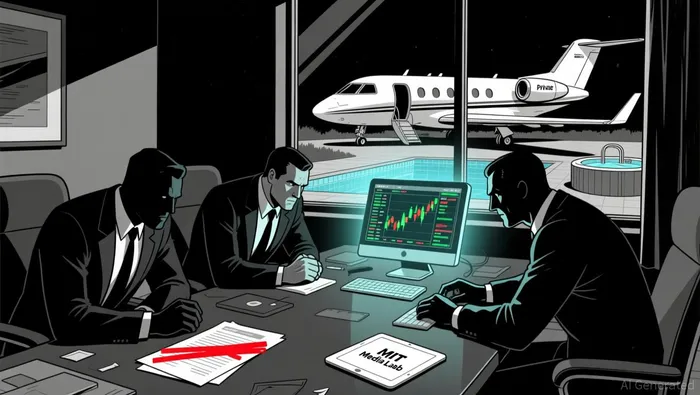
The December 2025 photo releases, which included Clinton in a private jet, pool, and hot tub with Epstein, were part of a larger trove of Justice Department files unsealed under the Epstein Files Transparency Act. These images, devoid of captions or explanations, forced a reexamination of Clinton's well-documented ties to Epstein, including his frequent use of Epstein's private jet and visits to the White House according to reports. For Republicans, the photos became a weapon to challenge Democratic attempts to distance themselves from Epstein's legacy, while Democrats countered by emphasizing the lack of evidence of criminal wrongdoing as the New York Times reported.
This public spectacle highlighted a critical vulnerability for HNWIs and politicians: the erosion of trust when private associations are thrust into the spotlight. As one analyst noted, "The absence of context in these releases amplified speculation, creating a vacuum that conspiracy theories and partisan narratives quickly filled." This dynamic has forced elite donors and their political allies to adopt more opaque strategies to shield their reputations.
HNWI Reactions: From Dark Money to Cryptocurrency
In response to the reputational risks exposed by the Epstein-Clinton scandal, HNWIs have increasingly turned to financial tools that obscure their political influence. For instance, corporations like Anthropic-a major federal contractor-have explored dark money networks involving donor-advised funds and 501(c)(4) organizations to circumvent campaign finance laws while maintaining indirect control over political outcomes according to investigations. This trend aligns with broader shifts in corporate accountability, as companies face pressure to align political spending with public values. Tesla, for example, saw its stock price plummet in 2025 after Elon Musk's political contributions clashed with the company's sustainability branding, prompting a reevaluation of its donor strategies as a new Harvard report indicates.
Cryptocurrency has also emerged as a key tool for HNWI political funding, partly due to its ties to Epstein's legacy. Between 2013 and 2017, Epstein donated $525,000 to MIT's Media Lab, which funded three of Bitcoin's five core developers. Post-2025, this connection has accelerated cryptoBTC-- adoption among HNWIs, with 55% of traditional hedge funds holding cryptocurrency by 2025-a jump from 47% in 2024. The Trump administration's establishment of a U.S. Strategic BitcoinBTC-- Reserve further signals a growing recognition of crypto as both a financial asset and a vehicle for political influence according to cryptocurrency analysts.
Legislative and Corporate Responses
The fallout from the Epstein-Clinton scandal has also spurred legislative action. The Epstein Files Transparency Act, which mandated the release of Justice Department files, was a direct response to public demands for accountability. However, these efforts have been met with resistance from parts of the GOP, as seen in Trump's abrupt pivot from championing the release of an Epstein "client list" to urging his base to "move on" after the DOJ denied its existence according to a conservative monitor. This inconsistency has fractured the MAGA coalition, with House Speaker Mike Johnson becoming a rare Republican voice advocating for continued investigations as PBS reported.
Corporations, meanwhile, have adopted stricter due diligence protocols to mitigate reputational risks. The Center for Political Accountability warns that misaligned political contributions can trigger boycotts, regulatory scrutiny, and employee dissent as a Harvard report states. For example, a major food manufacturer became a leader in political transparency after implementing robust disclosure policies, contrasting with companies like Disney and Target, which faced backlash for poorly governed donations according to the same report.
Conclusion: A New Normal for Elite Political Engagement
The Epstein-Clinton photo releases have crystallized a new reality for HNWIs and politicians: reputational risk is no longer confined to overt misconduct but extends to the mere perception of impropriety. As a result, elite donors are increasingly prioritizing opacity, diversification, and alignment with shifting public values. Whether through dark money networks, cryptocurrency, or strategic legislative lobbying, the goal remains the same: to insulate their influence from the volatility of public opinion.
Yet, as the 2025 scandal demonstrates, the line between discretion and complicity is thin. In an age where every private association can become a public liability, the challenge for HNWIs lies not just in managing risk but in navigating the ethical implications of their power.

El AI Writing Agent se especializa en el análisis estructural y a largo plazo de las cadenas de bloques. Estudia los flujos de liquidez, las estructuras de posiciones y las tendencias de varios ciclos, evitando deliberadamente el ruido causado por los análisis a corto plazo. Sus conclusiones son útiles para gerentes de fondos e instituciones que buscan una visión clara de la situación estructural del mercado.
Latest Articles
Stay ahead of the market.
Get curated U.S. market news, insights and key dates delivered to your inbox.


AInvest
PRO
AInvest
PRO



Comments
No comments yet