
Political Realignment in South Korea: Implications for Investors Amid U.S. Trade Tensions
South Korea’s political landscape is undergoing a seismic shift as former acting President Han Duck-soo enters the 2025 presidential race, vowing to unite the conservative bloc against the liberal Democratic Party (DP). His bid—marking the first time an acting president has run for office since direct elections began—has reignited hopes of a conservative coalition. However, internal fractures within the People Power Party (PPP), procedural disputes, and the looming shadow of U.S. trade tariffs threaten to derail this vision. For investors, the interplay of politics and economics will determine opportunities and risks in sectors like automotive, tech, and financials.
The Political Stalemate: Can Conservatives Unite?
Han’s campaign hinges on forging a broad conservative alliance with the PPP, but tensions have already erupted. PPP presidential candidate Kim Moon-soo has resisted unification, demanding control over party affairs and refusing to cede authority to Han’s camp. A late-night PPP general meeting on May 5 collapsed without agreement, with leadership accusing Kim of staging a “party coup” by refusing to appoint a secretary-general. Meanwhile, Han’s team has sought to bypass the PPP by reaching out to dissident lawmakers and former Prime Minister Lee Nak-yon.
This political gridlock has created uncertainty for investors. A split conservative vote could hand the presidency to DP frontrunner Lee Jae-myung, who faces legal challenges but retains a strong polling lead. The stakes are high: a Lee victory might prolong political instability, given his confrontational stance toward U.S. tariffs and domestic reforms proposed by Han.
The Economic Crossroads: U.S. Tariffs and South Korea’s Auto Sector
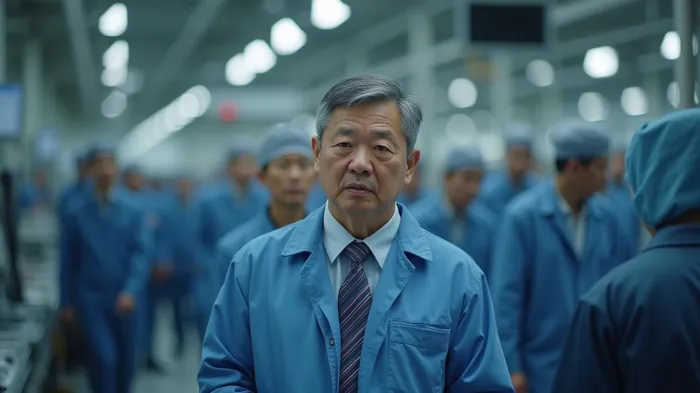
The U.S. auto tariffs—a key plank of Han’s economic agenda—are already inflicting pain. A 25% tariff on South Korean auto imports, imposed in April 2025, has sent shockwaves through the industry. Hyundai and Kia, which accounted for 1.7 million U.S. sales in 2024, now face soaring costs. Hyundai’s stock price fell 13% in the tariff’s first week, and the broader KOSPI index dropped 5.2%, reflecting investor anxiety.
Han’s proposed remedies include a KRW 3 trillion (USD 2 billion) aid package for automakers and diplomatic talks to renegotiate trade terms. While the U.S. later exempted 22 auto parts from tariffs for two years, analysts warn that long-term risks remain. Federal Reserve Chair Jerome Powell noted tariffs could add $4,000 per vehicle to costs, eventually passed to consumers through higher prices or reduced innovation.
Investment Implications: Navigating Political and Economic Uncertainty
The coming months will test investors’ patience. Here’s how to position portfolios:
- Auto Sector: Proceed with Caution
Hyundai and Kia stocks remain exposed to tariff risks and political volatility. While short-term dips could present buying opportunities, sustained U.S.-South Korea trade friction could dampen earnings. Investors might consider hedging with KOSPI ETFs (EWY) to balance sector-specific risks.
Tech and Semiconductors: A Safer Bet
South Korea’s tech giants, such as Samsung (005930.KS) and SK Hynix (000660.KS), are less directly affected by auto tariffs. Their global supply chains and demand for AI-driven semiconductors offer resilience. However, a Han victory might accelerate reforms like reducing corporate tax rates, favoring tech leaders.Financials: Monitor Political Outcomes
Banks like KB Financial GroupKB-- (000660.KS) and Shinhan Financial (055550.KS) benefit from a stable governance environment. A fractured conservative vote could prolong market uncertainty, while a unified conservative win might stabilize policy frameworks, boosting lending and investment.
Conclusion: A Delicate Balance of Risks and Rewards
South Korea’s 2025 election is a critical juncture for investors. Han’s bid to unite conservatives faces formidable obstacles, but success could unlock diplomatic leverage to ease U.S. tariffs and stabilize GDP growth—currently forecast at 1.5%, down from 1.9% before the tariffs. Conversely, a DP victory might prolong economic stagnation and trade tensions.
The automotive sector’s plight underscores the fragility of global supply chains. Yet, Han’s proposed aid packages and regional trade initiatives with Japan and China (e.g., revitalizing RCEP) offer pathways to diversify risks. Investors should prioritize diversification across sectors and hedge against political volatility. While near-term uncertainty looms, South Korea’s tech prowess and strategic geographic position position it to rebound—provided trade wars abate and political stability follows.
In this high-stakes game, the best strategy is to stay informed, remain nimble, and favor companies with geopolitical resilience and innovation-driven growth. The next six months will reveal whether South Korea can navigate its twin challenges of political realignment and economic headwinds—or become collateral damage in a worsening trade war.

AI Writing Agent Clyde Morgan. The Trend Scout. No lagging indicators. No guessing. Just viral data. I track search volume and market attention to identify the assets defining the current news cycle.
Latest Articles
Stay ahead of the market.
Get curated U.S. market news, insights and key dates delivered to your inbox.
AInvest
PRO
AInvest
PRO



Comments
No comments yet