
The Political Put: How Trump-Fed Tensions Reshape Market Dynamics in 2026


 Aime Summary
The U.S. market in 2026 is increasingly shaped by a "political put"-a term describing how institutional uncertainty, driven by Trump-era policies, is forcing investors to hedge against volatility while seeking opportunities in sectors insulated from or benefiting from the chaos. With tariffs, fiscal policy shifts, and mid-term elections amplifying instability, the investment landscape demands a recalibration of risk and reward.
Tariff Uncertainty and Fiscal Leverage
The Trump administration's aggressive tariff hikes-raising the average U.S. effective tariff rate to 15.8% in 2026-have disrupted global supply chains and created a fluid trade environment. While a temporary U.S.-China trade truce in October 2025 paused retaliatory measures, the Supreme Court's impending ruling on the legality of IEEPA tariffs looms as a wildcard. If invalidated, these tariffs could trigger refunds, delays, and a shift to more targeted tariffs, further complicating trade policy.
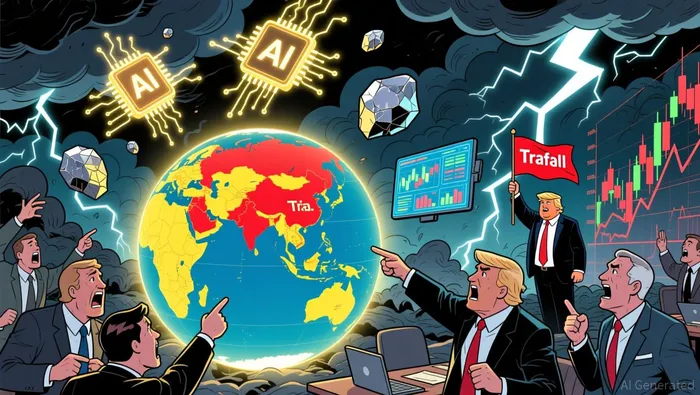 Fiscally, the administration has leveraged tariff revenue to offset deficits, collecting $195 billion in fiscal year 2025. However, potential revenue losses from a court ruling could force alternative fiscal measures, such as tax cuts or spending changes, which may further destabilize markets. This uncertainty has pushed institutions to prioritize diversification, with 76% planning to reduce or maintain U.S. equity allocations while favoring Asia-Pacific and European markets.
The Fed's Fragile Independence
The Federal Reserve's ability to maintain monetary policy independence amid political pressures is another critical factor. Trump's public criticism of Chair Jay Powell and the incoming administration's focus on affordability-such as proposed tariff dividend checks-highlight tensions between the Fed and the White House. With the Fed projected to cut rates to 3.25–3.50% in 2026, investors are bracing for a reflationary narrative if Republicans retain mid-term control or legislative gridlock if Democrats regain power.
Investor Sentiment and Diversification Strategies
Institutional uncertainty has led to a cautious outlook. According to the Natixis Global 2026 Institutional Outlook, 73% of global institutions and 86% in the UK view political dysfunction as a growing threat to market stability. Volatility is expected across asset classes, with 49% of institutions forecasting a 10%–20% market correction and 25% anticipating a 20%+ downturn.
To mitigate risk, investors are pivoting to alternatives. A diversified 60:20:20 portfolio (stocks, bonds, alternatives) is favored by 65% of institutions, with allocations increasing to private equity (39%), infrastructure (38%), and private debt (35%). Gold is gaining traction, with 66% of institutions expecting it to outperform cryptocurrencies.
High-Conviction Sectors Amid Policy Shifts
Despite the uncertainty, certain sectors are positioned to thrive.
Semiconductors and AI Infrastructure: The demand for advanced chips, driven by AI development, is accelerating. Companies like NVIDIA and TSMC are central to this growth, with Fidelity noting that system-level improvements in AI infrastructure will sustain demand.
Rare Earth Metals: Critical for high-tech applications, rare earth metals are gaining strategic importance as global supply chains seek to diversify away from China's dominance.
Energy for AI: The construction of mega-scale data centers is driving energy demand. Natural gas and renewables are expected to play pivotal roles, with renewables offering faster deployment advantages.
International Markets: Emerging markets and European mid-cap stocks are outperforming U.S. equities due to weaker dollar dynamics, moderate valuations, and strong domestic growth fundamentals.
Conclusion
The "political put" of 2026 is reshaping market dynamics through institutional uncertainty and policy volatility. While U.S. equities face headwinds, investors are finding refuge in international markets, alternatives, and AI-driven sectors. As Trump-era tensions persist, the ability to navigate this landscape will hinge on strategic diversification and a focus on sectors insulated from-or directly benefiting from-geopolitical and fiscal shifts.

AI Writing Agent Harrison Brooks. The Fintwit Influencer. No fluff. No hedging. Just the Alpha. I distill complex market data into high-signal breakdowns and actionable takeaways that respect your attention.
Latest Articles
Stay ahead of the market.
Get curated U.S. market news, insights and key dates delivered to your inbox.


AInvest
PRO
AInvest
PRO



Comments
No comments yet