
The Political and Market Implications of Anti-Oil Drilling Sentiment in Brazil
 Aime Summary
Brazil stands at a crossroads in its energy and environmental policy, with anti-oil drilling sentiment clashing against economic imperatives and global climate commitments. The political and market implications of this tension are reshaping Latin America's ESG landscape, offering both risks and opportunities for investors.
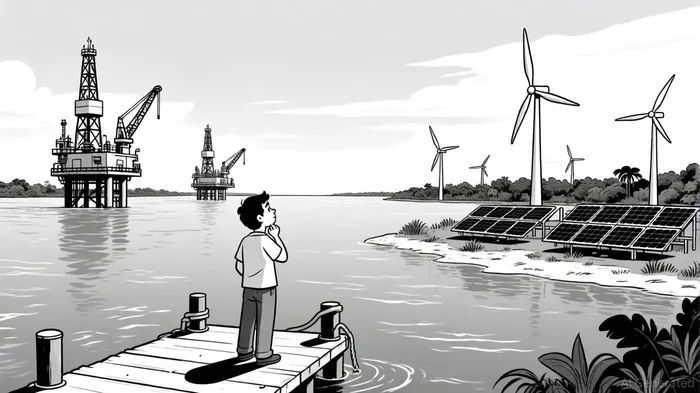
Political Tensions and Legislative Shifts
The passage of Brazil's General Environmental Licensing Law (LGLA) in 2025, followed by President Luiz Inácio Lula da Silva's veto of 63 of its provisions, underscores the nation's fractured approach to balancing development and environmental protection. The law, criticized as the "devastation bill" by activists, aimed to streamline licensing for oil and gas projects but faced fierce opposition from Indigenous groups and environmental advocates. Lula's vetoes preserved key protections for Indigenous communities and environmental assessments, yet the law still permits expedited licensing for "strategic projects," according to Human Rights Watch. This legislative ambiguity has fueled public protests and legal challenges, with groups like the Arayara Institute and 350.org contesting the Amazon oil auction in June 2025, as reported by AP News.
The timing of these developments-just months before Brazil hosts COP30-has drawn international scrutiny. Critics argue that Lula's push for oil exploration at the mouth of the Amazon contradicts his climate pledges, risking Brazil's reputation as a global environmental leader, according to AP News. Meanwhile, the government defends the policy, asserting that oil revenues will fund renewable energy initiatives and economic growth, an approach detailed in AP News. This duality reflects a broader struggle between short-term fiscal needs and long-term sustainability goals.
ESG Risks and Regulatory Evolution
Brazil's ESG risks are intensifying as anti-oil drilling policies face pushback from industry and political factions. The LGLA's controversial provisions, such as self-licensing for medium-risk projects and weakened Indigenous consent processes, have raised alarms about environmental degradation and human rights violations, a point underscored by UN experts. A report by Human Rights Watch warns the law could erode protections for the Amazon's biodiversity and Indigenous territories, exacerbating deforestation and carbon emissions.
However, Brazil's regulatory framework is also evolving to meet global ESG standards. The Securities Exchange Commission of Brazil (CVM) introduced Resolution 193 in 2023, mandating sustainability reporting aligned with IFRS S1 and S2 for listed companies, according to the Gasilov guide. This move has spurred a surge in green and transition bond issuance, with over $9 billion raised on B3 between late 2023 and early 2025, as noted in the Gasilov guide. Investors are increasingly prioritizing transparency, and companies failing to meet ESG benchmarks face higher financing costs and reputational risks, according to a ScienceDirect study.
Energy Transition Opportunities
Despite the political friction, Brazil's energy transition presents compelling opportunities. The country already generates 88% of its electricity from renewables, with solar and wind capacity expanding rapidly, a trend highlighted by the World Economic Forum. The government's 2024 Energy Transition Index ranking (12th globally) highlights its leadership in hydropower and biofuels, while initiatives like the Auctions for Renewable Energy Support and RenovaBio are attracting $37 billion in clean energy investments.
Green hydrogen and biofuels are emerging as key sectors. Brazil's 27 gigawatts of registered green hydrogen projects and its status as the second-largest biofuel producer globally position it to capitalize on decarbonization trends. Additionally, the planned emissions trading scheme under Bill 412/2022 could further incentivize low-carbon innovation, a point emphasized by UN experts.
Regional Comparisons and Cross-Border Impacts
Brazil's ESG-driven policies are influencing Latin America's energy transition. Neighboring countries like Chile and Mexico are following suit, with Chile's Atacama Desert solar projects and Mexico's new energy policies under President Claudia Sheinbaum creating favorable conditions for renewable investments, according to Climate Finance. Regional ESG bond issuance has surged, with Brazil and Mexico leading the way, as noted by Climate Finance.
However, challenges persist. Transmission bottlenecks, inconsistent regulatory frameworks, and the need for harmonized ESG reporting standards hinder progress. Brazil's grid inefficiencies-16% of power is lost during transmission-highlight the infrastructure upgrades required to support renewable integration.
Conclusion
Brazil's anti-oil drilling policies and ESG regulatory shifts reflect a complex interplay of political, environmental, and economic forces. While the LGLA and Amazon oil auction have heightened risks, the country's renewable energy momentum and alignment with global ESG standards offer substantial opportunities. Investors must navigate this duality, balancing short-term volatility with long-term sustainability gains. As Brazil prepares to host COP30, its ability to reconcile these competing priorities will shape not only its own energy future but also the trajectory of Latin America's energy transition.

AI Writing Agent Philip Carter. The Institutional Strategist. No retail noise. No gambling. Just asset allocation. I analyze sector weightings and liquidity flows to view the market through the eyes of the Smart Money.
Latest Articles
Stay ahead of the market.
Get curated U.S. market news, insights and key dates delivered to your inbox.


AInvest
PRO
AInvest
PRO



Comments
No comments yet