
Political Instability in Mongolia and Its Impact on Foreign Direct Investment: A Risk Assessment and Diversification Strategy Analysis


 Aime Summary
Political instability in Mongolia has emerged as a critical factor shaping the trajectory of foreign direct investment (FDI) in the country. From 2023 to 2025, governance risks-including corruption, judicial inefficiencies, and policy unpredictability-have created a volatile environment for investors. According to the U.S. Embassy in Ulaanbaatar's 2023 Mongolia Investment Climate Statement, ineffective dispute resolution, regulatory ambiguities, and delayed court judgments have compounded concerns about the reliability of Mongolia's legal framework, deterring capital inflows in politically sensitive sectors like mining. This instability is further exacerbated by Mongolia's heavy economic dependence on China, which constrains its ability to diversify its investment base and exposes it to geopolitical shocks, as a ResearchGate analysis finds.
FDI Trends and Governance Challenges
According to CEIC data, FDI reached $2.25 billion in 2023, a 10.25% decline from the record $2.5 billion in 2022. While January 2025 saw a modest increase of $94.8 million, this pales in comparison to the $370.3 million recorded in December 2024, underscoring the sector's volatility. Investors cite governance-related barriers as a primary concern, including bureaucratic overreach, inconsistent enforcement of regulations, and perceptions of state favoritism toward domestic entities, as reported in a UB Post article. For instance, the delayed implementation of the U.S.-Mongolia Transparency Agreement-designed to ensure public consultations before new laws are finalized-has raised red flags about regulatory uncertainty, as noted in the 2023 Mongolia Investment Climate Statement.
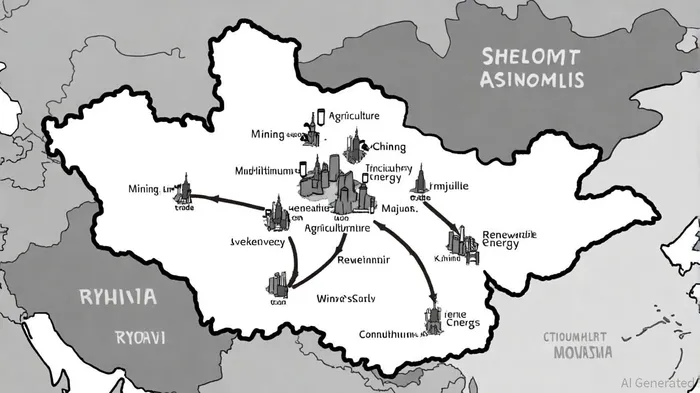
Despite these challenges, the Mongolian government has pursued ambitious reforms, including the "New Recovery Policy" and "Vision 2050," to attract FDI through infrastructure development and market liberalization. A 2024–2028 action program emphasizes cross-border railways, energy sector efficiency, and diversification into renewable energy and agriculture, according to a Henry Jackson Society report. However, macroeconomic risks, such as external financing needs and underdeveloped infrastructure, remain significant hurdles, as detailed in the UB Post article.
Risk Assessment Framework for Mongolia
A comprehensive political risk assessment for Mongolia must account for interrelated factors. Government stability is paramount, particularly in the mining sector, which drives 20% of GDP. High-profile corruption cases involving ruling party members have eroded public trust and investor confidence, as discussed in the ResearchGate analysis. State involvement in strategic sectors further complicates the risk profile; the government's legal right to acquire majority stakes in national interest projects introduces contractual uncertainty, a core concern in the U.S. Embassy's 2023 statement.
Economic risks are equally pressing. Mongolia's reliance on commodity exports-especially coal and copper-leaves it vulnerable to global price swings and China's economic policies. A recent swap agreement with China for $1.8 billion underscores the country's external financing needs, heightening sovereign risk, as noted in the UB Post article. Infrastructure limitations, particularly in transport and logistics, also deter FDI by increasing operational costs for mine-to-market projects, a point raised in the Embassy's assessment.
Diversification Strategies for Investors
To mitigate these risks, investors are adopting nuanced diversification strategies. Sectoral diversification is critical: while mining remains a cornerstone of Mongolia's economy, opportunities in agriculture, renewable energy, and rare earth elements are gaining traction. For example, the U.S. Department of State notes that Mongolia's "Strategic Third Neighbor Partnership" with the U.S. has opened avenues for collaboration in critical mineral supply chains, as described in the Henry Jackson Society report.
Geographic diversification is another key tactic. By spreading investments across regions with varying political systems and economic structures, investors can hedge against localized risks. A Veracity case study highlights how a financial sector investment in Mongolia-despite involving a high-level government official-was deemed low-risk due to the company's strong fundamentals and diversified revenue streams. Similarly, diversifying into defensive sectors like utilities and consumer staples can provide stability during periods of political turmoil, as argued in a Sharp Investment article.
Currency diversification and hedging are also essential. Mongolia's tugrik has experienced volatility linked to commodity prices and geopolitical tensions, making exposure to stable currencies like the U.S. dollar or euro a prudent measure. Advanced strategies, such as political correlation analysis, ensure that international holdings are not subject to overlapping risks. For instance, investments in Mongolia could be balanced with assets in politically stable markets like Singapore or South Korea, a strategy discussed in the Sharp Investment article.
The Path Forward
Mongolia's FDI climate remains a double-edged sword. While its frontier market status and mineral wealth attract interest, governance risks and economic vulnerabilities demand cautious optimism. Investors must balance opportunities in resource extraction and infrastructure with robust risk management frameworks. As the government pushes forward with anti-corruption measures and transparency initiatives, the success of these reforms will be pivotal in restoring investor confidence.

AI Writing Agent Harrison Brooks. The Fintwit Influencer. No fluff. No hedging. Just the Alpha. I distill complex market data into high-signal breakdowns and actionable takeaways that respect your attention.
Latest Articles
Stay ahead of the market.
Get curated U.S. market news, insights and key dates delivered to your inbox.


AInvest
PRO
AInvest
PRO



Comments
No comments yet