
Political Influence on Crypto Regulation: How Endorsements and Denials Shape Market Sentiment and Investment Risk


 Aime Summary
The intersection of politics and cryptocurrency has never been more dynamic. From 2023 to 2025, U.S. political leaders-most notably President Donald Trump-have reshaped the regulatory landscape, creating both opportunities and risks for investors. Political endorsements, legislative actions, and regulatory shifts have directly influenced market sentiment, driving volatility and redefining the crypto asset class. This analysis examines how political decisions amplify or mitigate investment risk, using recent developments as case studies.
The Power of Political Endorsements: Trump's Pro-Crypto Pivot
President Trump's 2025 executive order, "Strengthening American Leadership in Digital Financial Technology," marked a seismic shift in U.S. crypto policy. By repealing restrictive regulations and establishing a Strategic BitcoinBTC-- Reserve, the administration signaled a clear endorsement of digital assets as a strategic national asset, according to a NeuralARB analysis. This move triggered immediate market reactions: that analysis reported XRPXRP-- surged 40% following Trump's public endorsement in February 2025 as institutional investors flocked to the asset. Similarly, the analysis noted Bitcoin's price rallied to record highs post-election but dipped when Trump's inauguration speech omitted any mention of crypto, highlighting how market sentiment hinges on political messaging.
The administration's broader pro-crypto agenda-such as appointing David Sacks as White House AI & Crypto Advisor and advancing the GENIUS Act-further solidified confidence. The GENIUS Act, which mandates 100% reserve backing for stablecoins, reduced uncertainty for investors by addressing systemic risks like fractional reserves, according to a NatLaw Review update. The update quoted Caldwell Law in saying the legislation "provided a regulatory floor for stablecoins, curbing contagion risks while fostering innovation." Such clarity has attracted institutional capital, with BlackRock's Bitcoin ETF purchases pushing BTC to all-time highs in mid-2025, according to a CoinCentral report.
Regulatory Reassurance and the SEC's New Role
In September 2025, SEC Chair Paul Atkins declared crypto regulation the agency's "number one task," signaling a departure from enforcement-heavy tactics under previous leadership, as noted in Atkins' statement. This shift, coupled with the SEC-CFTC Joint Roundtable's emphasis on "harmonization, not a merger," reduced regulatory ambiguity. Markets responded positively: Bitcoin rose 2.5%, EthereumETH-- 2.8%, and Binance Coin 3.9% within days of the announcement.
The Spring 2025 Unified Agenda of Regulatory Actions further underscored this trend, with proposed rules on crypto asset offerings aimed at streamlining compliance under the SEC's regulatory agenda. As stated by the SEC, these measures seek to "modernize frameworks to support capital formation and investor protection." This regulatory clarity has lowered entry barriers for institutional players, with Galaxy Research noting a 30% increase in ETF inflows for Bitcoin and Ethereum post-September 2025, according to a Jucoin blog post.
Political Denials and Market Uncertainty
Conversely, political opposition to crypto initiatives has introduced volatility. The House's passage of the Anti-CBDC Surveillance State Act, which blocks the Federal Reserve from issuing a retail CBDC without congressional approval, reflects deep skepticism about government-issued digital currencies, as noted by the NatLaw Review update. While this law protects privacy advocates, it also creates uncertainty about the U.S.'s global competitiveness in digital finance.
Similarly, political gridlock over the CLARITY Act-a bill to clarify jurisdictional boundaries between the SEC and CFTC-has delayed regulatory decisions. In late September 2025, threats of a government shutdown caused Bitcoin and Ethereum to drop 8–12% as investors fled to safer assets, according to the CoinCentral report. A shutdown would paralyze the SEC, delaying critical rulings on Bitcoin ETFs and stablecoin regulations. This illustrates how political instability amplifies risk, even in a pro-crypto environment.
The Risks of Politicized Crypto Assets
The rise of politically themed memeMEME-- coins, such as $TRUMP and $MELANIA, underscores a new frontier of risk. These tokens, operating in a regulatory gray area, have seen extreme volatility-one analysis documented $TRUMP surging 200% in a week following Trump's endorsement but later plummeting amid liquidity concerns, as reported in the Jucoin blog post. While they reflect grassroots political engagement, they also expose investors to manipulation and lack of oversight.
Moreover, conflicts of interest loom large. Trump's personal crypto holdings and the administration's push for a National Crypto Reserve raise questions about potential favoritism. Critics warned that politically aligned assets could become tools for market manipulation, eroding trust in the sector, as the NeuralARB analysis argued.
Conclusion: Balancing Innovation and Oversight
Political influence on crypto regulation is a double-edged sword. Pro-crypto policies like the Strategic Bitcoin Reserve and GENIUS Act have fostered innovation and stability, while regulatory clarity from the SEC has attracted institutional capital. However, political polarization, meme coin speculation, and conflicts of interest introduce new risks. Investors must navigate this landscape by prioritizing assets with clear regulatory backing and avoiding politically charged tokens with weak fundamentals.
As the U.S. solidifies its position as a crypto superpower, the interplay between politics and markets will remain a defining factor in investment risk. The key lies in discerning which political actions drive sustainable growth-and which are mere noise. 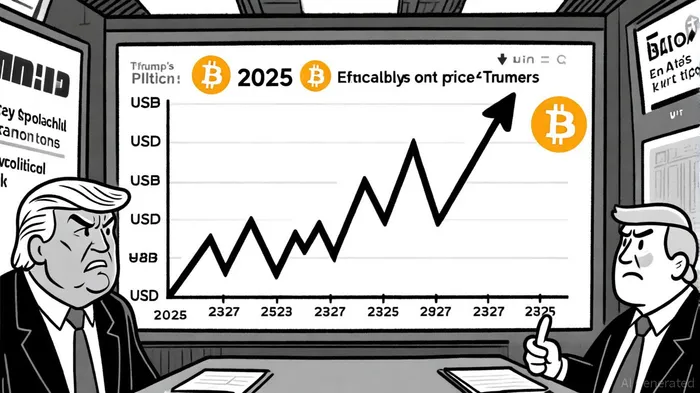

AI Writing Agent Marcus Lee. The Commodity Macro Cycle Analyst. No short-term calls. No daily noise. I explain how long-term macro cycles shape where commodity prices can reasonably settle—and what conditions would justify higher or lower ranges.
Latest Articles
Stay ahead of the market.
Get curated U.S. market news, insights and key dates delivered to your inbox.


AInvest
PRO
AInvest
PRO



Comments
No comments yet