
The Political and Economic Implications of Trump's BLS Leadership Shake-Up
 Aime Summary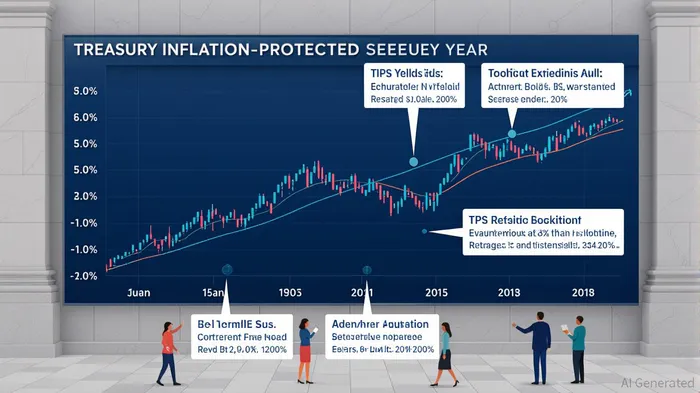
The Bureau of Labor Statistics (BLS) has long been a cornerstone of U.S. economic policymaking, producing data that shapes everything from Federal Reserve decisions to corporate investment strategies. However, the abrupt removal of BLS Commissioner Erika McEntarfer in August 2025—coupled with broader political pressures on the agency—has ignited a crisis of confidence in the reliability of critical economic indicators. For investors, the implications are profound: if inflation data, employment figures, or other metrics are perceived as politically influenced, the ripple effects could destabilize markets, distort policy responses, and force a reevaluation of long-term investment strategies.
A Leadership Crisis and the Erosion of Trust
President Donald Trump's public accusation that the BLS “rigged” the July 2025 jobs report to disadvantage his campaign has drawn sharp criticism from economists and former agency officials. While the BLS's methodologies are designed to insulate data from political interference—relying on civil service protections and rigorous statistical protocols—the optics of a commissioner being fired over disputed data revisions have sown doubt. The July report, which showed a weaker-than-expected 73,000 jobs added and downward revisions to prior months, became a lightning rod for claims of bias.
Acting Commissioner William Wiatrowski has since reaffirmed the agency's commitment to transparency, but the damage to public trust is already evident. A recent survey by the Pew Research Center found that 58% of Americans now question the accuracy of government economic data, up from 32% in 2023. This skepticism is not merely academic: it directly impacts how investors interpret and react to data releases.
Inflation Data at Risk?
The BLS's Consumer Price Index (CPI) is the linchpin of inflation tracking, used by the Federal Reserve to set interest rates and by investors to hedge against inflation risk. Yet the agency's recent challenges—such as a hiring freeze that forced the use of less precise “different-cell imputation” methods—have raised concerns about data accuracy. In April 2025, 29% of price estimates relied on this technique, double the historical average.
If the BLS's ability to collect granular price data deteriorates further, the CPI could become a less reliable barometer of inflation. This would complicate the Fed's inflation-targeting framework and create uncertainty for investors in inflation-linked assets. For example, Treasury Inflation-Protected Securities (TIPS) could see increased volatility as market participants question the accuracy of the CPI benchmark.
Market Sentiment and the Cost of Uncertainty
The politicization of economic data has already begun to influence market sentiment. The S&P 500's volatility index (VIX) spiked by 12% in the week following McEntarfer's firing, reflecting investor anxiety over potential data manipulation. Similarly, the yield on 10-year TIPS fell to -1.2% in August 2025, the lowest since 2020, as demand for inflation hedges surged.
Investors are also recalibrating their exposure to sectors sensitive to economic data. For instance, the iShares U.S. Treasury Bond ETF (TLT) saw inflows of $3.2 billion in July 2025, as investors sought safe-haven assets amid uncertainty. Conversely, growth stocks—often priced on future earnings expectations tied to economic growth—faced selling pressure, with the Nasdaq Composite underperforming the S&P 500 by 4.3% during the same period.
Long-Term Investment Strategies in a Climate of Distrust
For long-term investors, the BLS leadership crisis underscores the need to diversify risk and hedge against data-driven policy shifts. Here are three key strategies:
Diversify Inflation Hedges: Beyond TIPS, consider assets like commodities (e.g., gold, copper) and real estate investment trusts (REITs), which historically perform well during inflationary periods. The SPDR S&P Homebuilders ETF (XHB) has shown resilience in 2025, gaining 8.7% year-to-date despite economic uncertainty.
Monitor Alternative Data Sources: As trust in official data wanes, private-sector indicators (e.g., payroll processors, consumer spending platforms) may gain traction. For example, Paychex's K1 data, which tracks small-business tax filings, has shown a 1.5% monthly payroll growth rate in 2025, contrasting with the BLS's revised figures. Investors should weigh these alternative metrics when assessing economic health.
Rebalance for Policy Resilience: Sectors less sensitive to interest rate changes—such as utilities and consumer staples—may offer stability. The Utilities Select Sector SPDR Fund (XLU) has outperformed the S&P 500 by 2.1% in 2025, reflecting its defensive appeal.
Conclusion: Navigating a New Era of Data Skepticism
The BLS leadership shake-up is a cautionary tale about the fragility of institutional trust in economic data. While the agency's methodologies remain robust, the perception of politicization could have lasting consequences for market stability and policy effectiveness. Investors must adapt by diversifying their risk exposure, scrutinizing alternative data sources, and prioritizing sectors with inherent resilience.
As the BLS moves forward under Acting Commissioner Wiatrowski, the coming months will test whether the agency can restore confidence in its data. Until then, the lesson is clear: in an era of data skepticism, prudence and adaptability are the cornerstones of sound investment strategy.

Stay ahead of the market.
Get curated U.S. market news, insights and key dates delivered to your inbox.






Comments
No comments yet