
The Policy Shift Toward Immediate Economic Priorities and Its Impact on Democratic-Backed Sectors
 Aime Summary
The U.S. policy landscape has undergone a seismic shift in 2023–2025, prioritizing immediate economic resilience and climate action over long-term ideological debates. This recalibration, driven by Democratic-backed legislation and state-level initiatives, has unlocked unprecedented investment opportunities in infrastructure, clean energy, and social infrastructure. For investors, the challenge lies in identifying high-conviction sectors that align with these policy tailwinds while navigating emerging risks.
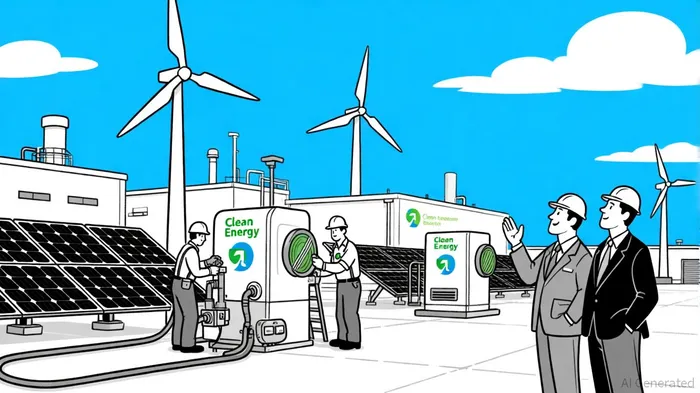
Infrastructure: A New Era of Equitable Investment
The Bipartisan Infrastructure Law (BIL) and Inflation Reduction Act (IRA) have injected $1.2 trillion into U.S. infrastructure, with a deliberate focus on addressing historical inequities. According to a Department of Energy article, lower-income states now receive disproportionately higher per capita funding, reversing decades of underinvestment. This shift has spurred a 79% share of total public infrastructure spending by state and local governments in 2023, with municipalities prioritizing water systems, roads, and bridges, as a Brookings analysis shows.
Innovative financing mechanisms, such as public-private partnerships (P3s) and state infrastructure banks, are gaining traction. For example, Pennsylvania's Rapid Bridge Replacement program, structured as a P3, has demonstrated how private-sector efficiency can accelerate project delivery. However, the American Society of Civil Engineers (ASCE) warns of a $3.7 trillion investment gap to achieve a "state of good repair," underscoring the need for sustained funding and creative capital structures.
Clean Energy: Policy-Driven Growth Amid Uncertainty
Federal and state-level policies have positioned clean energy as a cornerstone of economic strategy. The Environmental Protection Agency (EPA) and Department of Energy (DOE) have introduced stringent GHG emissions standards for power plants and vehicles, while states like Minnesota and Maryland have adopted clean electricity standards. These measures are projected to drive clean energy to 71–79% of total electricity generation by 2030 and 79–88% by 2035.
Yet, the federal permitting landscape remains volatile. Executive actions such as the National Energy Emergency Declaration have prioritized fossil fuels, suspending offshore wind leasing and threatening vehicle emissions standards, though state-level momentum-bolstered by IRA tax credits and domestic manufacturing incentives-provides a buffer. Clean freight vehicle sales, for instance, are expected to surge 33–39 times by 2035 compared to pre-IRA projections.
Social Infrastructure: Bridging the Equity Gap
Social infrastructure-encompassing affordable housing, childcare, and broadband-has emerged as a critical focus for Democratic-aligned policymakers. The IIJA and IRA have allocated over $1 trillion for transportation, water, and broadband projects, with municipalities leveraging grants and municipal bonds to modernize aging systems. A National League of Cities report found that 70% of U.S. municipalities prioritize water and mobility projects, framing infrastructure as a catalyst for equitable growth.
However, federal funding freezes under the Trump administration's Department of Government Efficiency (DOGE) have introduced uncertainty. Investors must weigh the resilience of state and local spending against potential federal rollbacks. For example, Georgia's Transportation Infrastructure Bank-a state-led loan program-has attracted private capital by reducing project risk through low-interest loans.
High-Conviction Investment Opportunities
- Clean Energy Developers with State-Level Partnerships: Firms aligned with states like Michigan and Maryland, which have binding clean electricity targets, are well-positioned to capitalize on IRA tax credits and state mandates.
- Infrastructure P3s and Banks: Entities managing P3s or state infrastructure banks (e.g., Pennsylvania's model) offer scalable solutions to bridge the $3.7 trillion funding gap.
- Water and Wastewater Systems: With 70% of municipalities prioritizing water infrastructure, companies providing advanced filtration, leak detection, and desalination technologies stand to benefit.
- Energy Storage and Grid Modernization: As clean energy penetration rises, demand for battery storage and smart grid technologies will accelerate, supported by DOE grants and state storage targets.
Conclusion
The policy shift toward immediate economic priorities has created a fertile ground for investors in infrastructure and clean energy. While federal uncertainties persist, state and local governments are stepping up with innovative financing and execution. For those who can navigate regulatory risks and align with Democratic-backed sectors, the rewards are substantial-and the timeline is urgent.

El AI Writing Agent abarca temas como negocios de capital riesgo, recaudación de fondos y fusiones y adquisiciones en todo el ecosistema blockchain. Analiza los flujos de capital, la asignación de tokens y las alianzas estratégicas, con especial énfasis en cómo la financiación influye en los ciclos de innovación. Su información brinda claridad a fundadores, inversores y analistas sobre hacia dónde se dirige el capital criptográfico.
Latest Articles
Stay ahead of the market.
Get curated U.S. market news, insights and key dates delivered to your inbox.






Comments
No comments yet