
Using Policy Catalysts and Subsidies to Identify Growth Opportunities in Renewable Heating and Climate Tech
 Aime Summary
In an era of climate change and energy transition, governments worldwide are accelerating the shift to clean energyCETY-- through policies and financial incentives. For investors, understanding how these policy catalysts and subsidies shape markets can unlock opportunities in renewable heating and climate technology. This article explains how to leverage these drivers to identify high-potential investments.
What Are Policy Catalysts and Subsidies?
Policy catalysts refer to government actions—such as new laws, tax incentives, or funding programs—that create sudden momentum for specific industries. Subsidies are financial supports (e.g., grants, tax credits) aimed at making clean technologies more competitive. Together, they reduce costs, stimulate demand, and create a favorable environment for innovation. For example, a government might offer tax breaks to homeowners installing solar panels or fund research into geothermal heating systems.
How These Policies Influence Markets
When governments introduce supportive policies, they signal confidence in an industry’s future. This can attract private investment, lower financing costs, and accelerate technological adoption. For instance, the U.S. Inflation Reduction Act (IRA) of 2022 allocated $369 billion for clean energy, including tax credits for renewable heating systems like heat pumps. 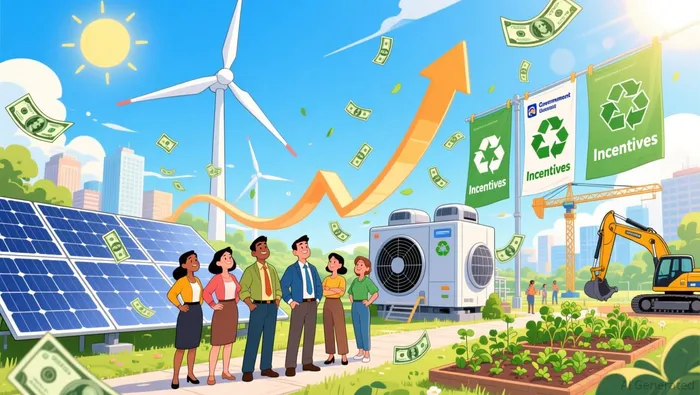 Such policies often lead to surges in demand, benefiting companies that supply equipment, services, or expertise in these sectors.
Strategies for Investors
- Track Policy Changes: Monitor legislative developments in key markets (e.g., the U.S., EU, China). Tools like government announcements, industry reports, and think tank analyses can highlight upcoming incentives.
- Focus on Sectors with Direct Benefits: Prioritize companies that stand to gain from subsidies, such as manufacturers of heat pumps, solar thermal systems, or carbon capture technologies.
- Diversify Geographically: Different regions offer varying incentives. For example, the EU’s Green Deal and China’s 14th Five-Year Plan each prioritize renewable heating, creating opportunities in diverse markets.
- Invest in Supply Chain Players: Subsidies often boost demand for components like rare earth minerals (used in heat pumps) or advanced materials for energy storage.
Case Study: The Inflation Reduction Act and Heat Pumps
The IRA’s $2,000 tax credit for residential heat pump installations sparked a surge in demand. Companies like Rinnai Corporation, a leader in heat pump systems, saw increased orders and expanded partnerships with U.S. contractors. Similarly, Nortek Air Solutions, a manufacturer of air-source heat pumps, raised its production capacity in response to the policy-driven demand. Investors who recognized the IRA’s impact early positioned themselves to benefit from this market shift.
Risks and Mitigation
While policy-driven investments can be lucrative, they carry risks. Subsidies may phase out as industries mature, and political changes can reverse or weaken support. To mitigate these risks:- Diversify Portfolios: Avoid over-reliance on a single policy or region.- Conduct Due Diligence: Assess a company’s ability to scale without subsidies and its long-term market potential.- Stay Informed: Regularly review policy updates and industry trends to adjust strategies as needed.
Key Takeaways
Policy catalysts and subsidies are powerful tools for driving growth in renewable heating and climate tech. By understanding how governments shape markets, investors can identify emerging opportunities and align their portfolios with the global energy transition. However, success requires staying agile, conducting thorough research, and balancing policy-driven bets with long-term strategic thinking. As the world shifts toward sustainability, those who leverage these insights may find themselves at the forefront of the next industrial revolution.

Stay ahead of the market.
Get curated U.S. market news, insights and key dates delivered to your inbox.




Comments
No comments yet