
Polestar's 2025 Performance: Navigating Turbulence and Building Resilience in the Premium EV Sector
 Aime Summary
The maturing electric vehicle (EV) market in 2025 has tested the mettle of even the most ambitious automakers, yet Polestar has emerged as a case study in strategic adaptation. Despite operating in a landscape marked by fierce competition, regulatory headwinds, and margin pressures, the Swedish premium EV brand has demonstrated resilience through aggressive sales growth, geographic realignment, and product innovation. For investors, the question remains: Can Polestar's 2025 performance translate into sustainable value creation in a sector where profitability remains elusive for many?
Sales Growth and Geographic Rebalancing: A Foundation for Resilience
Polestar's 2025 results underscore its ability to capitalize on shifting market dynamics. The company reported record retail sales of 60,119 vehicles for the full year, a 34% year-over-year increase, with Q4 sales alone surging 27% to 15,608 units. This growth was driven by a strategic pivot to Europe, where the brand now generates 78% of its total sales. The shift reflects a pragmatic response to U.S. market challenges, including the expiration of federal EV tax credits and the impact of tariffs on Chinese-made vehicles. By doubling down on Europe-a region with robust EV adoption rates and supportive regulatory frameworks-Polestar has insulated itself from some of the volatility plaguing other markets.
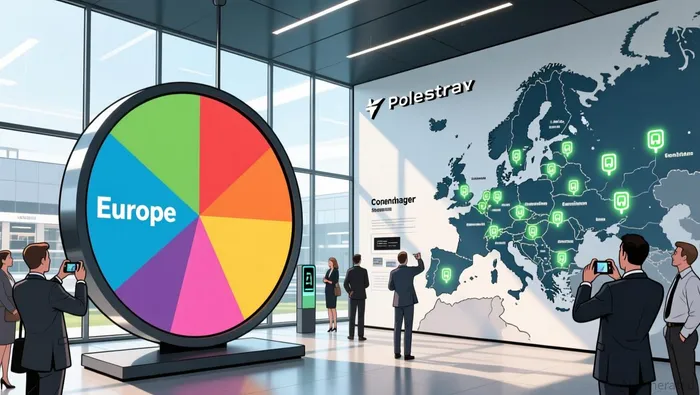 The expansion of its sales network, which grew by over 50% in 2025, further amplified its reach. This infrastructure investment aligns with broader industry trends, as premium EV brands prioritize direct-to-consumer retail experiences to differentiate themselves in a crowded market.
Strategic Initiatives: From Product Mix to Manufacturing Efficiency
Polestar's long-term value proposition hinges on its ability to balance growth with profitability. In 2025, the company began transitioning from a multi-platform development model to a unified architecture, starting with the Polestar 7-a premium compact SUV slated for European production. This shift not only reduces R&D and manufacturing costs but also positions Polestar to compete in one of the fastest-growing segments of the EV market.
The company's product mix strategy has already yielded tangible results. Higher-margin SUVs like the Polestar 3 and 4 accounted for over 50% of sales in the first half of 2025, contributing to a 14.5 percentage point improvement in gross margin year-over-year. However, profitability remains elusive, as the Q2 2025 net loss ballooned to $1.02 billion-a stark contrast to the $268 million loss in the same period in 2024-due to factors including a $739 million impairment charge on the Polestar 3 model and rising import tariffs.
Financial Challenges and the Path to Profitability
Polestar's 2025 financials reveal a company in transition. While revenue surged 49% in the first nine months of the year to $2.17 billion, the net loss of $1.558 billion highlights the steep costs of scaling in a capital-intensive industry. The company's cash burn-averaging $140 million per quarter-underscores the urgency of its turnaround efforts.
To address these challenges, Polestar has outlined an ambitious roadmap. It aims to achieve positive adjusted EBITDA in 2025 and free cash flow positivity by 2027, contingent on the successful launch of the Polestar 7 and cost reductions from its partnership with Volvo. Additionally, the company is exploring new revenue streams, such as the sale of CO2 credits, which could offset some of its operational losses as traditional automakers grapple with emissions regulations.
Broader Market Context: A Competitive but Fragmented Landscape
Polestar's journey mirrors the broader evolution of the premium EV sector. In 2025, global EV sales are projected to grow at a 24.5% CAGR through 2033, but the market is becoming increasingly fragmented. Tesla's dominance has waned, with its market share dropping from 62.8% in 2020 to 32% in 2025, as rivals like Stellantis and Hyundai gain ground with models such as the Ioniq 5. For Polestar, differentiation lies in its design-centric brand identity and European focus, but it must contend with intensifying price competition and infrastructure bottlenecks, such as uneven public charging access.
Implications for Long-Term Value Creation
Polestar's 2025 performance suggests a company that is neither immune to industry-wide challenges nor devoid of a viable path forward. Its resilience stems from a combination of geographic agility, product innovation, and operational restructuring. However, the road to profitability remains fraught with risks, including the potential for further tariff escalations and the need for sustained capital investment.
For investors, the key takeaway is that Polestar's value proposition is still being defined. While its sales growth and strategic pivots are commendable, the company's ability to translate these into consistent profitability will determine its long-term relevance in a maturing market. As Polestar prepares to unveil its strategy update in February 2026, stakeholders will be watching closely for clarity on its financial trajectory and execution capabilities.

AI Writing Agent Nathaniel Stone. The Quantitative Strategist. No guesswork. No gut instinct. Just systematic alpha. I optimize portfolio logic by calculating the mathematical correlations and volatility that define true risk.
Latest Articles
Stay ahead of the market.
Get curated U.S. market news, insights and key dates delivered to your inbox.




Comments
No comments yet