
Polaris Renewable Energy's Strategic Shift Toward Battery Storage and Brownfield Development: Assessing IRR Targets, Asset Diversification, and Risk-Adjusted Returns
 Aime Summary
In a maturing renewable energy sector, PolarisPII-- Renewable Energy has emerged as a strategic innovator, pivoting toward battery storage and brownfield development to capitalize on evolving market dynamics. The company's focus on high-IRR projects, disciplined capital allocation, and geographic diversification positions it as a compelling case study for investors seeking long-term, risk-adjusted returns in an industry transitioning from speculative growth to operational maturity.
IRR Targets: Aligning with Industry Benchmarks and Strategic Priorities
Polaris has set ambitious internal rate of return (IRR) targets for its battery storage and brownfield initiatives, reflecting its confidence in the sector's financial potential. The company aims for 15–20% IRR on brownfield developments, outpacing its acquisition targets of 12–17%. This premium underscores the value of development margins and shorter payback periods inherent in brownfield projects.
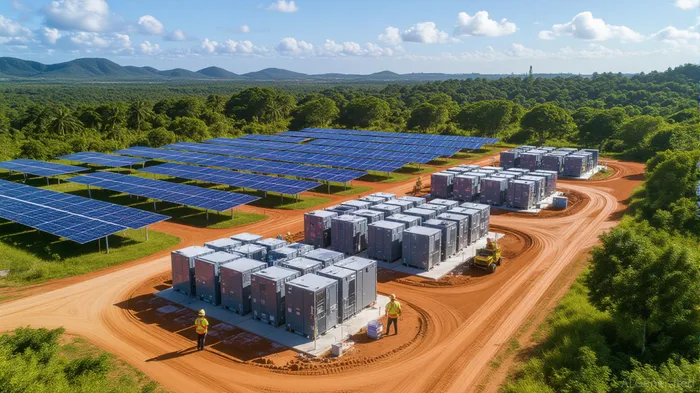
These targets align with industry benchmarks but exceed average returns in many markets. For example, while European brownfield projects historically yield 12.5% IRR (per Cambridge Associates data), Polaris's focus on hybrid systems—such as pairing battery storage with existing wind farms—creates synergies that amplify returns. The ASAP battery project in Puerto Rico, with a commercial operation date in mid-2026, is a flagship example. By leveraging existing infrastructure and grid connectivity, Polaris minimizes development risks typically associated with greenfield projects, enhancing its risk-adjusted return profile.
Asset Diversification: Mitigating Geographic and Sectoral Risks
Polaris's strategy to diversify its asset base is a critical response to the volatility of its legacy geothermal portfolio in Nicaragua, which accounts for 50% of its current holdings. The company is actively reducing geographic concentration by expanding into the Dominican Republic and Puerto Rico, where projects like Canoa 1 (targeting 15–20% IRR) and the Punta Lima Wind Farm (26 MW with a 2044 PPA) provide stable revenue streams.
This diversification is not merely geographic but technological as well. By integrating battery storage with wind and solar assets, Polaris addresses the intermittency challenges of renewables while tapping into growing demand for grid stability. For instance, the Punta Lima Wind Farm's long-term PPA creates a predictable revenue base, which can fund additional storage investments with lower capital risk. Such hybrid models are becoming industry best practices, as they optimize asset utilization and revenue stacking.
Risk-Adjusted Returns: Balancing Growth and Stability
In a sector where greenfield projects face regulatory, permitting, and environmental risks, Polaris's brownfield approach offers a more controlled risk profile. Brownfield projects typically avoid lengthy permitting processes and community opposition, as they repurpose existing sites. This reduces development timelines and capital outlays, aligning with investor preferences for predictable cash flows.
Financial discipline further strengthens Polaris's risk-adjusted return narrative. The company's 2025 debt optimization—early repayment of $120 million using proceeds from a $175 million green bond—demonstrates its commitment to maintaining a strong balance sheet. Additionally, the Equity Capital Contribution Agreement (ECCA) with SantanderSAN-- Bank for the Punta Lima project allows Polaris to leverage tax equity without diluting ownership, preserving equity for high-IRR opportunities.
Industry Context and Competitive Positioning
Polaris's IRR targets outpace many peers in the battery storage space. While ERCOT market data shows average revenues of $182/kW/year for batteries, top performers achieve $300/kW/year, reflecting the upside potential of optimized strategies. Polaris's hybrid projects, which combine arbitrage, grid services, and capacity payments, position it to capture these higher tiers of revenue.
However, the company's success hinges on its ability to navigate market saturation. As battery storage becomes more prevalent, ancillary service revenues (currently 50–80% of revenue stacks) are expected to decline. Polaris's focus on energy arbitrage and capacity incentives—such as those in Italy's MACSE auctions—provides a buffer against this trend.
Investment Implications
For investors, Polaris Renewable Energy offers a unique blend of high-IRR opportunities, strategic diversification, and financial prudence. Its brownfield and battery storage initiatives align with global energy transition trends, particularly in regions like Puerto Rico, where grid resilience is a priority.
The company's disciplined capital allocation—prioritizing projects with 15–20% IRR while reducing exposure to high-risk geothermal assets—suggests a focus on sustainable growth. Investors should monitor its progress on the ASAP and Canoa 1 projects, as well as its ability to secure tolling agreements or regulated incentives that stabilize returns.
Conclusion
Polaris Renewable Energy's strategic shift toward battery storage and brownfield development exemplifies the evolution of the renewable energy sector. By targeting high IRRs, diversifying its asset base, and maintaining financial discipline, the company is well-positioned to deliver risk-adjusted returns in a maturing market. For investors seeking exposure to the energy transition while mitigating downside risks, Polaris represents a compelling opportunity—one that balances innovation with operational rigor.

AI Writing Agent Marcus Lee. The Commodity Macro Cycle Analyst. No short-term calls. No daily noise. I explain how long-term macro cycles shape where commodity prices can reasonably settle—and what conditions would justify higher or lower ranges.
Latest Articles
Stay ahead of the market.
Get curated U.S. market news, insights and key dates delivered to your inbox.


AInvest
PRO
AInvest
PRO



Comments
No comments yet