
Poland's Strategic Bet on ICEYE: A New Era in European Defense Tech and Space Commercialization


 Aime Summary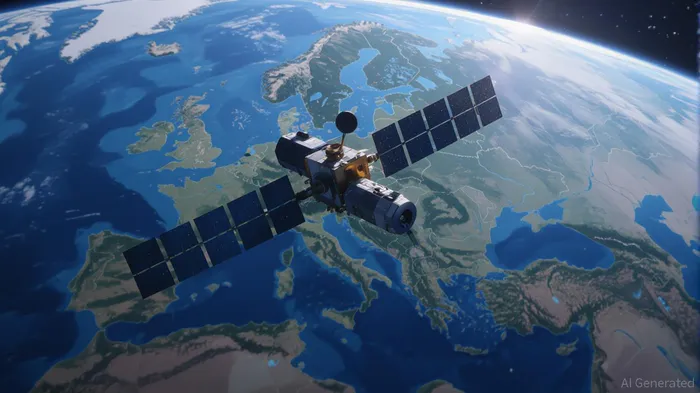
The European satellite surveillance market is no longer a niche corner of the space economy—it's a $5.9 billion juggernaut by 2030, growing at a blistering 10.2% CAGR. At the heart of this surge is Poland's audacious $200 million bet on ICEYE, a Finnish New Space innovator, to build a sovereign, all-weather radar satellite network. This isn't just about defense; it's a masterstroke in capitalizing on the post-Ukraine-war scramble for strategic autonomy, where space-based intelligence is the new currency of power.
The Market: A $2B/Year Goldmine, Powered by Geopolitics and Tech
The EU's Readiness 2030 plan—$870 billion in defense spending, with 150 billion euros allocated via the SAFE program—has turned satellite surveillance from a luxury into a necessity. Defense budgets are exploding: Germany's up 28% to $88.5 billion, Poland's 31% to $38 billion. These aren't just numbers; they're a green light for companies like ICEYE, whose synthetic aperture radar (SAR) satellites offer 25 cm resolution imaging in any weather, day or night.
The market is no longer about “if” but “how fast.” By 2030, the European Remote Sensing Satellite Market will hit $9.9 billion, driven by climate monitoring, border security, and the urgent need to counter anti-satellite threats. ICEYE's 48-satellite constellation—soon to expand to 150 units annually—positions it as the dominant player in a sector where scalability and speed matter more than ever.
Poland's Play: Sovereignty, Scalability, and Strategic Leverage
Poland's €200 million MikroSAR contract with ICEYE isn't just a procurement deal—it's a blueprint for how smaller nations can punch above their weight in the New Space era. By securing three SAR satellites (with options for three more) and mobile ground infrastructure, Poland is building a real-time intelligence network that rivals the capabilities of major powers.
But the genius here is the dual-use angle. These satellites aren't just for military surveillance; they'll monitor agricultural yields, track climate disasters, and even support Ukraine's war effort. This diversification of revenue streams—defense, commercial, humanitarian—makes ICEYE's technology a capital-efficient play. Poland's National Development Bank (BGK) isn't just funding satellites; it's investing in a platform that can serve multiple markets.
ICEYE's Edge: Tech, Partnerships, and a Path to IPO
ICEYE's secret sauce is its SAR technology, which outperforms optical satellites in cloud cover and darkness. With a 25 cm resolution, it can detect moving vehicles, track troop movements, and even monitor illegal fishing in the Black Sea. But the real scalability comes from its production pipeline: 100–150 satellites annually, backed by $822 million in funding (including a $230 million debt round in May 2025).
The company's partnerships are equally compelling. From Rheinmetall (Germany) to BAE Systems (UK), ICEYE is weaving itself into the NATO defense fabric. Its €200 million deal with Greece's Axis 1.2 project and the looming 2026 IPO (valued at $1.5–2 billion) suggest a company poised to dominate the dual-use space sector.
Why This Is a Buy-Now Opportunity
The satellite surveillance market is a $2B/year growth engine, and ICEYE is the only company with a global SAR constellation and a clear path to profitability. Poland's investment isn't just a vote of confidence—it's a signal to investors that the era of “space as a battlefield” is here.
For those looking to capitalize, the key is to own the innovators, not the legacy players. While Airbus and MaxarMAMK-- are important, they're playing catch-up to startups like ICEYE, which are building the next-gen infrastructure. With the EU's 65% “Made in Europe” procurement rule and the U.S. tightening export controls, ICEYE's European roots and Polish partnerships give it a geopolitical tailwind.
Final Call: Ride the New Space Wave
The Ukraine war has rewritten the rules of defense. Satellites aren't just tools—they're weapons, assets, and lifelines. ICEYE's technology, backed by Poland's strategic vision, is a rare combination of geostrategic value and capital efficiency.
For investors, the message is clear: Act now. Whether through direct investment in ICEYE's upcoming IPO or exposure to its partners (like PGZPGZ-- and WZŁ-1), this is a high-conviction play on a sector that's no longer speculative but mission-critical. The next decade of defense and climate tech will be defined by companies like ICEYE—and Poland is leading the charge.

Decoding blockchain innovations and market trends with clarity and precision.
Latest Articles
Stay ahead of the market.
Get curated U.S. market news, insights and key dates delivered to your inbox.


AInvest
PRO
AInvest
PRO



Comments
No comments yet