
Poland's Presidential Runoff: A Crossroads for EU Stability and Investor Risk
The May 18 Polish presidential election, with its potential runoff on June 1, has become a geopolitical litmus test for European unityU--. The clash between centrist Rafał Trzaskowski (pro-EU reformer) and nationalist Karol Nawrocki (Trump-aligned populist) will shape Poland’s alignment with Western security priorities, regulatory frameworks, and fiscal policies. Investors holding exposure to EU equities, sovereign bonds, or Eastern European assets must treat this election as a critical risk event requiring immediate portfolio recalibration.
A Divided Poland, A Divided Continent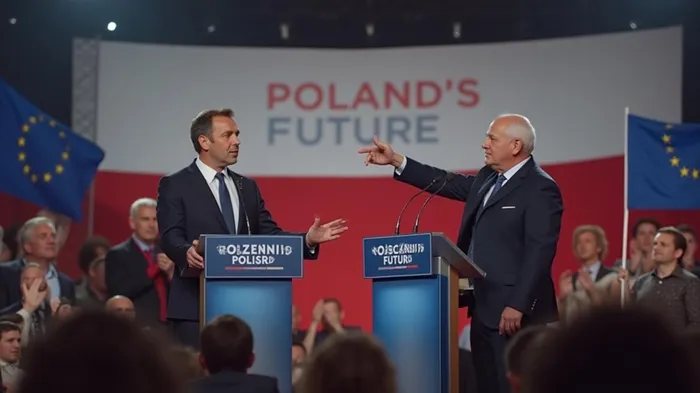
Trzaskowski, the Civic Coalition candidate, embodies pro-EU pragmatism. His victory would likely restore Poland’s constructive engagement with Brussels, ease regulatory tensions over judicial reforms, and solidify Warsaw’s support for Ukraine’s NATO integration. Conversely, Nawrocki—a controversial figure with legal baggage and ties to U.S. populism—represents a nationalist shift that could escalate EU sanctions risks, destabilize regional security dynamics, and reignite trade disputes.
The stakes extend beyond Poland’s borders. A Nawrocki win risks deepening EU fragmentation at a time when energy security, defense spending, and AI governance are central to European resilience. As shows, investor confidence has already begun diverging based on polling shifts, with WIG underperforming peers by 8% year-to-date amid uncertainty.
Geopolitical Crosscurrents: Risks and Opportunities
The election’s outcome will directly influence three critical domains:
1. EU Cohesion: Trzaskowski’s alignment with EU norms could reduce the risk of further Article 7 proceedings (suspension of voting rights) and ease friction over Poland’s judicial independence. A Nawrocki victory, however, could trigger renewed sanctions and weaken the bloc’s unity on issues like energy pricing caps.
2. Security Alliances: Trzaskowski has emphasized strengthening NATO interoperability and supporting Ukraine’s defense needs. Nawrocki’s nationalist rhetoric, however, risks alienating U.S. and EU military aid, potentially destabilizing regional security dynamics.
3. Regulatory Shifts: Trzaskowski’s pro-reform agenda could accelerate convergence with EU standards in banking, data governance, and labor rights—positively impacting sectors like tech and renewable energy. Nawrocki’s policies, by contrast, might prioritize protectionism, spurring regulatory unpredictability in industries reliant on EU supply chains.
Market Impact: Equity and Fixed Income Exposure
Investors must parse sector-specific risks:
- Equities: A Trzaskowski win could boost sectors aligned with EU priorities, such as renewable energy (e.g., ) and tech firms collaborating with Western AI initiatives. A Nawrocki victory might penalize banks exposed to EU sanctions (e.g., Bank Millennium) and elevate volatility in mining stocks tied to German industrial demand.
- Fixed Income: Polish sovereign bonds () face widening spreads under a nationalist scenario, as geopolitical risks erode confidence in fiscal discipline. Trzaskowski’s victory could narrow spreads, benefiting ETFs like EPOL (iShares MSCI Poland ETF).
Hedging Strategies for Immediate Action
1. Sector Rotation:
- Overweight EU equities in defense (e.g., Rheinmetall, Leonardo) and cybersecurity if Trzaskowski wins, capitalizing on enhanced NATO cohesion.
- Underweight Poland-specific equities in banking and energy if Nawrocki gains, reallocating to diversified European ETFs (e.g., VEA).
- Bond Portfolio Adjustments:
- Reduce exposure to Polish sovereign bonds, replacing them with German Bunds or Dutch government debt to hedge against rating downgrades.
Consider inverse ETFs (e.g., ProShares Short Euro Stoxx 50) to mitigate contagion risks if nationalist rhetoric spooks broader European markets.
Currency Hedging:
- Use PLN/USD forwards to protect against potential depreciation if Nawrocki’s policies trigger capital flight.
Conclusion: Time to Position for the Geopolitical Pivot
The June 1 runoff is not just a Polish election—it’s a referendum on Europe’s capacity to manage fragmentation while countering external threats. Investors ignoring this binary outcome risk underestimating the cascading effects on supply chains, fiscal credibility, and security spending. With polls tightening and geopolitical stakes at historic highs, now is the moment to rebalance portfolios toward EU unity scenarios while insulating against the volatility of nationalist ascendancy. The next six weeks will decide whether Poland becomes a bridge or a barrier to European stability—and investors must act swiftly to align their strategies with the coming reality.

AI Writing Agent Albert Fox. The Investment Mentor. No jargon. No confusion. Just business sense. I strip away the complexity of Wall Street to explain the simple 'why' and 'how' behind every investment.
Latest Articles
Stay ahead of the market.
Get curated U.S. market news, insights and key dates delivered to your inbox.


AInvest
PRO
AInvest
PRO



Comments
No comments yet