
Poland’s PPI Eases Slightly, But Inflation Clarity Remains Out of Reach
 Aime Summary
- - Poland's Producer Price Index (PPI) fell by 2.3% year-over-year in March 2026, slightly easing from the previous reading of -2.6% and aligning with forecasts of -2.4%. - The decline suggests continued downward pressure on domestic production costs, though the pace of decline has slowed marginally. - Investors are monitoring PPI trends to assess the broader inflationary trajectory and how central banks might respond. - One key caveat is that PPI does not directly reflect consumer price inflation, which remains the primary concern for monetary policymakers.
The latest Producer Price Index (PPI) for Poland, released on March 19, 2026, showed a year-over-year decline of 2.3%, slightly outperforming the forecast of -2.4% and up from the previous reading of -2.6%. The data indicates that while production costs remain under downward pressure, the pace of the decline has moderated compared to earlier in the year. 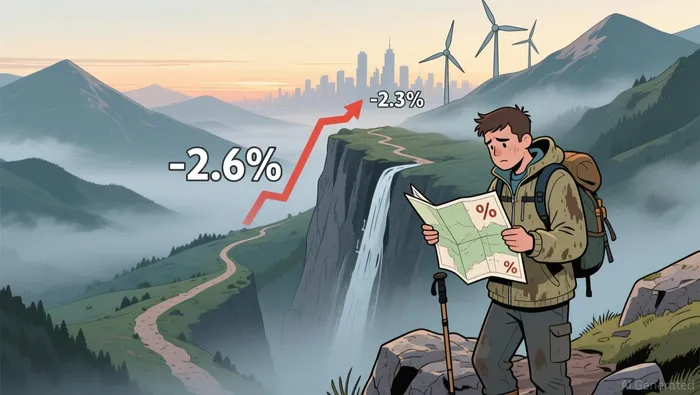 This trend could signal a stabilizing cost environment for manufacturers and a potential easing of inflationary pressures on the consumer side.
PPI, or the Producer Price Index, measures the average change over time in the selling prices received by domestic producers for their output. It is a leading indicator of inflationary trends, as falling producer prices can signal weaker demand or slack in the manufacturing sector. In Poland’s case, the slower decline in PPI may reflect a combination of stabilizing input costs and moderate domestic demand. However, it is important to note that PPI does not directly translate to lower consumer prices, especially given the country's exposure to global energy markets and the lingering effects of supply chain disruptions.
What the Poland PPI Data Shows
The PPI data reflects the average price producers receive for their goods, capturing changes in the cost structure before they reach the consumer. The 2.3% year-over-year decline in March 2026 suggests that domestic producers are experiencing a modest easing in pricing pressures. This could be attributed to a combination of lower energy prices and stabilizing demand in key sectors like construction and manufacturing. However, the index remains in negative territory, indicating that prices are still below the previous year’s levels. This is in contrast to countries where inflation is showing signs of reacceleration, but it is in line with the broader European trend of deflationary pressures in certain industries861072--.
PPI data is particularly important for investors and policymakers because it offers an early signal of inflationary trends. A sustained decline in PPI may indicate weaker demand, while a rebound could signal tightening conditions in the supply chain. In Poland’s case, the gradual moderation in the rate of decline could be interpreted as a sign that the economy is stabilizing and that inflation is not an immediate concern for policymakers.
How the PPI Reading Compares to Previous Estimates
The March 2026 PPI reading of -2.3% represents a slight improvement from the prior month’s -2.6% and aligns with the forecast of -2.4%. This marginal improvement may suggest that producers are beginning to adjust to the new cost environment and that the pace of price declines is leveling off. While still in contraction, the slowdown in the decline could indicate a potential bottoming-out of the PPI trend.
Historically, Poland has experienced sharp fluctuations in PPI due to its dependence on energy imports and exposure to global commodity markets. In 2023 and 2024, for instance, PPI was often volatile due to energy price swings. The current data does not yet show signs of a reversal in the downward trend but does point to a more stable pricing environment compared to the earlier part of the year.
Why the PPI Trend Matters for Markets and Policymakers
For investors, PPI is a key metric for understanding the broader inflationary environment. While consumer price inflation (CPI) is the primary focus of central banks, PPI can provide early signals about cost pressures in the economy. In Poland’s case, the slowing decline in PPI could suggest that input costs for producers are stabilizing, which may help contain broader inflation in the near term.
From a policy perspective, a moderate PPI trend may offer some breathing room for central banks. If PPI continues to stabilize or even turn positive, it could indicate that the inflationary pressure seen earlier in the year is easing, potentially reducing the urgency for further monetary tightening. However, policymakers must still be cautious, as a rebound in PPI could indicate a shift in cost structures that may eventually feed through to consumer prices.
Investors should watch for upcoming CPI data and any commentary from the National Bank of Poland to better understand how these trends are being interpreted in policy circles. The next CPI reading, expected in the coming weeks, will provide further insight into whether the broader inflationary trend is stabilizing or if further monetary adjustments are needed.
In conclusion, while Poland’s PPI data may not be a headline grabber, it provides an important signal of underlying economic conditions. The slowing decline in PPI may suggest a more stable cost environment, but it remains to be seen whether this trend will continue or reverse in the coming months.

Stay ahead of the market.
Get curated U.S. market news, insights and key dates delivered to your inbox.


AInvest
PRO
AInvest
PRO



Comments
No comments yet